


Fine Motor Skills Activities for Kids: 20 Fun Ideas to Build Dexterity and Confidence
Table Of Contents
What Are Fine Motor Skills and Why Do They Matter?
Signs Your Child Needs More Fine Motor Practice
20 Fun Fine Motor Skills Activities for Kids
Activities for Toddlers (Ages 2-3)
Activities for Preschoolers (Ages 4-5)
Activities for School-Age Children (Ages 6+)
Tips for Making Fine Motor Activities More Effective
How Vivo Kinetics Supports Motor Skill Development
Watch a toddler struggle with buttoning their jacket or a preschooler gripping a crayon with their entire fist, and you're witnessing fine motor skills in action—or rather, in development. These small muscle movements involving the hands, fingers, and wrists are the building blocks for everything from writing and eating to tying shoelaces and playing musical instruments.
While children naturally develop these abilities over time, intentional practice through play can significantly accelerate their progress and build confidence. The good news? You don't need expensive toys or elaborate setups. Most effective fine motor activities use everyday household items and transform them into engaging challenges that children don't even realize are "educational."
In this guide, we've compiled 20 fun, age-appropriate fine motor skills activities that you can start today. Whether you're a parent looking to support your child's development at home or an educator seeking fresh classroom ideas, these activities will help strengthen those crucial little muscles while keeping kids entertained and engaged.
What Are Fine Motor Skills and Why Do They Matter?
Fine motor skills refer to the coordination of small muscles in the hands and fingers, working in concert with the eyes to perform precise movements. Unlike gross motor skills that involve large muscle groups for running and jumping, fine motor skills enable the delicate, controlled actions that define so much of daily life.
These skills develop progressively throughout childhood, starting with a baby's reflexive grasping and evolving into the sophisticated hand movements needed for writing, cutting with scissors, and manipulating small objects. The development follows a predictable pattern: children first gain control of their arms and hands, then their fingers, and finally master the pincer grasp (using thumb and forefinger together).
Why should parents and educators prioritize fine motor development? Strong fine motor skills correlate directly with school readiness and academic success. Children with well-developed hand control find it easier to write legibly, complete art projects, and participate in classroom activities without frustration. Beyond academics, these skills build independence—enabling children to dress themselves, use utensils properly, and manage personal care tasks.
At Vivo Kinetics, we understand that motor development doesn't happen in isolation. Our play-based programs integrate both gross and fine motor challenges because children develop holistically. When kids engage in varied physical activities, they're building the foundational strength, coordination, and body awareness that supports all movement—whether they're kicking a soccer ball or threading a bead.
Signs Your Child Needs More Fine Motor Practice
Every child develops at their own pace, but certain signs suggest a child would benefit from additional fine motor activities:
Difficulty with age-appropriate self-care tasks like buttoning, zipping, or using utensils
Unusual pencil grip or excessive pressure when writing or coloring
Avoidance of activities requiring hand precision, such as puzzles, crafts, or building blocks
Hand fatigue during writing or drawing tasks that peers complete easily
Messy eating beyond the typical developmental stage
Trouble manipulating small objects like coins, beads, or small toys
If you notice several of these signs, incorporating more fine motor activities into your child's routine can make a significant difference. The activities below are designed to feel like play, removing any pressure or frustration while building essential skills naturally.
20 Fun Fine Motor Skills Activities for Kids
Activities for Toddlers (Ages 2-3)
Toddlers are just beginning to refine their hand movements, so activities should focus on building basic grip strength and hand-eye coordination without requiring precise control.
1. Play Dough Creations
Play dough remains one of the most effective fine motor tools available. Rolling, squishing, pinching, and poking the dough strengthens all the small muscles in the hands and fingers.
What you'll need: - Homemade or store-bought play dough - Cookie cutters, rolling pins, plastic knives - Small objects to press into the dough (buttons, beads, pasta)
How to enhance it: Challenge your toddler to make "birthday cakes" with specific numbers of candles, create snakes of different lengths, or hide small objects in the dough for them to find and extract.
2. Sticker Peeling and Placing
Peeling stickers from backing paper and placing them precisely on a target area develops the pincer grasp and hand-eye coordination.
What you'll need: - Large stickers (easier for beginners) - Paper, cardboard, or a sticker book
How to do it: Start with large stickers and gradually progress to smaller ones. Create simple games like "decorate the tree" where children place stickers on a drawn outline, or make patterns with dot stickers.
3. Transferring with Tongs
Using child-safe tongs to move objects from one container to another builds grip strength and control.
What you'll need: - Kitchen tongs or large tweezers - Pom-poms, cotton balls, or foam blocks - Two bowls or containers
How to do it: Challenge your toddler to transfer all the items from one bowl to another using only the tongs. Make it playful by pretending the pom-poms are "food" for a stuffed animal or calling them "treasure" to collect.
4. Pasta Threading
Threading large pasta shapes onto pipe cleaners or thick string develops hand-eye coordination and bilateral coordination (using both hands together).
What you'll need: - Large pasta with holes (rigatoni, penne, ziti) - Pipe cleaners or thick shoelaces - Optional: food coloring to dye pasta for added visual appeal
How to do it: Bend the pipe cleaner into a shape that prevents pasta from sliding off one end. Let your child thread the pasta on, creating patterns or just filling the cleaner. This activity is wonderfully self-correcting and naturally engaging.
5. Water Dropper Art
Using medicine droppers or pipettes to transfer colored water builds the same muscles needed for pencil control.
What you'll need: - Medicine droppers or pipettes - Water mixed with food coloring or liquid watercolors - Coffee filters, paper towels, or watercolor paper - Small cups for each color
How to do it: Show your child how to squeeze the dropper bulb, place it in the colored water, and release to draw water up. Then squeeze again over paper to create colorful designs. The squeezing motion directly strengthens finger muscles.
Activities for Preschoolers (Ages 4-5)
Preschoolers have more developed control and can handle activities requiring greater precision and focus.
6. Cutting Practice
Using scissors is a complex skill that requires bilateral coordination, hand strength, and visual-motor integration.
What you'll need: - Child-safe scissors (properly sized for your child's hand) - Variety of paper (construction paper, old magazines, cardstock) - Optional: printed cutting lines or shapes
How to progress: Start with snipping the edges of paper, advance to cutting straight lines, then curves, and finally cutting out complex shapes. Make it purposeful by cutting ingredients for pretend cooking or creating paper chains.
7. Clothespin Activities
Pinching and releasing clothespins builds the exact muscles children need for writing.
What you'll need: - Spring-loaded clothespins - Paper plates, cardboard, or containers
Activity variations: Clip clothespins around a paper plate to create a "sun" or "lion's mane," use them to hang artwork on a string, or create color-matching games by clipping clothespins to corresponding colored paper.
8. Lacing Cards
Lacing activities develop hand-eye coordination, concentration, and the ability to follow a sequence.
What you'll need: - Store-bought lacing cards or DIY versions (cardboard with punched holes) - Thick laces, yarn, or ribbon with stiff ends
How to do it: Start with cards that have large, widely-spaced holes. As your child improves, introduce cards with smaller, closer holes. The threading motion develops fine motor precision and patience.
9. Button and Zipper Boards
Practicing on boards removes the awkwardness of working on their own body while building essential self-care skills.
What you'll need: - Fabric or felt with various fasteners attached - Buttons of different sizes, zippers, snaps, buckles
How to make it engaging: Create a story where each fastener completed "reveals" something underneath, or race against a timer to see improvements over time.
10. Tweezers and Sorting
Using tweezers to sort small objects by color, size, or type refines the pincer grasp.
What you'll need: - Tweezers or child-safe forceps - Small objects (beads, buttons, pom-poms) - Sorting tray or muffin tin
How to do it: Set up a sorting challenge where your child uses tweezers to pick up objects and place them in the correct compartment. This combines fine motor practice with cognitive skills like categorization.
11. Letter Formation in Sensory Materials
Practicing letter shapes in sand, salt, or shaving cream makes early writing practice multisensory and fun.
What you'll need: - Shallow tray or baking sheet - Sand, salt, shaving cream, or rice - Letter cards for reference
How to do it: Spread the material in the tray and demonstrate how to trace letters with one finger. This builds the motor memory for letter formation without the pressure of pencil control.
12. Bead Patterns
Creating patterns with beads on pipe cleaners or string develops sequencing, planning, and precise hand movements.
What you'll need: - Beads of various colors and sizes - Pipe cleaners or string - Optional: pattern cards to follow
How to do it: Start with simple AB patterns (red-blue-red-blue) and progress to more complex sequences. This activity naturally grows with your child's abilities.
13. Nuts and Bolts
Twisting nuts onto bolts develops wrist rotation and bilateral coordination.
What you'll need: - Large plastic or wooden nuts and bolts - Can also use jar lids of different sizes matched to containers
How to do it: Simply matching nuts to bolts and screwing them together provides excellent practice. Create challenges like building structures or arranging them by size.
Activities for School-Age Children (Ages 6+)
School-age children can handle more complex, sustained fine motor challenges that often result in finished products.
14. Origami
Paper folding requires precision, following multi-step directions, and spatial reasoning alongside fine motor control.
What you'll need: - Origami paper or any square paper - Simple origami instructions (start with 3-5 step projects)
How to do it: Begin with very simple projects like paper airplanes or basic shapes. The satisfaction of creating recognizable objects motivates continued practice. Origami naturally progresses in difficulty, providing ongoing challenges.
15. Sewing and Weaving
Basic sewing projects develop hand-eye coordination, planning, and sustained focus.
What you'll need: - Plastic needles or blunt embroidery needles - Burlap, felt, or cards with pre-punched holes - Thick yarn or embroidery floss
How to do it: Start with simple running stitches on burlap or pre-punched cards. Progress to creating actual items like felt bookmarks or simple stuffed shapes. Weaving paper placemats provides a similar developmental benefit with less sharp tools.
16. Building with Small Construction Toys
LEGO bricks, K'NEX, and similar building systems require precise finger movements and build spatial reasoning.
What you'll need: - Construction toys appropriate to your child's skill level - Optional: instruction cards or creative building challenges
How to enhance it: Set specific challenges like "build a bridge that spans this gap" or "create an animal using only these pieces." The problem-solving aspect adds cognitive development to the motor practice.
17. Calligraphy and Hand Lettering
Decorative writing takes pencil control to the next level while creating beautiful results.
What you'll need: - Calligraphy pens, brush pens, or markers - Practice paper or guideline sheets - Instruction guides or online tutorials
How to do it: Start with basic strokes before attempting full letters. The varying pressure and controlled movements required for calligraphy significantly strengthen writing muscles and control.
18. Model Building
Assembling model kits (cars, planes, buildings) requires sustained attention and precise manipulation of small parts.
What you'll need: - Age-appropriate model kits - Any required tools (usually included) - Workspace for the project
How to do it: Choose models matched to your child's patience and skill level. The process of following instructions, handling small pieces, and assembling components provides extended fine motor practice with a rewarding end result.
19. Typing and Keyboarding
While different from handwriting, typing develops finger independence and coordination.
What you'll need: - Computer or tablet - Typing tutorial program or game
How to do it: Use gamified typing programs designed for children that teach proper finger placement and build speed gradually. This practical skill combines fine motor development with digital literacy.
20. Playing Musical Instruments
Instruments like piano, guitar, or recorder develop finger independence, coordination, and fine motor control while building musicality.
What you'll need: - Age-appropriate instrument - Lessons or instructional materials
How to do it: Even simple instruments like recorders or ukuleles provide excellent fine motor practice. The motivation to make music encourages persistent practice of precise finger movements.
Tips for Making Fine Motor Activities More Effective
Incorporating fine motor activities into your child's routine is most effective when you follow these principles:
Keep sessions short and playful. Young children have limited attention spans and small muscles that fatigue quickly. Ten to fifteen minutes of focused activity is often more beneficial than longer sessions that end in frustration. Frame activities as games rather than lessons.
Match activities to your child's current level. Activities should be challenging enough to require effort but achievable enough to build confidence. If your child consistently struggles, step back to simpler variations. If they complete tasks too easily, increase the difficulty.
Ensure proper positioning. Children should sit with feet flat on the floor, backs supported, and work surfaces at an appropriate height. Correct positioning reduces fatigue and allows for better control. This is especially important for writing and other precision tasks.
Encourage but don't pressure. Fine motor development happens over years, not days. Celebrate small improvements and focus on effort rather than perfection. Pressure creates anxiety that can actually hinder skill development.
Integrate activities into daily routines. Rather than setting aside separate "practice time," look for natural opportunities throughout the day. Let your child help with cooking tasks that involve stirring, pouring, or spreading. Involve them in buttoning their own clothes or zipping jackets. These real-world applications make skills meaningful.
Vary the activities. Different activities strengthen different muscle groups and movement patterns. A diverse rotation prevents boredom and ensures comprehensive development. Alternate between activities that require power grip (holding with the whole hand), pincer grip (thumb and forefinger), and isolated finger movements.
Notice the non-dominant hand too. Many fine motor activities require both hands working together—one hand stabilizing while the other manipulates. Encourage your child to use their non-dominant hand for support tasks, building bilateral coordination.
How Vivo Kinetics Supports Motor Skill Development
While the activities above focus specifically on fine motor skills, comprehensive child development requires attention to all aspects of physical literacy. At Vivo Kinetics, we've designed our programs around the understanding that children develop best through varied, play-based movement experiences.
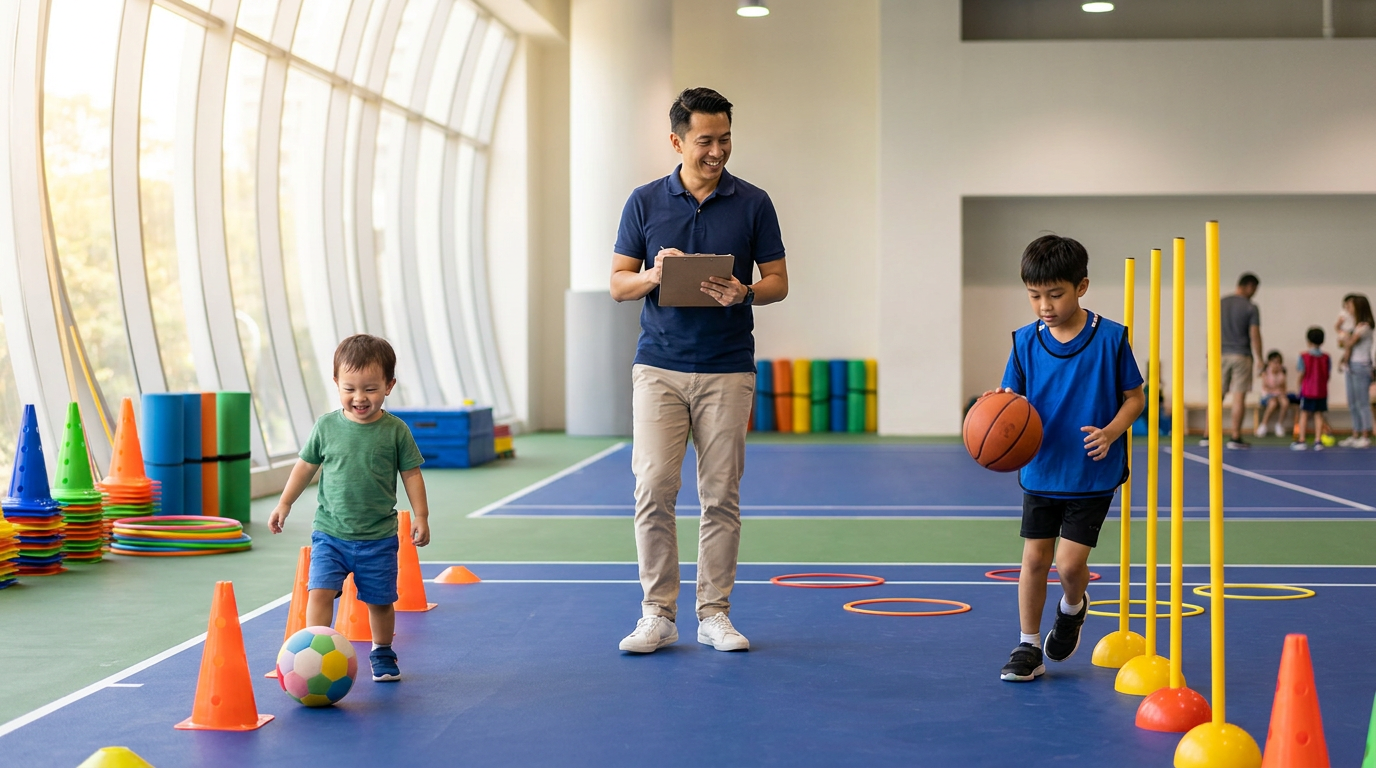
Our Vivo Kids multi-sports programme provides the perfect complement to home-based fine motor activities. Through age-appropriate sports and games, children ages 2-6 develop the gross motor skills, body awareness, and core strength that form the foundation for all movement—including those precise hand movements.
Strong shoulders provide stable bases for controlled arm movements. Good core strength enables children to maintain proper sitting posture during fine motor tasks. The hand-eye coordination developed while catching a ball transfers directly to threading a needle or writing. These connections are why our holistic, play-based approach produces such remarkable results.
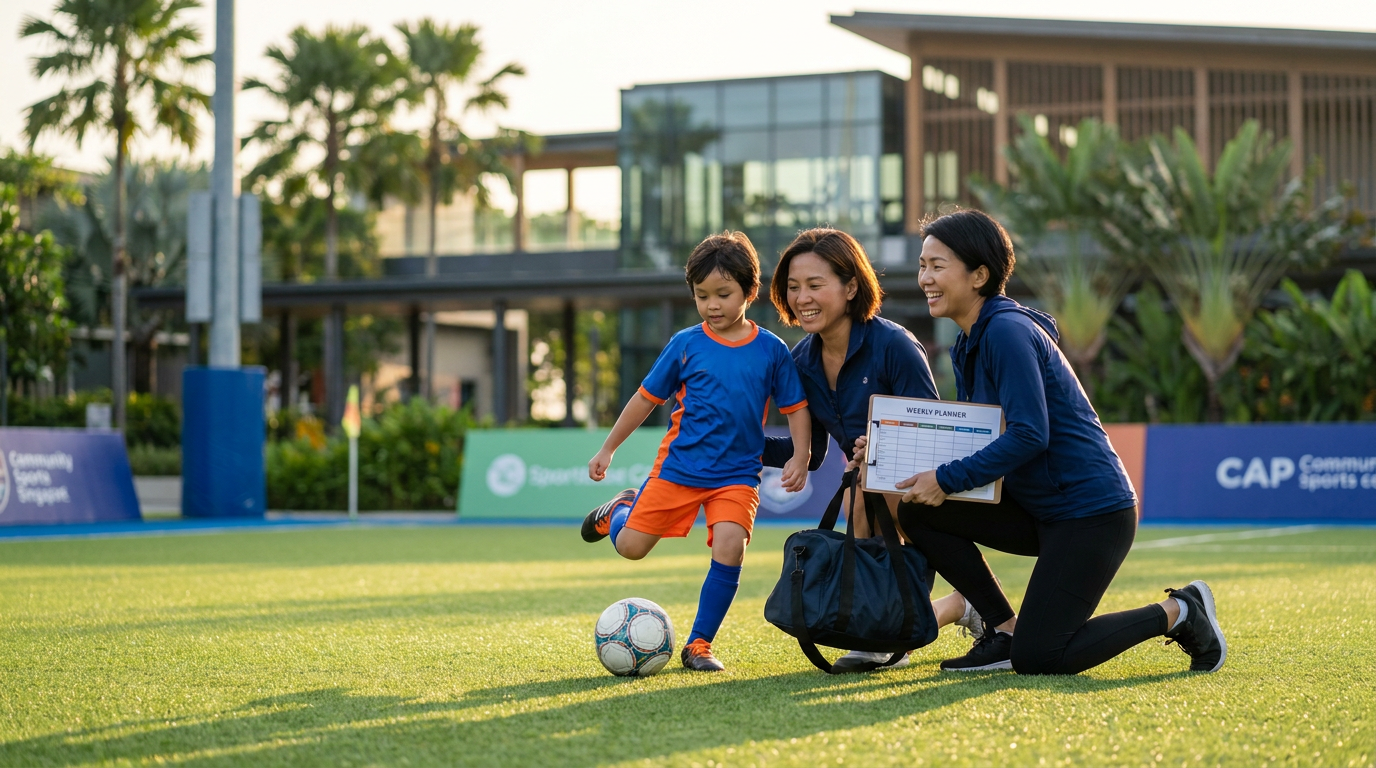
For older children, our Vivo Kicks Academy continues building these fundamental skills through soccer. The sport's demands—controlling a ball with precise foot movements, reacting quickly to changing situations, and coordinating complex movement patterns—develop the same neural pathways that support fine motor control.
Beyond physical skills, our programs build the confidence, focus, and perseverance that make children willing to tackle challenging fine motor tasks without frustration. When children believe in their ability to learn new physical skills, they approach all challenges with greater resilience.
Our expert coaches understand child development comprehensively. We create safe, nurturing environments where children explore their physical capabilities at their own pace, building both competence and confidence. This holistic approach to children's health and fitness is why we've earned recognition as the "Best Children's Multi-sport Programme 2024" and "Recognized Leaders in Children's Health & Fitness" in Southeast Asia.
Fine motor skills form the foundation for so many aspects of your child's independence and academic success. The twenty activities outlined above provide engaging, accessible ways to build these crucial abilities through play. From the simple pleasure of squishing play dough to the complex challenge of origami, each activity strengthens the small muscles and neural connections that enable precise, controlled movements.
Remember that development happens gradually and uniquely for each child. Focus on making these activities enjoyable rather than perfect, celebrating progress rather than demanding mastery. When fine motor practice feels like play rather than work, children naturally invest the repeated effort that builds lasting skills.
Combine these focused activities with plenty of opportunities for active play, outdoor exploration, and varied physical experiences. Children who move confidently through the world, who have strong bodies and capable hands, approach life's challenges with the self-assurance that comes from genuine competence. Whether they're buttoning a jacket, writing their name, or learning a new sport, they'll have the physical foundation to succeed.
Ready to support your child's complete physical development? Discover how Vivo Kinetics' award-winning programs build confident, capable children through play-based movement. Explore our programs and give your child the foundation for lifelong health and fitness.

Comments