


Shy Kids and Sports: How to Encourage Participation Without Pressure
- Vivo Kinetics
- Feb 24
- 11 min read
Table Of Contents
Understanding Shyness in Children
Why Sports Matter for Shy Kids
Signs Your Child Might Be Hesitant About Sports
Creating the Right Foundation at Home
Choosing the Right Sports Program
Age-Appropriate Expectations and Activities
Practical Strategies to Encourage Participation
What to Avoid When Encouraging Shy Children
How Play-Based Programs Build Confidence
Working with Coaches and Instructors
Celebrating Small Wins
Watching your child hang back while other kids dive enthusiastically into group activities can tug at your heartstrings. You know sports could be wonderful for them—building friendships, developing physical skills, boosting confidence—but how do you bridge that gap when your little one seems perfectly content staying on the sidelines?
Shyness in children is completely normal and doesn't mean your child is destined to miss out on the joys of active play and team sports. In fact, with the right approach and environment, sports participation can become one of the most powerful tools for helping reserved children blossom socially, emotionally, and physically.
This guide explores practical, compassionate strategies to help shy kids embrace sports at their own pace. You'll discover how to recognize your child's unique needs, choose programs that nurture rather than overwhelm, and create the supportive foundation that transforms hesitation into genuine enthusiasm.
Understanding Shyness in Children
Shyness isn't a flaw or something that needs to be "fixed." It's a temperament trait that affects how children respond to new situations, unfamiliar people, and social environments. Some children are naturally more cautious and observant, preferring to assess situations before jumping in. This thoughtful approach can actually be a strength when channeled properly.
Research shows that approximately 15-20% of children are born with a temperament predisposed to shyness. These children have a lower threshold for arousal in the amygdala, the part of the brain that processes fear and uncertainty. Understanding this biological component helps parents approach the situation with patience rather than frustration. Your child isn't being difficult—they're simply wired to process new experiences more carefully.
The key distinction to make is between shyness and anxiety. While shy children may warm up slowly to new situations, they eventually engage and participate. Children with anxiety may experience more intense, persistent fears that interfere with daily activities. If you suspect anxiety rather than typical shyness, consulting with a pediatrician or child psychologist can provide valuable guidance.
For most shy children, sports environments present a unique challenge because they combine multiple stressors: unfamiliar adults (coaches), peer interactions, physical performance expectations, and sometimes competitive elements. Recognizing these layers helps you address each component thoughtfully.
Why Sports Matter for Shy Kids
Countintuitively, sports participation can be especially beneficial for reserved children when introduced properly. The structured nature of sports programs provides predictable routines that shy children often find comforting. Unlike unstructured playground time where social dynamics can feel overwhelming, organized sports offer clear expectations and defined roles.
Physical activity itself acts as a natural anxiety reducer. Exercise releases endorphins, reduces cortisol levels, and helps children process emotions through movement rather than words. For kids who struggle with verbal expression, sports become an alternative language for connecting with peers and adults.
The character development that happens through sports—perseverance, teamwork, resilience—builds from the inside out. When a shy child masters a new skill or contributes to a team goal, that accomplishment creates genuine confidence that transfers to other areas of life. This isn't empty praise but earned self-knowledge: "I can do hard things."
Social connections formed through shared activities tend to feel more natural for reserved children than forced conversation. Working together toward common goals creates friendship opportunities without the pressure of direct social interaction. Many shy children find their first real friendships on sports teams or in activity programs.
Signs Your Child Might Be Hesitant About Sports
Recognizing hesitation early allows you to address concerns before they become entrenched resistance. Your child might not directly say "I'm scared" or "I don't want to," so watch for these indicators:
Excessive clinginess when arriving at activities or drop-off resistance
Physical complaints (stomachaches, headaches) before scheduled sports sessions
Watching from the periphery without joining group activities
Reluctance to make eye contact with coaches or teammates
Asking repeated questions about activities as a way to delay participation
Regression in previously mastered skills when others are watching
These behaviors signal that your child needs additional support, not that they're incapable of enjoying sports. The goal is identifying their specific concerns so you can address them systematically.
Creating the Right Foundation at Home
Your home environment sets the stage for how your child approaches new experiences. Start building sports readiness well before formal programs begin by integrating movement into daily life. Play catch in the backyard, create obstacle courses in the living room, or have dance parties in the kitchen. These informal activities normalize physical play without performance pressure.
Model positive attitudes toward trying new things. Share your own experiences with feeling nervous about unfamiliar situations and how you managed those feelings. This vulnerability shows children that hesitation is normal and manageable. Use phrases like "I felt nervous, but I tried anyway" rather than "It was easy."
Build your child's vocabulary for expressing emotions. Many shy children struggle to articulate their feelings, which intensifies anxiety. Practice naming emotions during calm moments: "That looks like you're feeling frustrated" or "I can see you're excited about that." This emotional literacy helps children communicate needs to coaches and peers.
Establish routines around physical activity so movement becomes a regular part of life rather than a special (and therefore potentially stressful) event. Consistency reduces the novelty factor that triggers shyness responses.
Choosing the Right Sports Program
Not all sports programs suit shy children equally well. The ideal environment balances structure with nurturing support, emphasizes participation over competition, and maintains appropriate adult-to-child ratios that allow for individual attention.
Look for programs specifically designed with developmental milestones in mind. Age-appropriate curricula meet children where they are physically, cognitively, and emotionally. Programs like the Vivo Kids multi-sports programme focus on building fundamental movement skills through play for ages 2-6, creating positive first experiences with organized physical activity. This foundation-building approach allows shy children to develop competence gradually without the pressure of sport-specific performance.
The coaching philosophy matters tremendously. Seek out instructors trained in child development who understand that emotional safety precedes physical performance. Expert coaches recognize that shy children need different encouragement strategies than naturally outgoing kids. They know when to gently invite participation versus when to allow observation, and they celebrate effort over outcomes.
Class size and structure also influence success. Smaller groups allow shy children to feel less overwhelmed and give coaches more opportunity for individual connection. Programs that incorporate familiar routines—warm-ups, skill practice, games, cool-downs—provide the predictability that helps reserved children relax into participation.
Age-Appropriate Expectations and Activities
Developmental readiness varies widely, and shy children often need additional time to adapt to group settings. Understanding typical milestones prevents unrealistic expectations that set everyone up for frustration.
Ages 2-4: At this stage, parallel play is normal. Your child might participate near other children without directly interacting, and that's perfectly acceptable. Look for programs emphasizing exploration, sensory experiences, and parent participation. The goal is positive associations with movement, not skill mastery or social engagement.
Ages 4-6: Children this age can handle simple instructions and brief turn-taking but still need frequent breaks and varied activities. Programs should feel like play, not drills. Multi-sport exposure works better than specialization because variety maintains interest and reduces performance pressure. Watch for curricula that weave character development and social skills into physical activities.
Ages 6-8: This is when many children become ready for more structured sports with basic rules and team concepts. Shy children might still need transition support—arriving early to meet coaches privately, having a buddy system, or receiving advance information about what each session will include. The Vivo Kicks Academy introduces soccer skills to this age group while maintaining the nurturing, confidence-building environment that helps reserved children thrive.
Ages 8-12: Older shy children benefit from having some choice in their activities. Involvement in the decision-making process creates buy-in and reduces resistance. Some might prefer individual sports (martial arts, swimming, gymnastics) while others find the structure of team sports comforting. Both paths offer valuable benefits.
Practical Strategies to Encourage Participation
Transforming hesitation into enthusiasm requires strategic, patient approaches that respect your child's temperament while gently expanding their comfort zone.
Start with observation. Allow your child to watch activities before participating. This "warm-up period" lets them mentally rehearse what participation looks like and reduces the fear of the unknown. Some children need one observation session; others might need several. Honor their timeline.
Use gradual exposure. Begin with the smallest possible step and build incrementally. Maybe the first goal is simply getting to the venue without complaints. Next session, aim for watching from inside the facility. Then perhaps holding your hand while standing near the group. Eventually, participating in just one activity during the session. These micro-successes compound.
Create pre-session rituals. Predictable routines reduce anxiety. This might include a special snack on the way to class, arriving early to explore the space when it's quieter, or reviewing a visual schedule showing what will happen during the session. Rituals provide control in situations that otherwise feel unpredictable.
Identify a comfort item. Especially for younger children, having something familiar can ease transitions. This might be a special water bottle, a lucky headband, or wearing their favorite colors. These tangible connections to home provide security.
Connect with coaches beforehand. Brief instructors about your child's temperament and what helps them feel comfortable. Most coaches appreciate this information and can make small accommodations—like greeting your child individually, assigning them a buddy, or providing a quiet space if they become overwhelmed.
Use role-playing at home. Practice scenarios your child might encounter: introducing themselves to a coach, asking for help, taking turns, responding when someone speaks to them. Rehearsing reduces the cognitive load during actual situations, making participation feel more manageable.
Focus on effort, not outcomes. Praise specific attempts: "I noticed you tried the balancing activity even though it was hard" rather than "You're so athletic" or "Great job!" This teaches children that courage and persistence matter more than natural ability or immediate success.
What to Avoid When Encouraging Shy Children
Well-intentioned approaches sometimes backfire with reserved children. Avoid these common pitfalls:
Labeling your child as "shy" in front of them. This identity becomes self-fulfilling and gives children an excuse to avoid challenges. Instead, acknowledge feelings: "New situations take you a little time, and that's okay."
Forcing participation. Pushing too hard triggers deeper resistance and can create negative associations with sports that last for years. There's a difference between gentle encouragement and coercion.
Comparing to siblings or peers. "Look how easily your brother joined in" only increases shame and self-consciousness. Every child has their own timeline.
Over-scheduling. Too many activities create constant stress rather than opportunities for growth. One or two carefully chosen programs work better than a packed calendar.
Showing your own anxiety. Children pick up on parental stress. If you're visibly worried about whether they'll participate, they assume there's something to worry about.
Dismissing their concerns. Statements like "There's nothing to be afraid of" or "Don't be silly" invalidate legitimate feelings. Instead, acknowledge: "I understand this feels hard right now."
Making sports the only social opportunity. Variety helps. If sports feel too challenging initially, build confidence through other structured activities (art classes, music groups, library programs) then return to sports later.
How Play-Based Programs Build Confidence
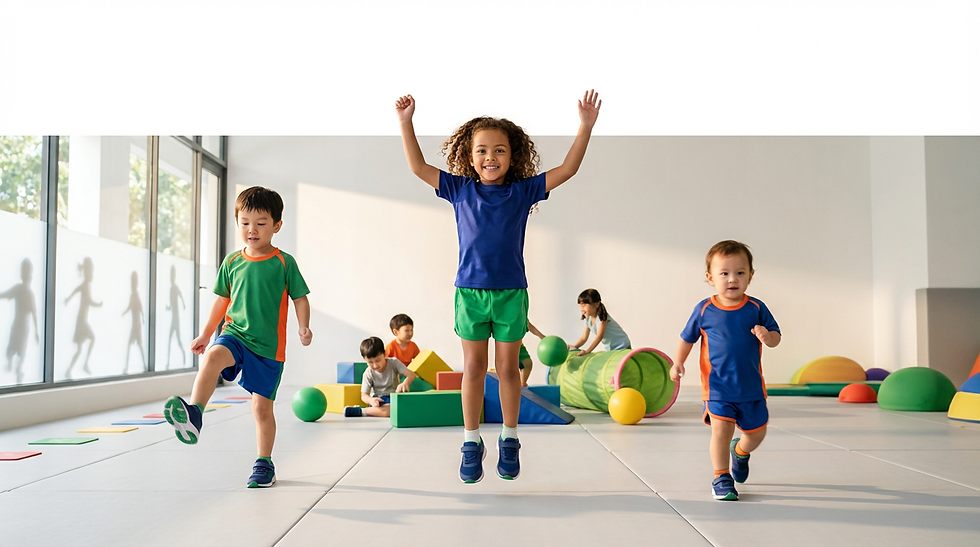
The magic ingredient for shy children is play. When physical activity feels like fun rather than performance, children relax and engage naturally. Play-based learning disguises skill development within games, stories, and imaginative scenarios that capture attention and reduce self-consciousness.
Vivo Kinetics has built its reputation on this exact approach, earning recognition as "Best Children's Multi-sport Programme 2024" by creating environments where children explore movement through play. When kids are pretending to be animals, navigating obstacle courses as adventurers, or playing cooperative games, they forget to be self-conscious. They're simply having fun—and learning fundamental skills in the process.
This methodology works particularly well for reserved children because it removes the spotlight. There's no "perform this skill while everyone watches" pressure. Instead, everyone participates simultaneously in activities designed for engagement rather than evaluation. Success is broadly defined and individually measured.
The intellectual, social, emotional, and physical development that happens through play creates well-rounded growth. Shy children might struggle initially with the social components but find confidence through physical mastery, which then transfers to social courage. Or they might connect first with the cognitive challenges (following multi-step instructions, problem-solving) and gradually warm up to the physical and social elements.
Working with Coaches and Instructors
The adult leading activities can make or break the experience for shy children. Quality coaches understand that building relationships comes before building skills. They invest time learning each child's name, interests, and communication style. This individual recognition helps reserved children feel seen and valued, not lost in the crowd.
Look for coaches who use positive reinforcement and encouraging language consistently. Shy children are often perfectionists who fear making mistakes. Instructors who normalize errors as part of learning ("Great try! Let's see what happens if we adjust this...") create psychologically safe spaces where children dare to attempt new skills.
Communication between parents and coaches should be ongoing. Share what works at home, report on what your child says about class, and ask for specific strategies you can reinforce. This partnership approach ensures consistency across environments.
Expert coaches also recognize when children need breaks. Forcing constant participation can overwhelm sensitive children. Brief observation periods during a session allow for emotional regulation without completely withdrawing from the activity.
Celebrating Small Wins
Progress for shy children often looks different than traditional milestones. While other kids might celebrate scoring a goal or winning a game, your child's victories might be making eye contact with the coach, trying an activity without prompting, or staying for the entire session without asking to leave.
These seemingly small steps represent enormous courage. Acknowledge them specifically: "I noticed you stood in the circle with the other kids today without holding my hand. That took bravery." This recognition validates their internal experience and motivates continued risk-taking.
Create a success journal or visual chart where you track these micro-achievements. Seeing accumulated progress helps children recognize their own growth, which might feel invisible day-to-day. Looking back at where they started compared to where they are now builds legitimate pride.
Remember that progress isn't always linear. Shy children might have great days followed by setbacks. This is normal. Developmental growth happens in waves, not straight lines. Maintain perspective and celebrate the overall trajectory rather than fixating on individual sessions.
The ultimate goal isn't transforming your shy child into an outgoing sports star. It's helping them discover that they can participate in activities that challenge them, that their body is capable and strong, and that they belong in group settings even when those settings feel initially uncomfortable. These lessons extend far beyond sports into every area of life.
When children experience supportive environments that respect their temperament while gently encouraging growth, they develop genuine confidence rooted in real competence. They learn that courage doesn't mean the absence of fear—it means doing things despite feeling nervous. That's a lesson that serves them for a lifetime.
Helping shy children embrace sports is a journey that requires patience, understanding, and the right environment. By recognizing that shyness is a temperament trait rather than a limitation, you can create experiences that honor your child's unique personality while opening doors to the countless benefits of physical activity.
The strategies outlined here—gradual exposure, choosing developmentally appropriate programs, working collaboratively with coaches, and celebrating incremental progress—create a framework for success. Remember that every child's timeline is different, and comparison serves no one.
What matters most is finding programs led by experts who understand child development and create psychologically safe spaces where all children can thrive. When sports feel like play rather than performance, when coaches prioritize relationships over results, and when participation is celebrated regardless of skill level, shy children discover their own strength, capability, and belonging.
Your reserved, thoughtful child has unique gifts to offer. With the right support and environment, sports become one more avenue for those gifts to emerge and flourish.
Ready to help your child discover the joy of movement in a nurturing, play-based environment?
Vivo Kinetics specializes in creating supportive spaces where shy children build confidence at their own pace. Our award-winning programs combine expert coaching with age-appropriate curricula designed to help every child thrive—intellectually, socially, emotionally, and physically.
Explore Vivo Kinetics Programs and discover how we help children transform hesitation into enthusiasm through the power of play.


Comments