


Active Play vs Structured Sports: What's the Difference and Why Both Matter
Table Of Contents
Understanding the Basics: Defining Active Play and Structured Sports
Key Differences Between Active Play and Structured Sports
The Developmental Benefits of Active Play
The Advantages of Structured Sports Programs
Age-Appropriate Considerations: What Works When
Finding the Right Balance for Your Child
How Play-Based Sports Programs Bridge the Gap
Common Misconceptions Parents Should Know
Creating a Healthy Activity Mix
As a parent, you've likely wondered whether your child should be running freely at the playground or enrolled in a formal sports program. Perhaps you've felt pressure to sign them up for structured activities, or maybe you've questioned if simply letting them play is enough. The truth is, both active play and structured sports serve important roles in your child's development, but they're fundamentally different experiences that offer unique benefits.
Understanding these differences helps you make informed decisions about your child's physical activity routine. It's not about choosing one over the other, but rather recognizing how each contributes to raising healthy, confident, and well-rounded children. When you grasp what makes these approaches distinct, you can create the ideal balance that supports your child's growth across physical, social, emotional, and cognitive domains.
In this guide, we'll explore what sets active play apart from structured sports, examine the specific benefits each provides, and show you how to combine both approaches effectively. Whether you have a toddler taking their first steps or a school-aged child with boundless energy, you'll discover practical insights to support their developmental journey.
Understanding the Basics: Defining Active Play and Structured Sports
Active play, sometimes called free play or unstructured play, is child-directed physical activity where youngsters create their own games, set their own rules, and follow their imagination. This might look like children running around a playground, creating obstacle courses with household items, pretending to be animals, or inventing games with friends. The defining characteristic is that children control the activity—they decide what to do, how to do it, and when to stop or change direction.
Structured sports, on the other hand, involve organized physical activities with defined rules, specific objectives, and adult guidance. These programs follow established curricula or sports frameworks, whether it's a formal soccer academy, swimming lessons, or a multi-sport program. An instructor or coach leads the session, teaching specific skills and guiding children through planned activities designed to achieve particular developmental or athletic goals.
Both forms of physical activity are valuable, but they engage children differently and develop distinct skill sets. Active play emphasizes creativity, self-direction, and exploration, while structured sports focus on skill acquisition, teamwork within frameworks, and progressive learning. Neither is inherently superior—they simply serve different purposes in a child's overall development.
Key Differences Between Active Play and Structured Sports
The distinction between these two approaches extends beyond simple organization. Understanding the core differences helps parents appreciate what each offers:
Leadership and Control: In active play, children are the decision-makers. They determine the rules, negotiate with peers, and modify activities spontaneously. Structured sports place adults in leadership roles, with coaches directing the flow and setting parameters. This difference significantly impacts how children experience autonomy and authority.
Goals and Outcomes: Active play is process-oriented, with the joy of playing being the primary goal. Success is self-defined and constantly evolving. Structured sports are typically outcome-oriented, working toward specific skill mastery, competitive objectives, or developmental milestones. Progress is often measured against established benchmarks.
Time Structure: Free play operates on the child's timeline. Activities can last five minutes or two hours, depending entirely on interest and engagement. Structured programs follow predetermined schedules, with sessions of specific duration and planned progressions across weeks or seasons.
Skill Development Approach: Active play develops skills incidentally through exploration and repetition driven by interest. A child might naturally improve balance while pretending to be a tightrope walker. Structured sports teach skills intentionally and sequentially, breaking down complex movements into teachable components and building systematically.
Social Dynamics: During active play, children navigate social situations independently, learning to resolve conflicts, negotiate roles, and create shared experiences without adult mediation. Structured sports provide guided social experiences where coaches facilitate teamwork, teach sportsmanship explicitly, and structure peer interactions.
The Developmental Benefits of Active Play
Active play is far more than just burning energy—it's a powerful developmental tool that supports growth across multiple domains. When children engage in self-directed physical activity, they're building foundational life skills that extend well beyond the playground.
Creativity and imagination flourish during active play. Without prescribed rules or objectives, children create entire worlds, develop complex narratives, and solve problems imaginatively. A simple cardboard box becomes a spaceship, a fort, or a racing car. This creative thinking translates into enhanced problem-solving abilities and innovative thinking in academic and social contexts.
Executive function skills develop as children plan their play, make decisions, adapt to changing circumstances, and regulate their emotions during peer interactions. When a game isn't working, they must think critically about what to change. When conflicts arise, they learn to self-regulate and find compromises. These are precisely the cognitive control skills that predict academic success and life satisfaction.
Intrinsic motivation strengthens when children play freely. They learn to recognize what genuinely interests them, pursue activities for personal satisfaction rather than external rewards, and develop self-directed engagement. This internal drive becomes crucial for lifelong learning and personal growth.
Risk assessment and physical confidence improve as children test their limits in self-chosen challenges. Climbing slightly higher on the playground equipment, jumping from progressively taller platforms, or attempting new movements allows them to calibrate risk and develop realistic assessments of their capabilities. This builds physical confidence without the fear of disappointing a coach or team.
Research consistently shows that children with ample opportunities for active play demonstrate better emotional regulation, enhanced creative thinking, stronger peer relationships, and greater resilience when facing challenges. The unstructured nature of this play is precisely what makes it so developmentally powerful.
The Advantages of Structured Sports Programs
While active play offers tremendous benefits, structured sports programs provide distinct advantages that complement free play beautifully. Quality organized sports experiences support child development in ways that unstructured activity simply cannot replicate.
Skill mastery and technical development occur most efficiently with expert instruction. A qualified coach can identify movement inefficiencies, introduce proper techniques, and create progressions that systematically build competence. Whether learning to kick a ball properly, develop swimming strokes, or master fundamental movement patterns, structured guidance accelerates skill acquisition and prevents the reinforcement of poor habits.
Goal-setting and achievement become tangible in structured environments. Children learn to work toward specific objectives, persist through challenges, and experience the satisfaction of measurable improvement. This teaches delayed gratification, persistence, and growth mindset—understanding that abilities develop through effort and practice.
Social skills within frameworks develop as children learn to follow group rules, respect authority figures, cooperate toward shared objectives, and handle both success and disappointment appropriately. The guided social environment of structured sports teaches valuable lessons about teamwork, leadership, and gracious competition that might not emerge as clearly in free play.
Routine and commitment help children understand responsibility and follow-through. Attending regular sessions, preparing appropriate equipment, and honoring commitments to teammates teaches time management and reliability. These organizational skills transfer to academic settings and future responsibilities.
Exposure to diverse activities through multi-sport programs like Vivo Kids introduces children to movements and skills they might never discover independently. This broad foundation supports long-term athletic development and helps children identify their genuine interests rather than specializing prematurely.
Age-Appropriate Considerations: What Works When
The ideal balance between active play and structured sports shifts as children grow and develop. Understanding age-appropriate approaches helps parents make decisions aligned with developmental readiness.
Ages 2-3: Play Should Dominate
Toddlers and young preschoolers need predominantly unstructured active play. Their attention spans are brief, their need for autonomy is intense, and they're developing fundamental movement patterns through exploration. At this age, structured activities should be minimal and extremely play-based. Programs that resemble guided play rather than formal instruction—with flexibility, creativity, and child-led exploration—work best. The focus should be on developing basic movements like running, jumping, throwing, and catching through games and imaginative play.
Ages 4-6: Introduction to Structure
As children approach school age, they become ready for more structured experiences while still requiring substantial free play time. This is an ideal age for play-based sports programs that introduce structure gradually while maintaining fun and variety. Children this age benefit from short, engaging sessions that teach fundamental movement skills across multiple sports, build social skills in group settings, and introduce following instructions and basic rules. However, active play should still constitute the majority of their physical activity.
Ages 7-9: Balanced Approach
Early elementary children can handle increased structure and benefit from more specialized skill development. This is when the balance between active play and structured sports becomes more equal. Children this age are ready for sport-specific programs like Vivo Kicks Academy that develop technical skills while still incorporating play elements. They can understand strategy, handle more complex rules, and benefit from progressive skill-building. However, they still need regular opportunities for self-directed play to maintain creativity, autonomy, and intrinsic motivation.
Ages 10-12: Individualized Balance
Older children vary significantly in their readiness for competitive sports, specialized training, and structured commitment. Some thrive with intensive structured programs, while others still prefer recreational participation with plenty of unstructured activity. The key is following the child's genuine interests and ensuring that even with increased structure, they maintain agency in their activity choices and continue having opportunities for free play and creativity.
Finding the Right Balance for Your Child
Creating the optimal mix of active play and structured sports isn't about following a universal formula. Instead, it requires observing your individual child, understanding their developmental needs, and remaining flexible as they grow.
Watch for engagement signals. Is your child excited about their structured activities, or do they resist and complain? During free play, do they remain engaged and creative, or do they seem to need more guidance? These observations reveal whether your current balance is working.
Consider personality and temperament. Some children crave structure and thrive with clear expectations and systematic learning. Others feel constrained by too much organization and need more freedom to explore. Neither preference is wrong—they simply indicate different optimal balances.
Protect unscheduled time. In our achievement-oriented culture, the tendency is to over-schedule children with structured activities. Resist this pressure. Children need substantial unstructured time to play freely, explore their environment, and simply be children without performance expectations.
Quality over quantity. One or two high-quality structured programs that genuinely engage your child and support their development are far more valuable than numerous activities that create stress and exhaustion. Leave room for spontaneous play, family time, and rest.
Reassess regularly. What works for your four-year-old won't suit your seven-year-old. Stay attuned to changing needs, interests, and developmental stages. Be willing to adjust the balance as your child grows.
How Play-Based Sports Programs Bridge the Gap
The most effective children's sports programs recognize that active play and structured sports aren't opposing forces but complementary approaches that can be integrated beautifully. Play-based sports programs incorporate the benefits of both approaches.
These programs maintain the joy, creativity, and child-centered nature of active play while introducing the skill development, social frameworks, and progressive learning of structured sports. Rather than rigid drills and repetitive exercises, play-based programs use games, imaginative scenarios, and varied activities to teach fundamental movement skills and sport-specific techniques.
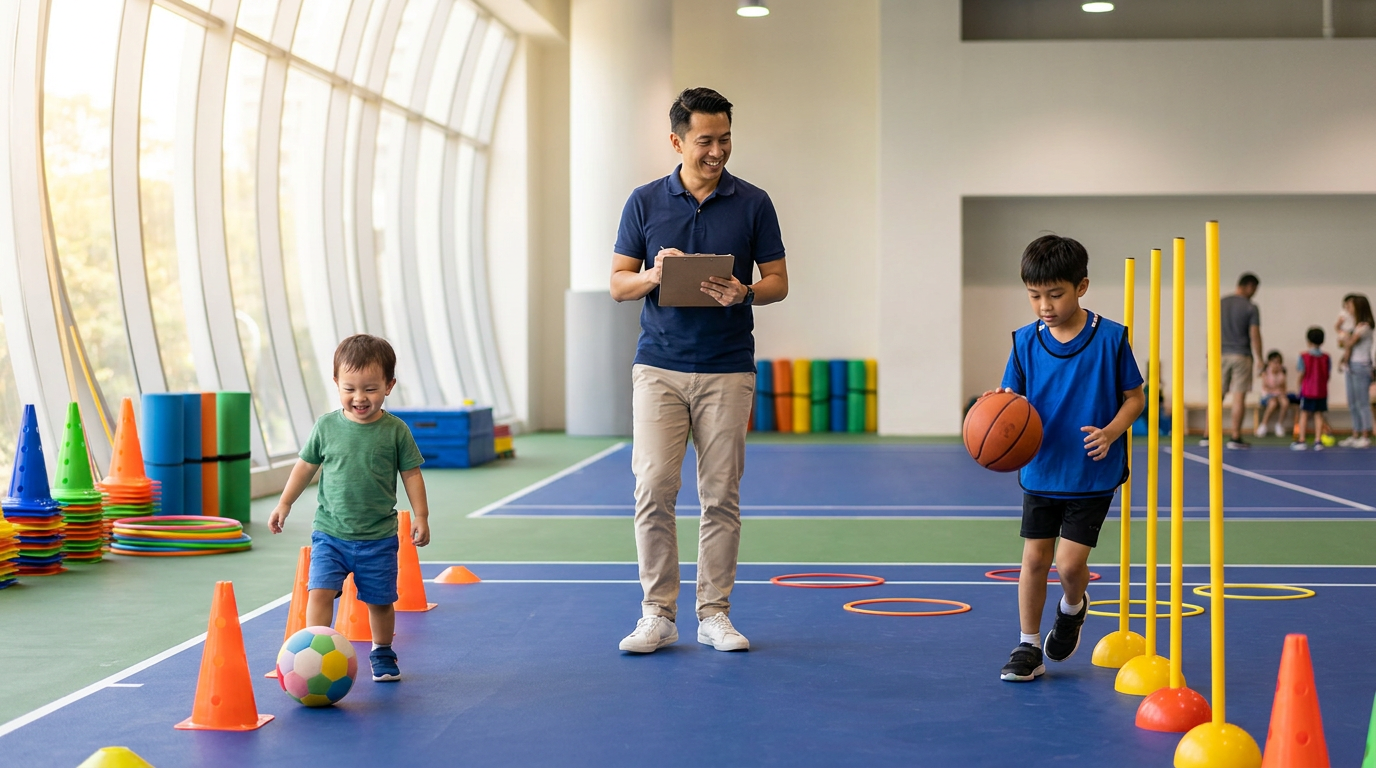
Vivo Kids, for example, employs a multi-sport approach for children aged 2-6 that develops movement skills through play-based activities. The program has structure and expert coaching, but maintains the engaging, fun atmosphere that keeps young children intrinsically motivated. Children learn fundamental skills across multiple sports while exploring, creating, and playing—combining the best elements of both approaches.
This integrated approach is particularly valuable for young children who aren't developmentally ready for formal sports instruction but can benefit from some structure and expert guidance. It creates a bridge between purely free play and traditional structured sports, offering a developmentally appropriate middle ground.
Common Misconceptions Parents Should Know
Several persistent myths about active play and structured sports can lead parents astray when making activity decisions for their children.
Misconception: Structured sports are always better for development. Many parents believe that organized programs with coaches and curricula are inherently superior to free play. In reality, active play develops crucial skills that structured sports cannot replicate, particularly creativity, autonomy, and intrinsic motivation. Both are valuable.
Misconception: Early specialization leads to athletic success. Research consistently shows that early sport specialization doesn't predict long-term athletic achievement and often leads to burnout and overuse injuries. Children who sample multiple sports and engage in varied active play during early childhood typically develop better overall athleticism and maintain engagement longer.
Misconception: Unstructured play doesn't teach important skills. Some parents dismiss active play as "just playing" without recognizing its developmental power. Free play builds executive function, emotional regulation, creativity, problem-solving, and social negotiation skills that are crucial for success in all life domains.
Misconception: More structure is better. Quality matters far more than quantity. A child enrolled in numerous structured activities but lacking time for free play, rest, and family connection often experiences stress, reduced intrinsic motivation, and developmental gaps in areas that unstructured play addresses.
Misconception: Children will choose to be inactive if given free time. When children have been exposed to movement and physical activity positively, they naturally gravitate toward active play when given unstructured time. If your child consistently chooses sedentary activities during free time, it may indicate that their structured activities are creating exhaustion or that they need more exposure to enjoyable movement experiences.
Creating a Healthy Activity Mix
Putting these insights into practice means thoughtfully constructing your child's weekly activity routine with both structure and freedom.
Aim for daily active play opportunities. Regardless of how many structured sports your child participates in, they should have time every day for self-directed physical activity. This might be playground time, backyard play, active games with siblings, or neighborhood exploration.
Choose quality structured programs. Select one or two programs led by qualified instructors who understand child development, maintain age-appropriate expectations, and create positive, encouraging environments. Look for programs that incorporate play elements and focus on skill development rather than winning.
Vary the types of structure. If your child participates in structured sports, consider varying between team-based and individual activities, competitive and recreational programs, or sport-specific and multi-sport approaches. This variety prevents burnout and develops broader capabilities.
Respect rest and downtime. Physical activity is crucial, but so is rest. Children need time for quieter activities, family connection, and simply doing nothing. Overscheduling creates stress that undermines the benefits of both active play and structured sports.
Follow your child's lead. Pay attention to what genuinely engages your child. Their enthusiasm and intrinsic motivation are far more important indicators of appropriate activities than what other children are doing or what you think they should enjoy.
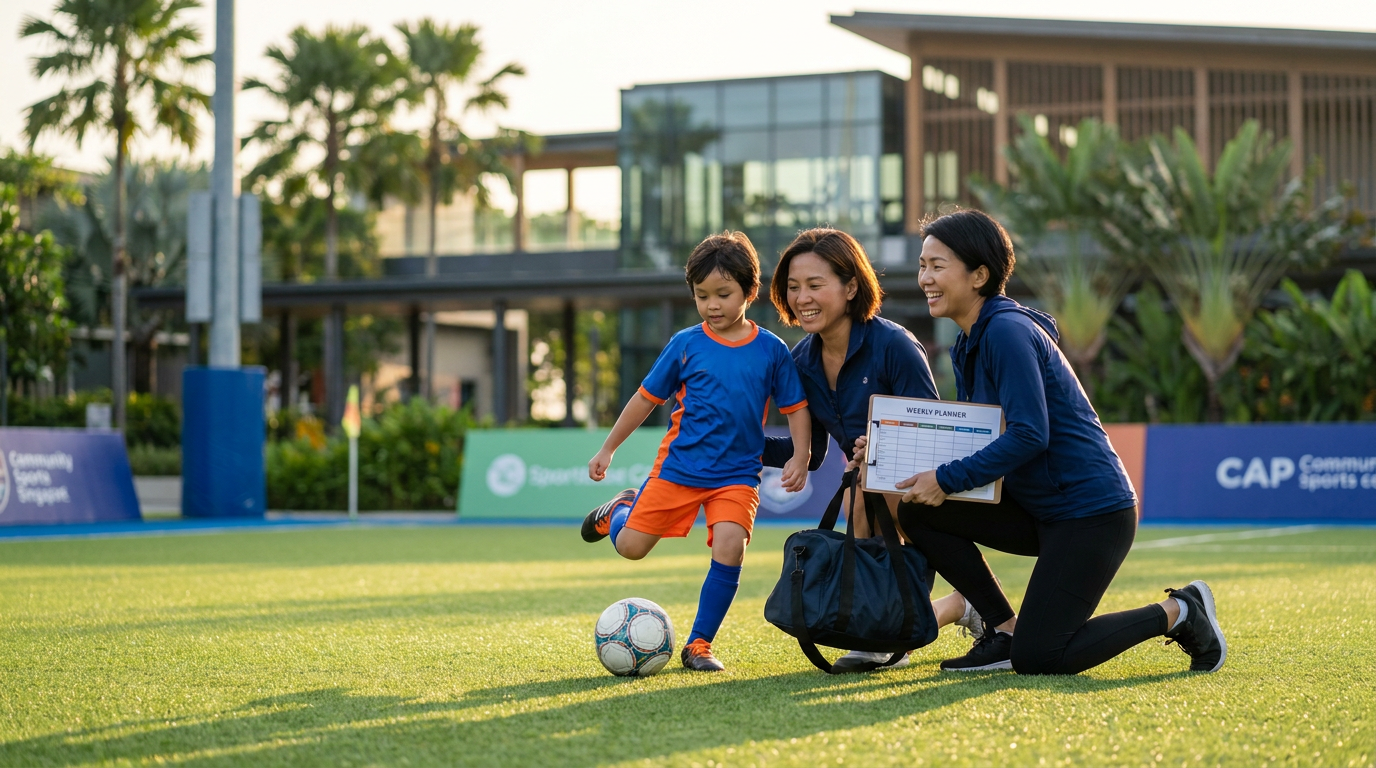
A sample balanced week for a five-year-old might include two one-hour sessions of a play-based multi-sport program, daily outdoor free play time of 1-2 hours, weekend family activities involving movement, and plenty of unscheduled time for rest, creative play, and family connection. This creates a rhythm that supports comprehensive development without overwhelming the child.
For older children with specific sports interests, the balance might shift toward more structured time, but active play remains important. A nine-year-old passionate about soccer might attend Vivo Kicks Academy sessions several times weekly while still having regular opportunities for unstructured outdoor play, casual games with friends, and family activities.
The key is remaining flexible, observant, and willing to adjust as your child's needs, interests, and developmental stage evolve. The goal isn't perfection but rather creating a sustainable approach that supports your child's health, development, and genuine love of movement.
Active play and structured sports aren't competing approaches to children's physical activity—they're complementary elements of comprehensive development. Active play nurtures creativity, autonomy, intrinsic motivation, and self-directed problem-solving. Structured sports build technical skills, goal-setting abilities, teamwork within frameworks, and systematic progress. Your child needs both.
The most successful approach recognizes that the ideal balance shifts with age, personality, and individual circumstances. Young children require predominantly active play with gradually introduced structure. Older children can handle more organization while still needing freedom and autonomy. Throughout childhood, quality matters far more than quantity, and your child's genuine engagement is the best indicator of appropriate activities.
By understanding these differences and thoughtfully creating a mix of structured and unstructured physical activity, you're setting the foundation for a lifetime of healthy, joyful movement. You're raising children who are physically competent, emotionally resilient, socially skilled, and intrinsically motivated—outcomes that matter far more than any single athletic achievement.
Ready to Give Your Child the Best of Both Worlds?
At Vivo Kinetics, we specialize in play-based sports programs that bridge active play and structured sports beautifully. Our expert coaches create engaging, age-appropriate experiences where children develop skills, build confidence, and fall in love with movement.
Explore our Vivo Kids multi-sports programme for ages 2-6, or discover our Vivo Kicks Academy for young soccer enthusiasts aged 6-12.
Start your child's movement journey with Singapore's award-winning children's sports program →

Comments