


Skill Levels in Sports Classes: Why Proper Grouping Makes All the Difference for Your Child
Table Of Contents
Why Grouping in Sports Classes Is More Than a Logistics Decision
Age vs. Skill Level: Understanding the Difference
The Three Skill Tiers Explained: Beginner, Intermediate, and Advanced
What the Research Says About Proper Grouping
The Emotional Case: Confidence, Belonging, and the Right Challenge
Signs Your Child May Be in the Wrong Group
How Vivo Kinetics Approaches Skill-Level Grouping
Tips for Parents: How to Assess Your Child's Readiness
Picture this: your six-year-old walks into their first football class, excited and buzzing with energy. But by the end of the session, they're sitting quietly on the sideline, overwhelmed because every other child seems to have been playing for years. Or flip it — your confident eight-year-old is bored, coasting through drills they mastered months ago, losing interest fast. Neither scenario is about your child lacking talent. It's about placement.
Skill levels in sports classes matter more than most parents realise. The way children are grouped — whether by age, ability, or a thoughtful combination of both — has a direct impact on how much they learn, how confident they feel, and whether they stick with sport at all. Getting it right is one of the most important things a youth sports programme can do.
In this guide, we break down exactly how skill-level grouping works, what the research says, how to tell if your child is in the wrong group, and what a truly thoughtful approach to placement looks like.
Why Grouping in Sports Classes Is More Than a Logistics Decision
At first glance, dividing children into sports classes might seem like a simple administrative task — sort kids by age, fill the roster, start the session. But the decision of how to group young athletes is one of the most developmentally significant choices a programme can make. Inclusive, thoughtful grouping in physical education and youth sports is crucial for ensuring both physical and emotional safety, creating a supportive environment that also facilitates quality control from the coach's perspective.
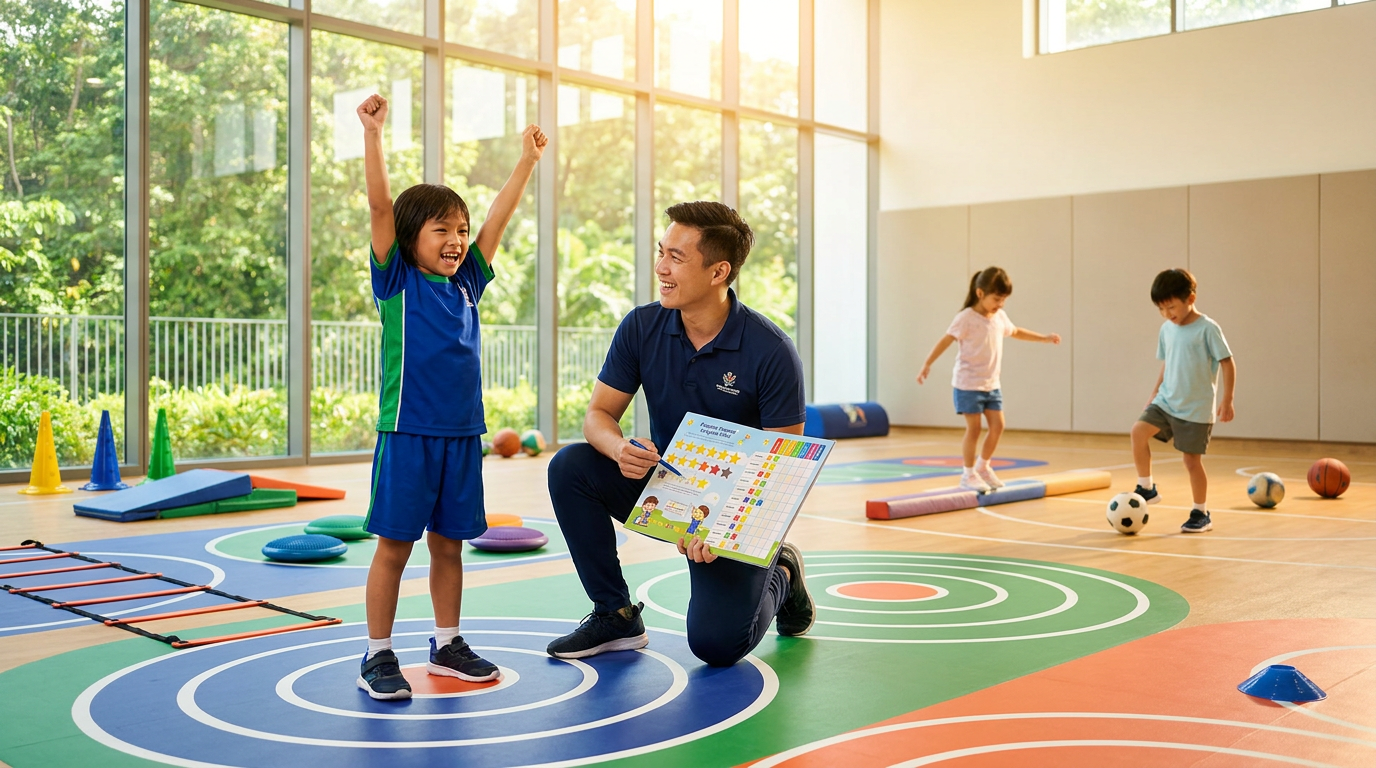
When children are placed in a group that matches their current level, something important happens: they get to experience success. They try a skill, it works, they try it again. Kids usually stay with programmes when they feel successful, connected, and challenged at the right level — and when children feel noticed, they tend to stay engaged longer. This sense of belonging and competence isn't just feel-good; it's the foundation of long-term athletic development.
Conversely, when grouping is done poorly — placing beginners with advanced players, or lumping widely different ages together — it creates frustration on both ends. Advanced children disengage. Beginners feel exposed and fall behind. Neither is being adequately challenged or supported, and both are at greater risk of losing interest in sport altogether.
Age vs. Skill Level: Understanding the Difference
One of the most common misconceptions in youth sports is that age and skill level are the same thing. They are not — and conflating them can lead to poor placement decisions that hold children back.
Age is a useful starting point. The term 'developmentally appropriate' is often used but rarely explained; for youth sport experiences to be truly developmentally appropriate, the experience must match each child's physical, psychological, and social readiness to a level of activity that provides both the challenges and support they need for growth. This means age brackets offer a helpful framework — younger children need movement-based, play-led sessions, while older children can handle more technical instruction and strategic thinking. Younger children usually need movement-based sessions with simple directions, short activities, and lots of encouragement, while older kids can handle more detailed technical coaching and longer focus blocks.
But here's the catch: age doesn't tell the whole story. Older age isn't always an indicator of a more advanced player; in many cases, separating students by ability level rather than by age produces better outcomes. Two seven-year-olds in the same class can have vastly different motor skills, attention spans, and experience levels depending on when they started playing, how much they've practised, and their individual developmental pace.
This is why the most effective youth sports programmes consider both dimensions — using age as a broad filter and skill level as the finer, more precise guide for class placement.
The Three Skill Tiers Explained: Beginner, Intermediate, and Advanced
Most structured youth sports programmes organise children into three core skill tiers. Understanding what each tier is designed to achieve helps parents make better enrolment decisions — and helps children thrive once they're placed.
Beginner (Foundations): This group is for children who are new to a sport or who are still building the fundamental movement skills needed to participate. Early development of motor skills is important because children with better motor skill performance and coordination are more likely to be physically active; fundamental motor skills such as running, leaping, throwing, catching, and kicking are essential for everyday functioning and are important building blocks for higher-level sports skills. At this level, the emphasis is on fun, exploration, and repetition in a low-pressure environment — not technique perfection.
Intermediate (Development): Children at this level have a working grasp of the basics and are ready to build on them. They understand simple rules, can follow multi-step instructions, and are beginning to engage with teammates in more meaningful ways. This is the stage where game intelligence starts to develop alongside physical skills, and where consistent encouragement from coaches makes the biggest difference to a child's trajectory.
Advanced (Performance): More experienced young athletes who demonstrate reliable technique, strong spatial awareness, and the ability to apply skills under pressure move into this tier. Around age 10, most children 'have the motor skills and cognitive ability to play sports that require complex motor skills, teamwork and strategies.' Advanced groups feature faster pacing, more tactical instruction, and competitive scenarios — but should still keep the joy of play at the centre of every session.
It's worth noting that these tiers are not permanent rankings. Children move between them as they develop. The goal is not to label a child but to meet them where they are today.
What the Research Says About Proper Grouping
The science behind skill-level grouping in youth sports is robust, and the evidence generally points in a clear direction: children perform and progress better when grouped with peers at a similar stage of development.
Research provides further evidence of the positive benefits that ability grouping can have; lower-skilled children in particular seem to suffer more during mixed (heterogeneous) gameplay. When a less experienced child is consistently placed alongside more advanced peers, they receive fewer touches, make more errors, and get less out of the session — both physically and emotionally. A child's skill level and the homogeneity of their group provided the best prediction of moderate-to-vigorous physical activity, with both higher and lower skilled students showing significantly lower activity levels when playing in mixed-ability games.
This doesn't mean that children should never interact across skill levels — peer learning and social connection are valuable, and there are contexts where mixed groups are entirely appropriate, particularly in younger age brackets. Being challenged in a positive way is a key theme in the research; without skill-based grouping, stronger children can dominate games while weaker children get left behind — and neither child ends up receiving the kind of challenge that actually helps them develop.
Because of increased participation and younger entry ages in organised sports, appropriate practice and content become more important than ever, taking into account athlete developmental stage and skills — and parental support with a focus on development and fun rather than winning has emerged as a key factor in athlete enjoyment. Programmes that keep this principle at the heart of their structure are the ones where children flourish and stay engaged long-term.
The Emotional Case: Confidence, Belonging, and the Right Challenge
Beyond the physical development data, there is a compelling emotional and psychological case for getting grouping right. Children don't just measure themselves against their own progress — they constantly compare themselves to the people around them. This social comparison is a natural and powerful part of childhood learning, and it cuts both ways.
Every child is different, and putting them in a group where kids have similar competence meets them where they are, limits feelings of exclusion, and ensures that everyone can rise together within the skill or sport — nobody feels alone. This thoughtful approach creates a positive, empathetic atmosphere where children are empowered to participate confidently, free from the stress of judgment or failure.
For lower-skilled or newer players especially, the peer environment makes an enormous difference. Research shows that the preferences of students who identified as lower or average ability were particularly related to the visible nature of the sporting environment, where feelings of vulnerability and anxiety were worsened by the presence of more able peers — and a considerable number of these students reported that being grouped with similar-level peers made them feel more comfortable and confident.
The flip side is equally important: advanced children placed in groups that don't challenge them lose motivation quickly. When every drill feels effortless and there's no one to push them, the joy of sport fades. The right group keeps every child in what psychologists often call the "productive struggle" zone — stretched but not overwhelmed, challenged but not defeated.
Participation in organised sports is strongly associated with a positive social self-concept; the team environment provides a setting for athletes to bond socially, identify with peers, and engage in personal growth and development. This is only possible when children feel they genuinely belong in their group.
Signs Your Child May Be in the Wrong Group
Parents are often the first to notice when something isn't quite right. Here are some clear signals that your child may need to be moved to a different skill level:
Signs they may need to move up: - They finish every drill quickly and spend a lot of time waiting - They appear bored, distracted, or under-stimulated during sessions - They've stopped talking enthusiastically about class — it no longer feels like a challenge - Their coach is consistently running out of ways to stretch them further
Signs they may need to move down (or need more foundational support): - They come home frustrated or upset after class regularly - They're reluctant to attend and become anxious beforehand - They struggle to follow the pace of drills and fall behind peers consistently - Their confidence has visibly dropped since joining the class
Parents usually notice the benefits of good placement before their child can articulate them — common early signs include more enthusiasm after class, as kids talk about what they learned because they remember specific moments. When those signs disappear, it's worth checking whether the placement is still the right fit.
It's always appropriate to speak directly with your child's coach. A good programme will have clear, honest conversations with families about skill level and placement, and will adjust proactively rather than waiting for a problem to become significant.
How Vivo Kinetics Approaches Skill-Level Grouping
At Vivo Kinetics, thoughtful grouping isn't an afterthought — it's built into every aspect of programme design. Their expert coaches understand that children between the ages of 20 months and 12 years span an enormous range of developmental stages, and that meeting each child at their current level is the foundation of genuine progress.
The Vivo Kids multi-sports programme is designed for children aged 2 to 6, a stage where sports should feel indistinguishable from play. At this age, the focus is on building fundamental movement skills — running, jumping, throwing, balancing — through games and exploration rather than formal instruction. The curriculum is age-appropriate and play-based, recognising that young children learn best through movement and repetition, not competition. Repeated practice in a variety of activities that allow children to explore their environmental space and enhance their mastery of skills is key at this age; they learn better using visual aids and from redirection and repetition, as they tend to have short attention spans.
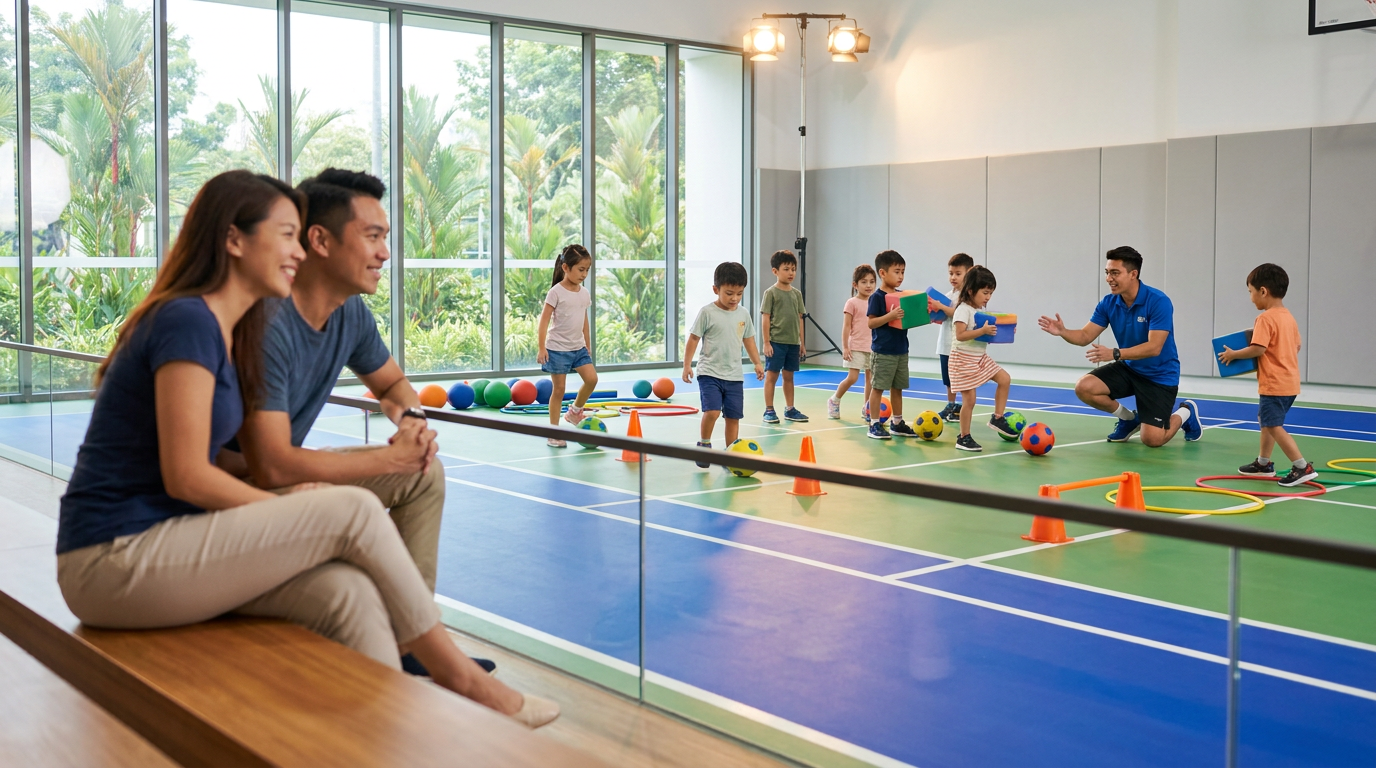
As children grow and develop more refined motor skills, structured skill progression becomes increasingly important. The Vivo Kicks Academy, designed for children aged 6 to 12, moves into a more skill-differentiated model. Children are grouped according to their ability level, ensuring that every player receives coaching that is genuinely calibrated to where they are — not averaged out for a mixed group. A strong sports session is organised on purpose: coaches should not place children together simply because they are the same age, but should also consider skill level, physical maturity, attention span, and the pace each athlete can handle.
This approach reflects Vivo Kinetics' broader philosophy: that intellectual, social, emotional, and physical development are all intertwined, and that sport is one of the most powerful tools for building them all — when structured correctly.
Tips for Parents: How to Assess Your Child's Readiness
Before enrolling your child in any sports programme, or when evaluating their current placement, consider these practical questions:
What is their experience level? Have they played this sport before, or is this their first exposure? Be honest — a child who has kicked a ball in the garden a few times is not the same as one who has had two years of coaching.
How do they respond to challenges? Some children thrive with a steep learning curve; others need a gentler entry point to build confidence before they can take on complexity.
What are their social comfort levels? A child who is shy or easily overwhelmed may need a smaller, more supportive beginner group regardless of their physical skill.
What do they enjoy most about sport? If the answer is making friends and having fun, a beginner or intermediate group with an emphasis on team play may be ideal. If they're intensely driven and love competition, a more advanced placement may motivate them further.
How does their coach describe their progress? Regular feedback from coaches is invaluable. If a coach is not offering updates on where your child sits developmentally, it's worth asking directly.
Praising hard work, improvement, and teamwork rather than wins and losses is essential — children who feel supported regardless of performance are more likely to continue in sport long-term. The right programme will make this easy, because the grouping structure itself removes the need to compare against more advanced peers and allows every child to measure themselves against their own growth.
The Right Group Changes Everything
Proper skill-level grouping is not about sorting children into boxes or labelling them. It's about giving every child the environment where they can genuinely thrive — where they're challenged enough to grow, supported enough to feel safe, and surrounded by peers who are on the same developmental journey.
The research is clear, the developmental science is compelling, and the real-world impact is something parents and coaches see every session: children who are well-placed show up with more energy, build skills faster, and develop a love of sport that stays with them for life. Those who are misplaced — in either direction — tend to disengage, lose confidence, or simply stop coming.
Whether your child is picking up a ball for the first time or ready to sharpen their technique and compete, finding a programme that genuinely invests in thoughtful placement is one of the most valuable decisions you can make for their development.
Ready to Find the Right Fit for Your Child?
At Vivo Kinetics, every programme — from our play-based Vivo Kids sessions for toddlers to our structured Vivo Kicks Academy for school-age footballers — is built on the principle that the right environment makes all the difference. Our expert coaches assess each child individually and ensure they're placed where they'll be both challenged and supported.
Explore our programmes and find your child's perfect fit today →

Comments