


Sports Class Packages for Kids: How to Find the Best Deals in Singapore
Table Of Contents
Why Choosing the Right Package Matters
Understanding the Types of Sports Class Packages
What Does a Sports Class Package Really Cost in Singapore?
Watch Out for Hidden Costs
How to Evaluate Value, Not Just Price
Smart Tips for Finding the Best Deals
Multi-Sport vs. Single-Sport Packages: Which Is Better for Young Children?
How Vivo Kinetics Makes Value Easy to Find
Sports Class Packages for Kids: How to Find the Best Deals in Singapore
Every parent in Singapore has been there — scrolling through options at midnight, trying to figure out whether a 10-session sports package is genuinely good value, or whether a cheaper-looking class will end up costing more once you factor in registration fees, uniforms, and makeup lesson policies. With so many programs to choose from, finding the best deal on a children's sports class package takes more than comparing sticker prices.
The good news is that Singapore's children's sports scene is rich, varied, and genuinely competitive — meaning great value is absolutely out there, if you know what to look for. This guide walks you through everything you need: how packages are typically structured, what the going rates are, the hidden costs that catch parents off guard, and the key questions that separate a genuinely good deal from one that simply looks good on paper.
Why Choosing the Right Package Matters
Enrolling your child in a sports class is one of the best investments you can make in their early years — but the word "investment" deserves to be taken seriously. Beyond physical fitness, structured sports programs help children build confidence, coordination, social skills, and emotional resilience. The package structure you choose shapes how much of that value your child actually receives, and how sustainably your family can afford to keep them enrolled.
A program your child loves and attends consistently will always outperform a more prestigious or expensive one they dread. Research on youth sports enjoyment consistently shows that a child's enthusiasm and regular attendance matter far more than the brand name or price point of the program. Getting the package right — in terms of session frequency, flexibility, and cost — is what allows that consistency to happen.
Understanding the Types of Sports Class Packages
Before comparing prices, it helps to understand the main package formats offered by sports providers in Singapore, since they differ in how they're structured and what they include.
Term-Based Packages are the most common format. These align with school terms and typically cover 8 to 12 weekly sessions bundled together. They offer predictable scheduling and are often the most cost-efficient option per session. Many providers also tie progress and curriculum progression to term blocks, so children build on skills systematically.
Block or Session Packages (such as 4-session, 8-session, or 20-session bundles) give families more flexibility. These are popular with parents who want to try a program before fully committing, or whose family schedules are variable. Per-session costs are usually slightly higher than term packages, but the reduced upfront outlay lowers the risk.
Drop-In or Casual Classes offer maximum flexibility but come at the highest per-session price. They suit families testing a new sport or making up missed classes, though they're rarely the best deal for consistent attendance.
Holiday Camps are a distinct category — intensive multi-day programs held during school breaks. They pack a lot of learning and fun into a short window and often represent excellent value per hour of supervised activity. Many providers bundle sports, games, and social experiences into a single camp fee.
Understanding which format fits your family's lifestyle is the first step toward finding a deal that actually works for you, not just one that looks attractive on a website.
What Does a Sports Class Package Really Cost in Singapore?
Pricing in Singapore's children's sports market spans a genuinely wide range, and understanding the landscape helps you benchmark any quote you receive.
For term-based programs, prices typically range from around $250 to $600 per term, depending on program type, instructor qualifications, class duration, and facilities. Multi-sport programs often sit in the $300–$450 range for weekly sessions across a term, while single-sport programs vary based on equipment requirements and coaching specialisation. Soccer programs, for example, typically range from $280 to $500 per term for once-weekly sessions, and swimming can run from $200 to $500 depending on pool facilities and class sizes.
At the more accessible end of the spectrum, public programmes through ActiveSG offer structured sports coaching at approximately $160–$220 for a 10-week term, with every Singaporean member receiving $100 in ActiveSG credits that can offset fees. Private academies and premium providers typically charge more — often $400–$700 per term — reflecting smaller class sizes, more experienced coaches, and richer curricula.
For block or casual options, drop-in and casual class rates generally run around $30–$60 per session, while shorter trial sessions or introductory passes are often priced at $15–$20 to lower the barrier to entry.
When you see a package price, always translate it into a cost per session figure. A $450 term that includes 12 sessions works out to $37.50 per session — which may compare very favourably to a $300 package offering only 6 sessions at $50 each.
Watch Out for Hidden Costs
The registration fee or term price is rarely the full picture, and many parents discover this only after signing up. Being aware of common additional costs before you commit can save your family significant money over the course of a year.
Registration fees: Many providers charge a one-time or annual registration fee of $20–$60, which is not always disclosed upfront in advertised package prices.
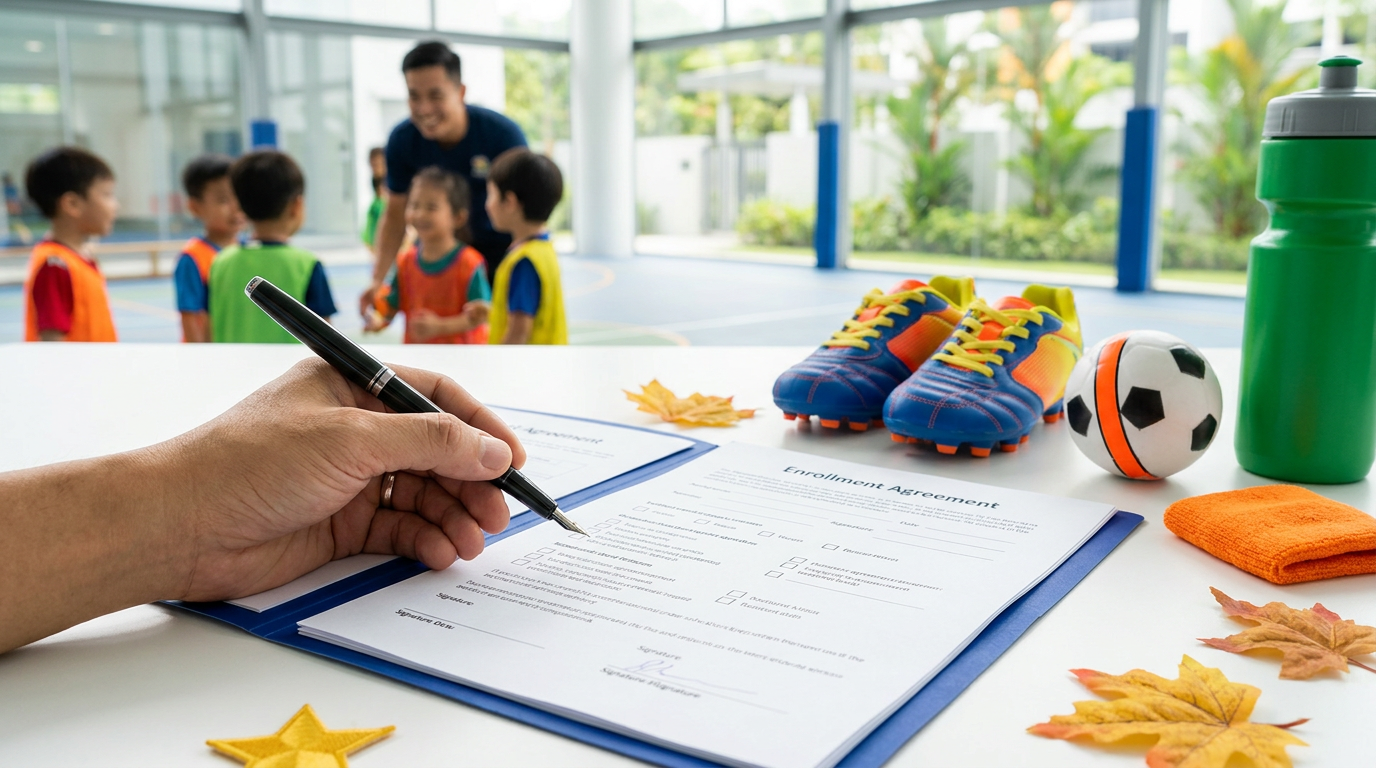
Uniform or kit requirements: Some academies require branded training tops, bibs, or sports shoes that must be purchased from the provider. For football programs, boots alone can cost $30–$80 for children, and they outgrow them quickly.
Tournament or competition entry fees: If your child progresses into a development or competitive stream, tournament fees and insurance charges can add up significantly.
Make-up lesson policies: Check carefully whether missed classes can be made up, and whether that flexibility is included or costs extra. Some providers have strict expiry windows on make-up credits.
Smaller recurring charges: Think uniform washing bags, photo packages, app subscriptions for progress tracking, and end-of-term events. Each is small individually, but collectively they add up.
A straightforward way to protect yourself: before enrolling, ask the provider for a simple breakdown of the all-in cost for one full year, not just the headline package price. Reputable programs will answer this clearly and completely.
How to Evaluate Value, Not Just Price
Price and value are not the same thing, and in children's sports programs, the gap between them can be significant. A program that costs more per session but delivers genuinely better coaching, smaller class sizes, and higher engagement is better value than a cheaper one your child attends half-heartedly.
Here are the key factors to weigh when assessing whether a package is truly worth it:
Coach qualifications and approach. Look for programs led by coaches with formal qualifications in physical education, child development, or specific sports coaching. Beyond credentials, observe how coaches actually interact with children — whether they encourage, engage, and adapt to individual needs. The best coaches make every child feel seen, not just the most athletic ones.
Age-appropriate curriculum. A quality program doesn't treat a 3-year-old like a small 8-year-old. Age-appropriate design means activities that match the developmental stage of your child, building motor skills, attention span, and social confidence in the right sequence. Children who develop strong fundamental movement skills between ages 2 and 7 carry better coordination and body awareness throughout their lives.
Class size and child-to-coach ratios. Smaller groups mean more individual attention, better safety supervision, and more learning. When evaluating a package, ask what the typical class size is — a session of 8 children with one coach is a very different experience from one of 20.
Enjoyment. This is not a soft extra. Research on youth sports consistently shows that a child who enjoys practice will keep improving, while a child who dreads it will not, regardless of program cost or prestige. Watch a trial session and notice whether children are smiling, engaged, and asking questions — or waiting in lines.
Flexibility and makeup policies. Life with children is unpredictable. A package that offers reasonable makeup class options, a sensible absence policy, and the ability to freeze or defer enrollment in exceptional circumstances is worth paying a little more for.
Smart Tips for Finding the Best Deals
Finding excellent value on a sports class package doesn't mean chasing the cheapest option — it means making smart choices that maximise what your child gets out of every session. Here are practical strategies Singapore parents use.
Start with a trial class. Most reputable providers offer a trial session at a reduced rate before you commit to a full package. This is the single most valuable step you can take. You'll see the coaching style, the class environment, and your child's reaction firsthand — information no website can give you.
Compare cost per session, not total package price. A larger package almost always costs less per session than a smaller one. If you're confident a program is the right fit, buying a longer block typically saves money. A 20-session package at $550 works out to $27.50 per session, while a 4-session package at $150 is $37.50 per session — a meaningful difference over time.
Ask about sibling discounts and referral offers. Many providers extend meaningful discounts when siblings enroll together, or when existing families refer new students. These are often not advertised prominently, so it's worth asking directly.
Use ActiveSG credits strategically. Every Singaporean citizen who joins ActiveSG receives $100 in credits, and children enrolled as ActiveSG members receive their own $100 credit. For families using public sports programs, this can effectively cover a substantial portion of a first term's fees.
Consider holiday camps as a value-packed option. Holiday camps often represent exceptional value per hour of quality, supervised, structured activity. They also serve as a low-risk way to discover whether your child enjoys a particular sport or program provider before committing to a full term.
Prioritise consistency over prestige. A child who happily attends a well-run, mid-range program every single week will develop more than a child dragged reluctantly to an elite academy across town. Proximity, timing, and your child's enthusiasm are all part of the value equation.
Multi-Sport vs. Single-Sport Packages: Which Is Better for Young Children?
One of the most common questions parents face when comparing sports class packages is whether to choose a multi-sport program or commit to a single discipline. The answer depends significantly on your child's age.
For children under 7 or 8, multi-sport programs generally offer better developmental value. Rather than specialising too early, young children benefit from broad exposure to different movement patterns — running, jumping, throwing, kicking, catching — that build a physical foundation for every sport they might pursue later. Multi-sport programs keep this age group motivated through variety and reduce the risk of early burnout or overuse injuries that can come from repeating the same movements too young.
By primary school age, children's interests become clearer and their attention spans grow longer, making sport-specific coaching increasingly valuable. A child who is passionate about football, for example, will thrive with dedicated coaching that builds technical skills, tactical understanding, and position-specific confidence. That said, even keen single-sport participants benefit from maintaining some breadth — playing multiple sports reduces overuse injuries, develops complementary physical skills, and sustains the pure enjoyment that keeps children active long term.
From a package value perspective, multi-sport programs also offer a practical advantage: they give you more information before you commit to a specialised (and often more expensive) sport-specific pathway. A term of multi-sport exploration is a genuinely low-risk way to let your child discover what they love.
How Vivo Kinetics Makes Value Easy to Find
For families looking for programs that genuinely deliver on quality, curriculum, and value, Vivo Kinetics offers two purpose-built options for different ages and stages.
Vivo Kids is Vivo Kinetics' award-winning multi-sport programme designed for children aged 20 months to 6 years. Through a play-based curriculum developed by expert coaches, Vivo Kids introduces young children to fundamental movement skills across multiple sports — nurturing not just physical development, but also intellectual, social, and emotional growth. For parents of toddlers and preschoolers weighing multi-sport package options, Vivo Kids represents a structured, age-appropriate choice backed by curriculum expertise and a nurturing environment.
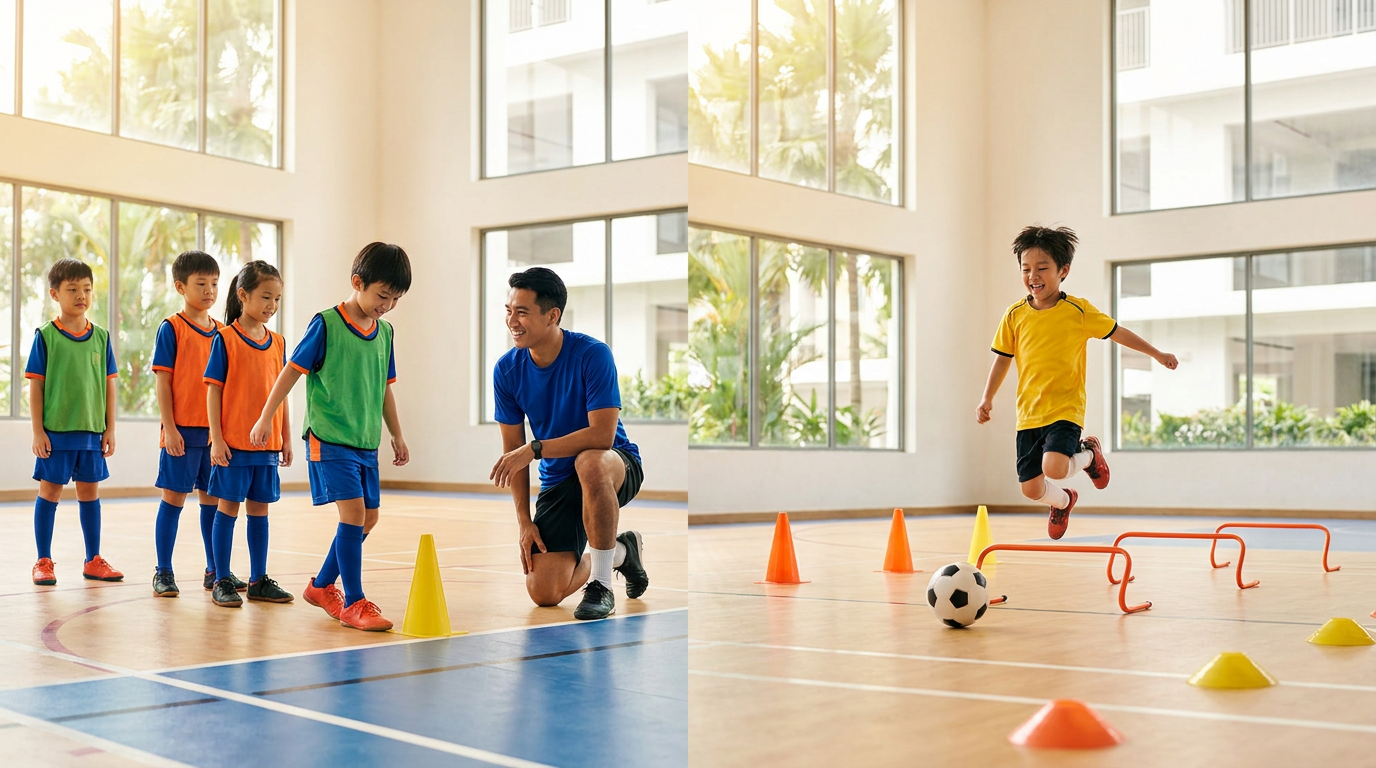
Vivo Kicks is Vivo Kinetics' soccer academy for children aged 6 to 12. As children move into primary school years and their sport-specific interests sharpen, Vivo Kicks provides the focused football development that growing athletes need — with an expert coaching team, age-appropriate progressions, and the same commitment to positive, confidence-building training that defines the Vivo Kinetics philosophy.
Both programs reflect the qualities that genuinely good value looks like in practice: qualified coaches, thoughtfully designed curricula, age-appropriate class structures, and an environment where children look forward to every session. Vivo Kinetics has been recognised as "Best Children's Multi-sport Programme 2024" and as a "Recognized Leader in Children's Health and Fitness" in Southeast Asia — acknowledgements that reflect what parents experience week after week on the pitch and in the studio.
When you're comparing sports class packages, the most valuable question you can ask is: will my child leave each session smiling, learning, and wanting to come back? That's the benchmark that matters most — and it's the one Vivo Kinetics is built around.
Finding the Best Deal Starts with Knowing What to Look For
Sports class packages for kids in Singapore vary enormously in price, structure, and value — and the best deal for your family isn't always the cheapest one, or the most expensive. It's the one that matches your child's developmental stage and personality, fits your family's schedule and budget, and delivers the kind of consistent, joyful learning that keeps children active for life.
Start with a trial class, ask the right questions about hidden costs and makeup policies, translate every package into a cost-per-session figure, and prioritise your child's enjoyment above all else. When those factors align, you'll know you've found real value — not just an attractive price.
Explore Vivo Kinetics Programs
Ready to find the right sports class package for your child? Whether you're looking for a nurturing multi-sport start for your toddler or focused soccer development for your primary schooler, Vivo Kinetics has an age-appropriate program designed to help every child thrive.
Discover Vivo Kinetics Programs →

Comments