


Term-Based vs Drop-In Sports Classes for Kids: Which Is Right for Your Child?
Table Of Contents
What Are Term-Based Sports Classes?
What Are Drop-In Sports Classes?
Key Differences: Term-Based vs Drop-In Classes
Benefits of Term-Based Classes for Children
When Drop-In Classes Make Sense
How Age and Developmental Stage Affect the Choice
Signs Your Child Is Ready to Commit to a Term Programme
How to Use Drop-In Classes as a Stepping Stone
Finding the Right Fit at Vivo Kinetics
Signing your child up for a sports class sounds straightforward, until you realise there are two very different ways to do it. Some programmes ask you to enrol for an entire school term and commit to weekly sessions from start to finish. Others let you book a single class whenever it suits your schedule, with no long-term strings attached. Both options exist for good reasons, and both can play a meaningful role in your child's development depending on where they are in their sports journey.
For parents in Singapore navigating a sea of enrichment choices, understanding the difference between term-based and drop-in sports classes can save a lot of frustration and help you make a decision that actually fits your child's personality, age, and goals. This guide breaks down what each format offers, when each one works best, and how to use them together to give your child the foundation they need to grow as a confident, active young person.
What Are Term-Based Sports Classes?
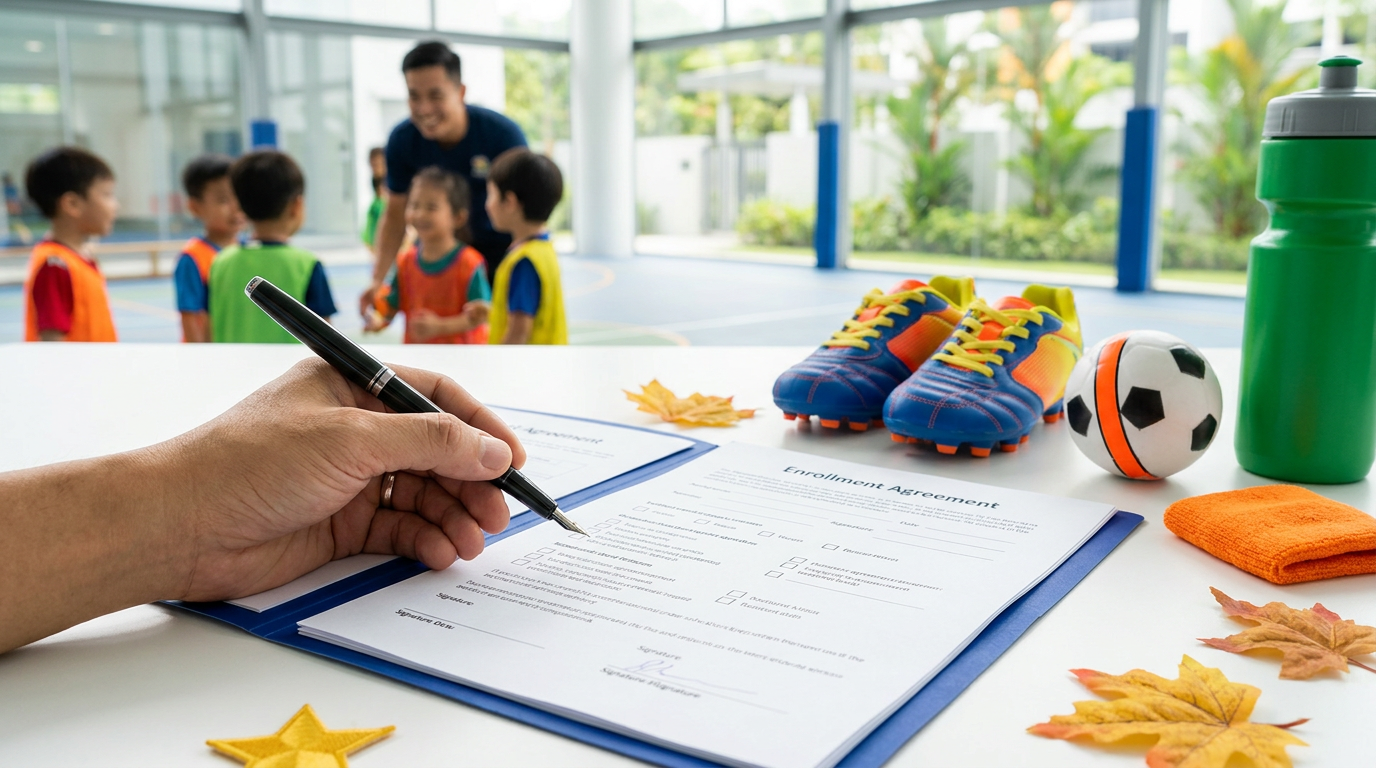
Term-based sports classes follow a structured schedule that runs across a fixed period, typically aligned with school terms or defined blocks of eight to twelve weeks. When you enrol, you commit to attending a set number of sessions at the same time each week, with the same coach and the same group of children. Term-based programmes generally require upfront payment for ten to twelve weeks, with the expectation that your child attends consistently across the full enrolment period. This model is built on the idea that real development happens through repetition, familiarity, and progressive challenge — not through one-off encounters with a sport.
In practice, term-based classes look very different from casual sporting activity. Each session builds on the one before it, with coaches deliberately sequencing skills so that children are ready for the next challenge only after they have mastered the previous one. A well-designed programme has a clear progression — skills that build on each other week by week, age-appropriate challenges that keep children engaged without overwhelming them, and regular opportunities to experience success. Over the course of a term, what starts as an unfamiliar movement pattern becomes a confident, automatic skill.
What Are Drop-In Sports Classes?
Drop-in classes, by contrast, work on a session-by-session basis. Parents book and pay for individual classes as they become available, with no obligation to attend the following week. Some drop-in formats are genuinely open and unbooked, while others require advance registration to secure a spot. Drop-in sessions can still develop physical literacy, agility, and coordination while boosting focus, adaptability, and problem-solving skills, allowing kids to try new things and take small risks without pressure.
Drop-in formats are common for trial sessions, holiday programmes, and casual multi-sport play days. They suit families who have unpredictable schedules, children who are still sampling different sports, or parents who want to test out a programme before making a financial and time commitment. Never commit a full term on a brochure alone; one trial class tells you more than any website. Used well, a drop-in experience can be a genuinely valuable first step on a child's sports journey.
Key Differences: Term-Based vs Drop-In Classes
The differences between these two formats go far beyond pricing and scheduling. They reflect fundamentally different relationships between the child, the coach, and the sport itself.
Consistency and progression are the defining advantages of term-based classes. Structured sports training offers something drop-in classes cannot: consistency, progression, and a sense of team, with regular coaching and a clear development path helping kids build real skills and real confidence. When a child attends the same class every week, the coach begins to understand how that child learns, what motivates them, and where they need extra encouragement. Coaches learn each child's strengths, personality, and learning style — and when kids trust their coach, they are more open to trying new skills and taking direction.
Flexibility and low commitment are where drop-in classes lead. Families dealing with demanding school calendars, sibling activities, or simply a child who hasn't yet found their sporting passion will appreciate the ability to come and go without penalty. The trade-off, however, is that progress tends to be inconsistent. Without the week-on-week repetition that underpins skill-building, a child attending sporadically may enjoy themselves but rarely develops enough mastery to feel genuinely capable.
Peer relationships also develop very differently across the two formats. In term-based classes, children build friendships over weeks and months with the same group of peers. Organised sports provide children with the opportunity to interact socially with their peers in a positive and structured environment, where through team sports, children learn the importance of cooperation, communication, and mutual respect — helping build friendships and improve empathy. Drop-in sessions, by nature, attract a rotating cast of participants, making it harder for quieter or more reserved children to feel settled and connected.
Benefits of Term-Based Classes for Children
For children who have found a sport they enjoy, or who are ready to build real competence in movement and teamwork, term-based classes offer a depth of benefit that casual attendance simply cannot replicate.
Skill mastery through progressive learning. Structured sports training goes beyond casual play, ensuring children develop foundational movement skills, confidence, and a positive relationship with sport. When coaches design a ten-week curriculum, they can introduce concepts in the right order, revisit challenging skills multiple times, and celebrate meaningful progress at the end of the term. This systematic approach accelerates development in ways that random or sporadic participation cannot achieve.
Discipline and resilience. One of the less obvious but deeply valuable benefits of term enrolment is that it teaches children to show up — even on days when they don't particularly want to. Structured sports programmes bring a set of developmental benefits that are harder to build through play alone, as organised sports teach kids to show up consistently, even on days they feel unmotivated or tired, building discipline and the ability to persist through challenges — a skill that carries over into school, relationships, and future work.
Emotional growth and confidence. The emotional benefits of structured sports programmes are profound, with children experiencing both success and failure that teaches important lessons about resilience, perseverance, and emotional regulation — where overcoming challenges builds self-esteem and confidence as children learn to trust their abilities. These are not incidental gains; they are the kind of character traits that shape how a child approaches challenges throughout their entire life.
Academic benefits. The connection between consistent sports participation and academic performance is well established. Physically active children tend to have better grades, better school attendance, better cognitive performance, and better classroom behaviours, as there is a positive relationship between sports and academic performance. The focus, goal-setting, and self-regulation that children practise on the sports court translate directly into the classroom.
When Drop-In Classes Make Sense
Drop-in classes are not simply a lesser version of term-based programmes. They serve a genuinely different and legitimate purpose — and for certain children in certain seasons of life, they are exactly the right choice.
Dropping in is most valuable when a child is exploring what they enjoy. Sampling multiple sports and activities without forcing early commitment is healthy, especially for younger children. Signing a reluctant or undecided child into a full term of something they end up disliking is both expensive and discouraging. A well-run drop-in session lets your child experience the energy of a class, interact with a coach, and decide for themselves whether they want more.
Drop-in formats also make sense during periods of family unpredictability — a new sibling, an upcoming house move, school examination periods, or simply a stretch of weekends where commitments shift. Rather than missing paid sessions or putting family schedules under strain, a drop-in allows children to stay active without added pressure. Practical logistics significantly impact long-term sustainability, as the most perfect programme becomes problematic if getting there creates family stress — so considering location, schedule fit, and whether the commitment aligns with your family's other activities matters greatly.
Finally, holiday camps and special drop-in programmes serve a wonderful role during school breaks. They keep children active, introduce them to new sports and new friends, and provide structured fun without the weekly routine of a term class.
How Age and Developmental Stage Affect the Choice
The right format for your child depends enormously on where they are developmentally, not just how old they are. Younger children, in particular, need a different kind of sports experience than older primary school-aged kids.
For toddlers and preschoolers (ages 2 to 5), play-based movement is the priority. Light structure starts to become useful, and movement-based classes are appropriate because they are short, low-pressure, and playful in nature, though free play should still make up the majority of a preschooler's active time — and any organised activity at this age should be an extension of play, not a training programme. At this stage, multi-sport exploration is especially valuable. For toddlers and preschoolers, multi-sport is often the smartest starting point, as children rotate through the fundamentals of several sports in a fun, non-competitive setting.
For early primary school children (ages 6 to 9), the balance shifts. Children at this age are cognitively and physically ready for more consistent structure, and they benefit from building relationships with coaches and peers over time. This is when a healthy mix really matters, as children this age are developmentally ready to engage with more structured sports while still needing significant unstructured time. A term-based programme in a sport they enjoy — whether that's a multi-sport class or a specific discipline like soccer — offers the right blend of challenge and routine.
For older primary school children (ages 10 to 12), term-based commitment in a chosen sport begins to pay real dividends. Older primary school children can handle more structured training, longer sessions, and a greater focus on performance improvement — they can set personal goals, understand tactical concepts, and thrive on measurable progress, and if they have found a sport they love, this is the time to invest more deeply while keeping the atmosphere enjoyable and growth-oriented.
Signs Your Child Is Ready to Commit to a Term Programme
Knowing when to transition from casual exploration to term-based commitment is one of the more nuanced decisions parents face. Here are some clear signals that the time is right:
They ask about a sport unprompted. When a child spontaneously brings up football, asks to practise at home, or talks about a coach or classmate from a trial session, that's genuine interest worth investing in.
They engage positively during sessions. A child who is focused, tries hard, and leaves a class energised rather than relieved it's over is ready for more regular attendance.
They show frustration with their own limits. When children start wanting to get better — not just to have fun — they are ready for the progressive structure a term class provides.
They are comfortable separating from you. For younger children, being able to participate independently is an important developmental milestone that makes structured classes genuinely productive.
Choosing a youth sport organisation isn't just about filling a Saturday morning — you are choosing the people, space, and teaching style that will shape how your child experiences sport. When these signs appear, the investment in a term programme is very likely to pay off.
How to Use Drop-In Classes as a Stepping Stone
The smartest approach for many families is not choosing between term-based and drop-in classes, but using them in sequence. A drop-in trial session gives your child a low-pressure first encounter with a sport, a coach, and a group of peers. If the experience is positive, it creates natural momentum toward term enrolment.
Try a couple of different sports before committing to a full term, particularly for under-sixes who benefit from sampling widely. This is a genuinely wise strategy. By using drop-in sessions to discover what resonates — and what doesn't — you avoid the common trap of paying for a full term in a sport your child ends up dreading. Once your child has found something they look forward to, committing to a term programme allows that enthusiasm to become real, lasting progress.
Children who develop a love of sport early are more likely to remain active as they grow, with weekly sessions turning those first attempts into regular practice, and regular practice into lasting habits. The goal is never to force commitment too early, but to build toward it naturally as your child's confidence and interest grow.
Finding the Right Fit at Vivo Kinetics
For families in Singapore looking for high-quality programmes that honour both exploration and progression, Vivo Kinetics offers structured options at every stage of a child's development.
The Vivo Kids multi-sports programme is designed for children aged 2 to 6, delivering a play-based, age-appropriate curriculum that builds fundamental movement skills, character, and a genuine love of being active. It reflects the same developmental principles outlined in this article — using structured sessions to build consistent habits while keeping the experience joyful and low-pressure. For children in this age range who are ready to move from casual exploration to term-based learning, Vivo Kids offers the ideal bridge.
For children aged 6 to 12 who are passionate about football, the Vivo Kicks Academy provides progressive, skill-based training in a nurturing, expert-led environment. The Vivo Kicks curriculum is age-appropriate and skill-progressive, guided by expert coaches who understand both the technical demands of football and the psychological needs of developing players — actively cultivating teamwork, resilience, and sportsmanship, qualities that serve children well on and off the pitch for the rest of their lives.
Both programmes operate within a philosophy that places child development — physical, intellectual, social, and emotional — at the centre of everything. Whether your child is taking their first step onto the field or deepening a commitment to a sport they love, Vivo Kinetics creates a safe, nurturing environment where progress feels both achievable and exciting.
The Bottom Line
There is no single right answer when it comes to term-based versus drop-in sports classes. Both formats serve real and legitimate purposes depending on your child's age, temperament, and where they are in their sporting journey. Drop-in classes are a brilliant way to explore, build curiosity, and test the waters before committing. Term-based programmes are where consistent growth, genuine skill-building, and lasting confidence are forged.
For most children, the best path moves through both — using casual exploration early on and transitioning into structured term enrolments once a genuine interest has taken root. The key is to stay observant, follow your child's lead, and choose programmes that prioritise enjoyment and development in equal measure. When those two things are in place, sports becomes something your child carries with them for life.
Ready to find the right fit for your child?
Whether you're looking for a playful first step or a structured programme to take their skills to the next level, Vivo Kinetics has an award-winning option for every stage. Visit www.vivokinetics.com to explore programmes, book a trial class, and discover how the right sports experience can shape your child's confidence, character, and love of movement.


Comments