


Active Learning: How Movement Enhances Education in Young Children
Table Of Contents
What Is Active Learning?
The Brain-Body Connection: Why Movement Matters
How Physical Activity Boosts Academic Performance
Key Benefits of Movement-Based Learning for Young Children
Active Learning in Practice: What It Looks Like
The Role of Sports and Structured Play in Education
How Vivo Kinetics Brings Active Learning to Life
Tips for Parents: Supporting Active Learning at Home
Conclusion
Active Learning: How Movement Enhances Education in Young Children
Imagine a classroom where children are not sitting still but jumping to count numbers, running to sort colours, or kicking a ball while learning the rules of teamwork. This is not a dream — it is active learning in action, and a growing body of research shows it is one of the most powerful ways children absorb, retain, and apply new knowledge.
For parents of young children, understanding the link between movement and learning is more than academic curiosity. It shapes the choices you make about how your child spends their time, what programmes you enrol them in, and what kind of environment helps them truly thrive. In this article, we explore the science behind active learning, the profound ways movement enhances education, and how structured physical play can set your child up for lifelong success — in the classroom and beyond.
What Is Active Learning?
Active learning is an educational approach in which children engage with material through physical movement, hands-on exploration, and direct participation rather than passive listening or observation. Instead of sitting at a desk absorbing information, children are doing, touching, moving, and interacting. This approach draws from decades of research in developmental psychology and neuroscience, and it is particularly well-suited for young learners whose brains and bodies are still developing in tandem.
Active learning can take many forms: a toddler sorting blocks by shape, a preschooler acting out a story with their body, or a group of school-age children working together to solve a physical challenge on a sports field. What all these experiences share is that the child is not a passive recipient of information — they are an active constructor of their own understanding. This distinction is at the heart of why movement-based education works so well for children in the early years.
The Brain-Body Connection: Why Movement Matters
The relationship between physical movement and brain development is not coincidental — it is biological. When children move, their bodies increase blood flow to the brain, delivering more oxygen and nutrients that support cognitive function. Physical activity also stimulates the production of brain-derived neurotrophic factor (BDNF), sometimes called "Miracle-Gro for the brain," which promotes the growth of new neural connections and strengthens existing ones.
Research from neuroscientist John Ratey, author of Spark: The Revolutionary New Science of Exercise and the Brain, demonstrates that physical activity directly enhances the brain's capacity to learn. Studies show that children who engage in regular physical activity demonstrate stronger memory consolidation, better attention spans, improved processing speed, and greater executive function — the cognitive skills that govern planning, self-regulation, and problem-solving.
For young children especially, the brain and body develop together. Motor skills and cognitive skills are not separate tracks — they share overlapping neural pathways. When a child learns to balance, coordinate their limbs, or follow a sequence of movements, they are simultaneously strengthening the very neural networks that support reading comprehension, mathematical reasoning, and emotional regulation.
How Physical Activity Boosts Academic Performance
The evidence linking physical activity to academic achievement is substantial and continues to grow. A landmark review published in Pediatrics found that increased physical activity in school settings was associated with improved academic performance across mathematics, reading, and writing — without reducing time for academic instruction. In fact, children who moved more often performed better on standardised assessments.
Another study from the University of Illinois found that fit children showed greater hippocampal volume — a brain region critical for memory and learning — than their less active peers. This structural difference translated into measurably stronger performance on relational memory tasks. The message is clear: investing in a child's physical development is also an investment in their intellectual development.
For school-readiness specifically, active learning builds the foundational skills children need to succeed: the ability to follow multi-step instructions, take turns, regulate their emotions under pressure, and persist through challenges. These are not secondary skills — they are the prerequisites for thriving in any learning environment.
Key Benefits of Movement-Based Learning for Young Children
Movement-based learning delivers benefits that touch every dimension of a child's development — physical, cognitive, social, and emotional. Here is a closer look at what the research and practice consistently show:
Improved concentration and focus: Short movement breaks and physically engaging tasks help children re-set their attention and return to learning with greater alertness.
Stronger memory retention: Encoding information through physical action creates additional memory pathways, making concepts easier to recall.
Enhanced language development: Songs, movement games, and action-based storytelling expose children to rich vocabulary in meaningful, embodied contexts.
Better emotional regulation: Physical play provides a healthy outlet for energy and emotion, reducing anxiety and improving mood — both essential for learning readiness.
Greater social competence: Movement-based group activities teach children to collaborate, communicate, negotiate, and show empathy in real time.
Development of executive function: Activities that require children to follow rules, plan movements, and adapt strategies build the self-regulation skills that underpin academic success.
These benefits do not exist in isolation. A child who feels physically confident and emotionally regulated is far more likely to engage enthusiastically with learning — whether in a formal classroom or a play-based environment.
Active Learning in Practice: What It Looks Like
Active learning does not require elaborate equipment or unusual settings. It happens whenever movement and learning are meaningfully combined. In early childhood settings, this might look like:
A toddler hopping on numbered spots to learn counting
Children crawling through an obstacle course while identifying animal names
A group acting out the water cycle with their bodies
Partners throwing a ball back and forth while practising letter sounds
The key is intentionality. Purposeful movement — where the physical action is connected to a learning concept — produces stronger outcomes than movement for its own sake, though free play also has immense developmental value. The most effective active learning experiences are designed by educators and coaches who understand child development and can scaffold activities to match where each child is in their journey.
This is where quality programme design becomes critical. When physical activities are thoughtfully structured around age-appropriate goals, children gain far more than fitness — they gain the cognitive tools, social habits, and emotional resilience they need to flourish.
The Role of Sports and Structured Play in Education
Organised sports and structured play programmes occupy a unique and powerful space in the landscape of active learning. Unlike unstructured free play — which is valuable but unpredictable — quality sports programmes offer a consistent framework within which children can practise skills, receive coaching, experience challenge, and celebrate growth.
In multi-sport environments designed for young children, the focus is rarely on winning. It is on developing the full range of physical literacy skills: balance, coordination, agility, spatial awareness, and body control. These are the building blocks not just of athletic ability, but of confident, capable movement through the world.
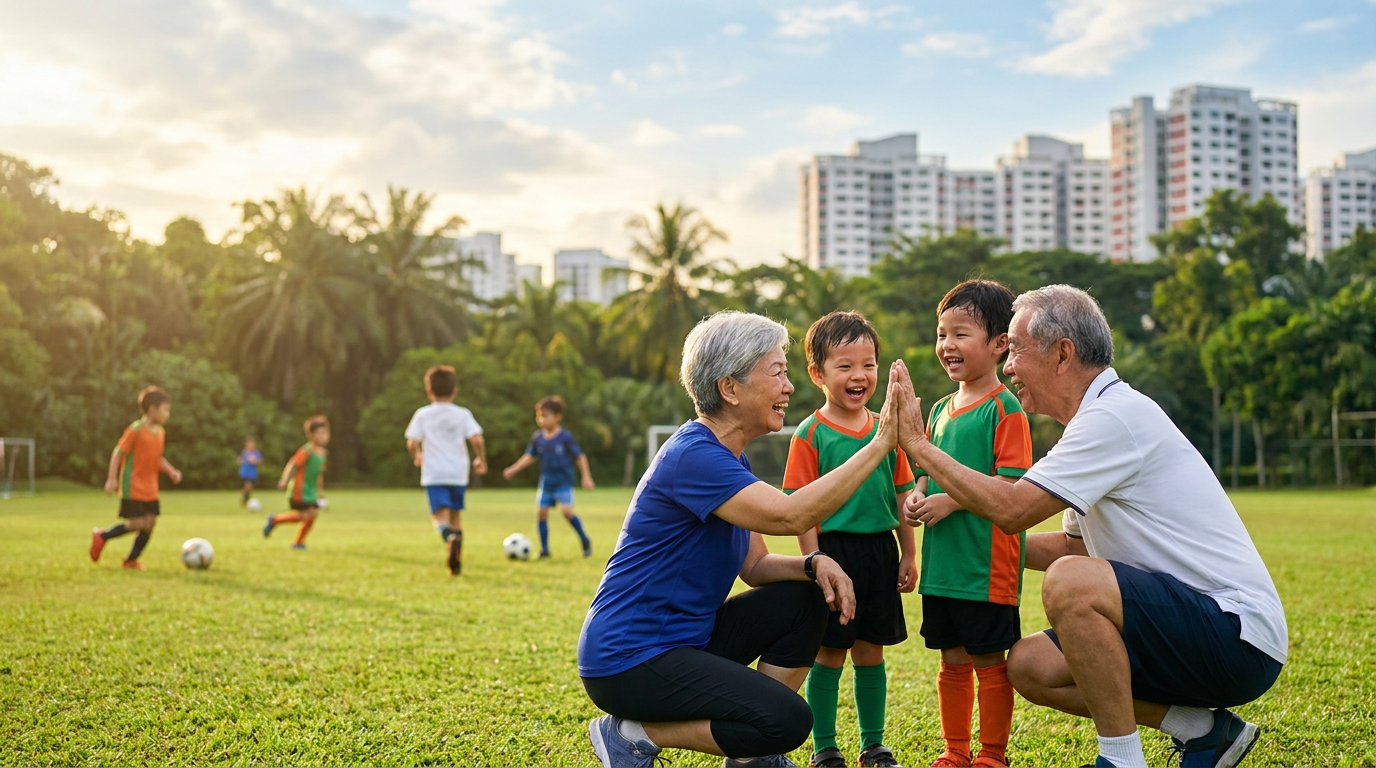
Sports also offer unparalleled opportunities for character development. When a child misses a goal and chooses to try again, they are practising resilience. When they cheer for a teammate, they are practising empathy. When they listen to a coach and adjust their technique, they are practising coachability — a quality that serves them throughout life. The soccer pitch and the multi-sport court are, in this sense, classrooms without walls.
How Vivo Kinetics Brings Active Learning to Life
At Vivo Kinetics, the connection between movement and learning is not a philosophy in theory — it is built into every programme we design. As Singapore's award-winning children's sports and fitness company, we have spent years developing age-appropriate curricula that harness the power of active learning to support children's intellectual, social, emotional, and physical growth.
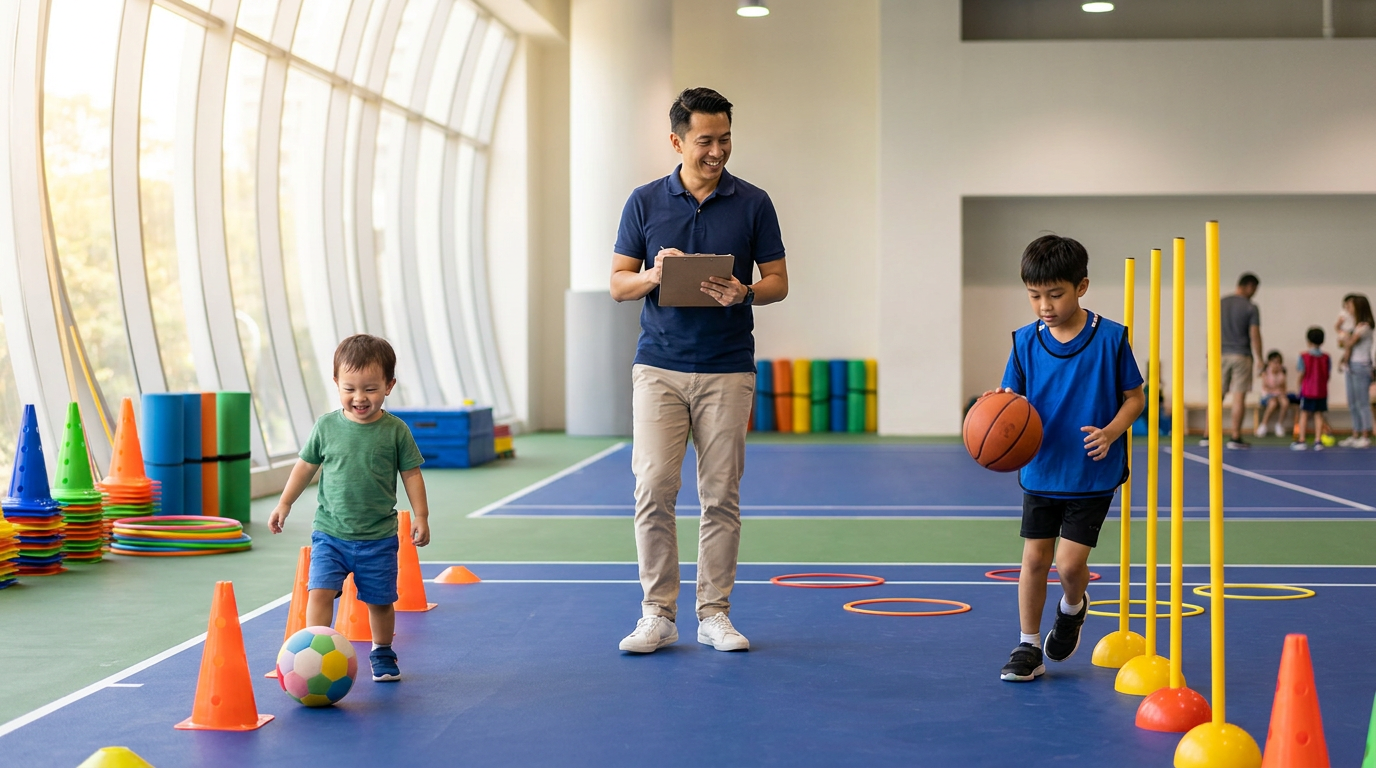
Our Vivo Kids multi-sport programme for children aged 2 to 6 is a perfect example of active learning in action. Through carefully designed movement activities spanning multiple sports and physical disciplines, young children develop fundamental motor skills and character traits — confidence, teamwork, and a love of learning — in a safe, nurturing environment. Every session is crafted to be developmentally appropriate, joyful, and purposeful, so children are growing in ways they do not even realise.
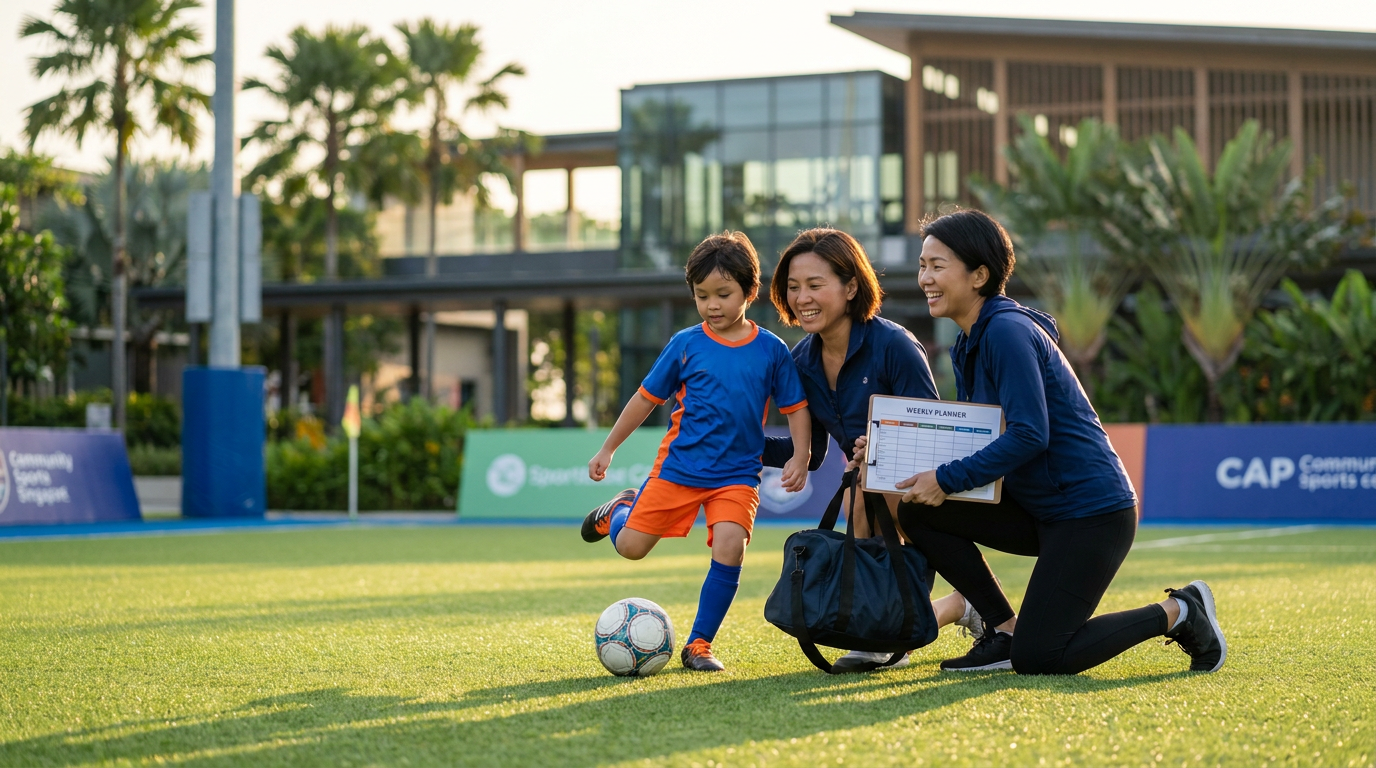
For older children aged 6 to 12, our Vivo Kicks soccer academy extends these principles into the world of the beautiful game. Beyond technique and tactics, Vivo Kicks develops the cognitive and social skills that come from being part of a team: strategic thinking, communication, persistence, and the ability to perform under pressure. These are lessons that translate directly into academic confidence and life readiness.
We are proud to have been recognised as "Best Children's Multi-sport Programme 2024" and acknowledged as "Recognised Leaders in Children's Health and Fitness" in Southeast Asia. These accolades reflect our commitment to doing more than teaching sport — we are shaping the whole child, one active session at a time.
Tips for Parents: Supporting Active Learning at Home
You do not need to be a trained educator or coach to bring active learning into your child's daily life. Small, intentional shifts in how your family plays and moves together can make a meaningful difference. Here are some practical ideas to get started:
Make counting physical: Ask your child to jump, clap, or hop as they count, linking number concepts to body movement.
Play movement-based word games: Call out a word and ask your child to act it out — great for vocabulary and creativity.
Use obstacle courses: Even a simple living room course with pillows and cushions builds gross motor skills, spatial awareness, and problem-solving.
Cook and build together: Hands-on activities like measuring ingredients or assembling a toy engage fine motor skills alongside early maths and science concepts.
Prioritise outdoor free play: Nature-based play develops risk assessment, creativity, and physical confidence in ways that structured environments cannot fully replicate.
Limit passive screen time: Replace sedentary screen time with active alternatives that challenge the whole child — body and mind together.
Choose quality programmes wisely: Look for sports and activity programmes led by trained coaches who understand child development, not just sport performance.
The goal is not to turn every moment into a lesson. It is to cultivate an environment where movement feels natural, joyful, and connected to discovery — because that is exactly how children are wired to learn.
Conclusion
The science is compelling and the practice is clear: when children move, they learn better. Movement is not a distraction from education — it is education, especially in the early years when brain and body develop as one. Active learning builds stronger neural connections, deepens memory, sharpens focus, and cultivates the social and emotional skills that underpin every other form of success.
As parents, one of the most powerful investments you can make in your child's future is choosing environments that honour this truth — environments where play is purposeful, movement is celebrated, and every jump, kick, and sprint is also a step forward in learning. Your child's natural energy and curiosity are not obstacles to education. They are the engines of it.
Ready to give your child the gift of active learning? Vivo Kinetics offers expertly designed, play-based programmes that nurture every dimension of your child's growth — from their first tumble to their first team goal. Explore our programmes and book a trial session today.
Comments