


Single Parent Sports Management: How to Make It Work for Your Family
Table Of Contents
Why Sports Matter Even More for Single-Parent Families
Start With the Right Program: Simplicity Is Your Superpower
Master the Calendar Before It Masters You
Build Your Support Village
Manage the Financial Side Without Burning Out
Protect Your Child's Energy (and Your Own)
Use Sports as Bonding Time, Not Just Logistics
Know When to Say No—and When to Lean In
A Note on Choosing the Right Program in Singapore
Single Parent Sports Management: How to Make It Work for Your Family
Running a household solo is already one of life's most demanding jobs. Add a child who loves sport—or who you want to love sport—and the logistics can feel like a second full-time role. Pick-ups, fees, kit bags, schedule clashes, rainy day cancellations, and the quiet guilt of missing a session because work ran late: single parents navigating youth sports know this maze intimately.
But here's what the research, and thousands of families, confirm: keeping your child active in sports is worth every bit of the effort. The physical, emotional, and social benefits are profound—and for children in single-parent homes especially, a consistent sporting routine can provide structure, belonging, and a confidence boost that extends well beyond the field or court.
This guide is built specifically for single parents in Singapore. It covers everything from choosing the right program and managing schedules to building a support network and protecting your own wellbeing—so that sport becomes a source of joy for your family, not just another item on an already full plate.
Why Sports Matter Even More for Single-Parent Families
Before diving into tactics, it helps to remind yourself why you're doing this. The evidence for youth sports is compelling. Research consistently shows that children who participate in organised sport experience lower rates of anxiety and depression, higher self-esteem, stronger social skills, and better academic performance. For children in single-parent households, who may face additional emotional pressures during periods of family transition, these benefits can be especially meaningful.
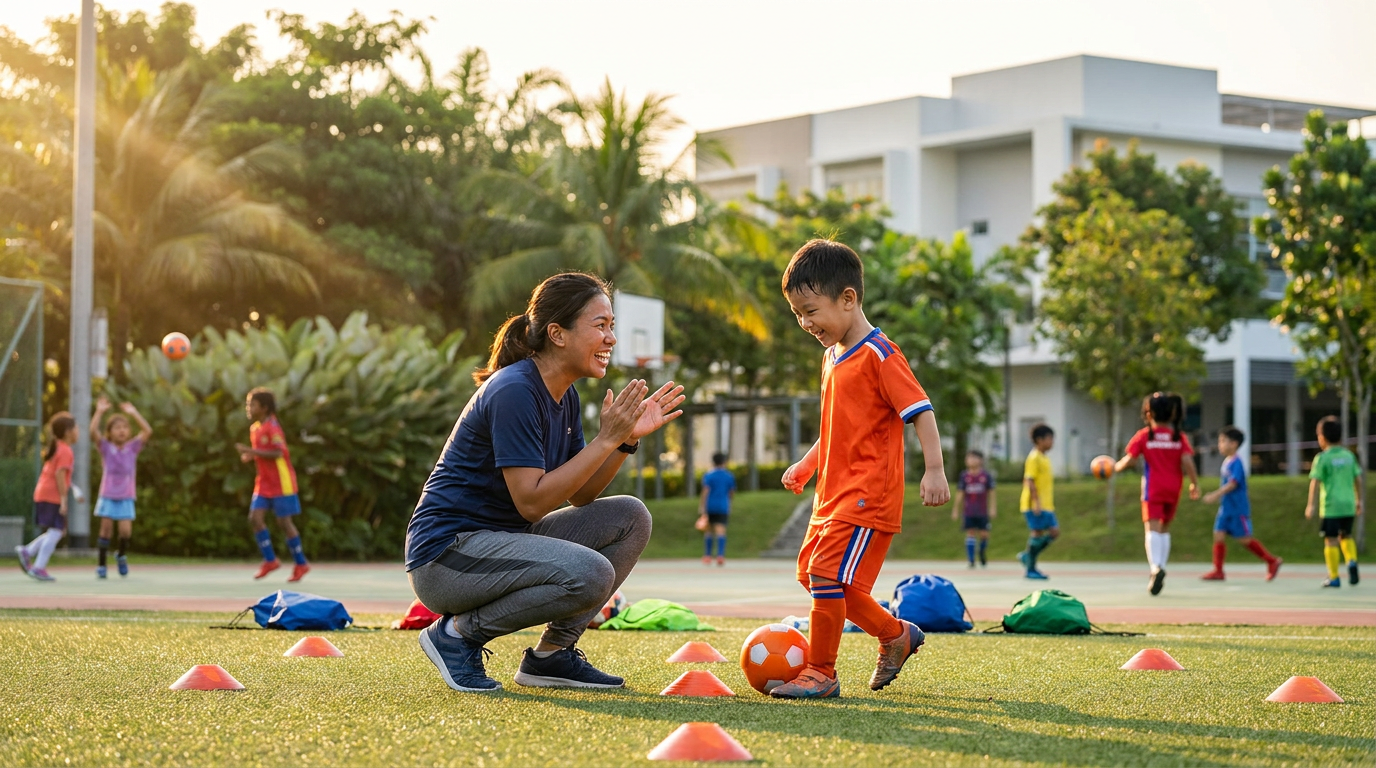
Sports give children a space where the rules are clear, effort is rewarded, and belonging is built through shared experience. A child who rushes to a Tuesday afternoon session knowing their teammates and coach will be there is a child with an anchor in their week. That consistency—separate from home stresses—can make a real difference to their sense of security and confidence.
Equally important: shared physical activity strengthens the parent-child bond. The drive to training, watching from the sideline, celebrating a small win together—these moments accumulate into a relationship built on positive, shared experience. So even on the days when logistics feel overwhelming, the investment genuinely pays off.
Start With the Right Program: Simplicity Is Your Superpower
For single parents, the right sports program isn't necessarily the most prestigious or intensive one—it's the one that fits your actual life. When assessing options, prioritise three things above all else: location, schedule consistency, and coaching quality.
Location is non-negotiable. A program that requires a 45-minute commute after school or a complicated MRT transfer with a tired six-year-old will erode your energy faster than almost anything else. Look for programs close to your home, your workplace, or your child's school. Many reputable providers in Singapore operate across multiple venues, which makes it easier to find a slot that works geographically.
Schedule consistency matters just as much. Programs that run at the same time every week, term after term, are infinitely easier to plan around than those with rotating or irregular timetables. Consistency also helps children settle in faster—they know what to expect, which means fewer meltdowns at the door.
Coaching quality is what determines whether your child actually wants to go back. Look for coaches who are qualified, patient, and genuinely enthusiastic about working with young children. A coach who makes your child feel seen and capable is worth their weight in gold, especially if your child is navigating any emotional complexity at home.
For younger children (ages 2 to 6), a play-based multi-sport program offers the ideal entry point. Rather than committing to a single sport your child may or may not love at age three, a multi-sport format lets them explore movement, build fundamental skills, and discover what excites them—without the pressure of early specialisation. Vivo Kinetics' Vivo Kids multi-sports programme is designed exactly for this age group, offering an age-appropriate curriculum that develops movement skills, character, and confidence through guided play. For single parents, having a program that covers physical, social, and emotional development under one roof means fewer activities to manage and more meaningful outcomes per session.
For school-age children (6 to 12) who've caught the football bug, a structured academy environment provides the consistency and progression that keeps them engaged. The Vivo Kicks Academy offers a soccer-specific pathway for this age group, combining technical skill development with character-building in a nurturing, expert-led environment—exactly the kind of program that rewards a single parent's logistical effort with genuine developmental value.
Master the Calendar Before It Masters You
One shared calendar is the foundation of single-parent sports management. Whether you use Google Calendar, a family planning app like Cozi, or a whiteboard on the fridge, the rule is simple: everything goes in one place. Sports sessions, school commitments, work obligations, and rest time all need to be visible together, or schedule conflicts will blindside you.
Colour-coding by child (if you have more than one) rather than by sport makes it far easier to see where your attention is needed on any given day. Set automated reminders for kit prep, departure times, and session payments—the more you can offload to technology, the less mental load you carry.
A brief Sunday evening review—ten to fifteen minutes to look at the week ahead—can prevent most scheduling crises before they happen. It doesn't need to be elaborate. Just a quick scan: what's happening, what needs to be packed, what might clash? Involve your child in this review as they get older. Teaching them to look ahead and take ownership of their schedule is one of the most valuable life skills sport can support.
It's also worth scheduling backwards from your non-negotiables. Start with sleep (this is not optional), school, and work commitments. Then fit sport around those anchors, not the other way around. A sports program that consistently costs your child their rest time will create burnout, not benefit.
Build Your Support Village
No single parent should attempt to manage a child's sports involvement entirely alone. Building even a small network of reliable, trusted adults changes everything. This doesn't mean you need an army—two or three dependable connections can dramatically reduce your logistical load.
Carpool arrangements are among the most practical tools available. Identify one or two other families from your child's team or class who live nearby and share similar values around punctuality. A rotating arrangement where you each cover one or two sessions per week means you're not driving to every single practice. Even one freed-up afternoon per week creates breathing room.
Team parent WhatsApp groups are standard at most programs and clubs in Singapore. Use them actively—not just to receive information, but to offer and ask for help when you need it. Most parents in these groups are navigating similar pressures and are genuinely willing to assist if the need is clear.
Grandparents, trusted friends, or a reliable helper can also play a role on the days when work runs late or an unexpected commitment arises. Having one or two adults your child knows and trusts who can cover a session drop-off means you're not one cancelled meeting away from a crisis.
Finally, don't underestimate the support that comes from coaches and program staff themselves. Good coaches notice when a child is going through a tough time and adapt accordingly. Building a positive, communicative relationship with your child's coach means they become a genuine partner in your child's development—not just a session provider.
Manage the Financial Side Without Burning Out
Youth sports isn't cheap, and as a single parent managing one income, the financial dimension of keeping your child active deserves honest attention. A 2024 survey found that parents now spend an average of USD $3,000 per year on children's sports, with costs continuing to rise. In Singapore, fees vary widely depending on the type of program, frequency, and provider.
A few approaches help keep costs manageable. First, choose quality over quantity. One well-chosen program your child attends consistently and loves is far more valuable—developmentally and financially—than three programs they drift in and out of. Early childhood sports experts broadly agree that multi-sport participation until at least age 12 is preferable to early specialisation, which means a single well-rounded program is not just the economical choice but often the developmentally superior one.
Second, take advantage of holiday programs strategically. School holiday sports camps can provide intensive skill development and social engagement during the school breaks when childcare is most challenging. Rather than enrolling in additional weekly sessions to fill gaps, a well-timed holiday camp covers both development and supervision needs in a single cost.
Third, ask about trial classes before committing to a term. Most reputable programs in Singapore offer trial sessions. Using these trials—rather than enrolling blindly—means you only invest in a full term once you're confident the fit is right for both your child and your schedule.
Protect Your Child's Energy (and Your Own)
Burnout is real for both children and parents, and single parents are particularly vulnerable to it because there's no second adult to absorb the slack on a hard week. Protecting energy means making deliberate choices about pace.
For your child, ensure that sport remains one part of a balanced week—not the entire week. Children need unstructured, screen-free downtime to recharge, process their experiences, and simply play. A child whose every afternoon is scheduled will eventually show signs of fatigue: reluctance to attend sessions they previously loved, emotional volatility, or declining performance. Build in at least one or two genuinely free afternoons per week.
For you, the same principle applies. Accepting that you will occasionally have to miss a session, say no to an extra tournament, or skip the parent volunteer roster is not failure—it's sustainability. A parent who is rested and present for the sessions they do attend is worth far more to their child than a parent who is physically there but completely depleted.
Watch also for signs that a program has become more of a stress source than a benefit. The goal of youth sport is enjoyment, development, and connection. If your child is consistently dreading sessions or you're consistently arriving frantic and anxious, it's worth pausing to reassess the fit, the frequency, or the program itself.
Use Sports as Bonding Time, Not Just Logistics
One of the underrated gifts of single parenthood in the context of sport is that you are the primary presence. There's no second parent to defer to or coordinate with. When you're on that sideline, your child knows exactly who they're performing for—and that undivided attention is powerful.
Turn the drive to training into conversation time. Ask open questions: What are you looking forward to today? Which drill was your favourite last week? Is there something you find tricky that you'd like to get better at? These conversations, brief as they are, tell your child that you're genuinely engaged with their experience—not just chauffeuring them from A to B.
After sessions, resist the urge to immediately critique or coach. The post-training debrief with your child works best when you lead with curiosity: How did that feel? What was the best moment? Children who feel their sporting experience is met with genuine interest (rather than evaluation) stay motivated longer and associate sport with positive emotion rather than performance pressure.
Shared physical activity between parent and child outside of organised sessions—a kickabout in the park, a Saturday morning jog—also strengthens the bond and reinforces the message that an active life is a family value, not just a scheduled activity.
Know When to Say No—and When to Lean In
Single parents often feel a disproportionate pressure to overcompensate—to say yes to every opportunity because of guilt, or to ensure their child misses out on nothing. This impulse is deeply human and worth acknowledging. But in practice, saying yes to everything creates unsustainable pressure for both of you.
Develop a set of simple family rules for adding new activities. Before agreeing to a new sports commitment, ask: Does this fit our current schedule without cutting sleep or homework? Can we afford it without financial stress? Does my child genuinely want to do this, or am I projecting? These three questions, applied consistently, will protect you from over-scheduling.
Conversely, when your child finds something they love—when their face lights up before a session and they talk about it all week—lean in fully. That intrinsic motivation is the most powerful developmental engine in early childhood sport. A child who is genuinely excited about what they're doing will progress faster, build better habits, and associate sport with joy for life. Your job, as their single parent and loudest supporter, is to create the conditions for that spark to grow.
A Note on Choosing the Right Program in Singapore
Singapore's children's sports landscape is rich and varied, which is genuinely good news for single parents. The city-state's compact geography means most families are within reasonable distance of multiple quality providers. When evaluating programs, focus on coaches who hold formal qualifications in physical education or child development, programs that prioritise enjoyment and skill progression over early competition, and providers who offer flexibility—trial classes, make-up sessions, and multiple scheduling options.
For children aged 2 to 6, the priority is building fundamental movement skills and a love of physical activity through play—not drilling sport-specific technique. Vivo Kinetics' Vivo Kids programme is built around exactly this philosophy, combining age-appropriate movement education with character development in a safe, nurturing environment. For parents of children aged 6 to 12 who are ready for more structured training, the Vivo Kicks Academy offers a soccer-specific pathway with expert coaching, progressive skill development, and the kind of warm team environment that makes children genuinely eager to return each week.
Choosing a provider with a clear developmental philosophy, qualified coaches, and a track record in Singapore's parenting community means you can commit with confidence—knowing your child is in good hands even on the days when you have to hand off the drop-off to a grandparent or a carpooling friend.
Making It Work, One Week at a Time
Single parent sports management is never going to be perfectly smooth. There will be weeks when the schedule collides with itself, when your child refuses to put on their boots, or when you're simply too tired to feel like a sports parent. That's normal, and it doesn't define you.
What defines you is the consistent, imperfect, loving effort of showing up—for drop-offs and pick-ups, for sideline cheers, for the quiet car-ride conversations that your child will remember long after they've forgotten any specific match result. Sports give your child something irreplaceable: structure, belonging, resilience, and the embodied knowledge that they are capable. You give them something just as irreplaceable: a parent who decided, even amid the difficulty, that their child's wellbeing was worth the effort.
The strategies in this guide—choosing the right program, mastering the calendar, building your support network, protecting energy, and staying connected to the joy of it all—aren't about perfection. They're about building a sustainable system that makes active living a genuine, joyful part of your family's story.
Ready to find the perfect sports program for your child?
Vivo Kinetics offers award-winning, play-based sports programs for children aged 20 months to 12 years—with expert coaches, flexible scheduling, and a nurturing environment designed to make every child feel capable and confident.
Explore Vivo Kinetics programs and book a trial today →


Comments