


Sibling Sports Scheduling: How to Juggle Multiple Kids Without Losing Your Mind
Table Of Contents
Why Sibling Sports Scheduling Feels So Hard
Start with the Right Programs for Each Child's Age
Build a Family Sports Calendar That Actually Works
Plan for Conflicts Before They Happen
Make Every Child Feel Equally Valued
Watch for Over-Scheduling and Burnout
Build Your Village: Carpooling and Community
Check In, Adjust, and Keep It Fun
If you have more than one child in sports, Tuesday evenings can feel like air traffic control. One child has training at 5pm across town. Another has a session starting at the same time, five minutes in the opposite direction. Dinner is theoretical. You haven't sat down since 3pm.
Sibling sports scheduling is one of the most common — and genuinely tricky — challenges for active families in Singapore. Between school drop-offs, homework, and the commitment that quality sports programs demand, juggling multiple kids' activity calendars can tip from exciting to exhausting surprisingly fast.
The good news is that with the right approach, it doesn't have to feel this way. A few smart systems, some honest conversations with your children, and choosing programs that are genuinely designed for their age and stage can transform the weekly scramble into something that actually works for everyone. This guide walks you through practical, parent-tested strategies for making sibling sports scheduling less chaotic — and a whole lot more enjoyable.
Why Sibling Sports Scheduling Feels So Hard
Most families don't set out to create a chaotic schedule. It builds gradually. One child joins a multi-sport programme. Another shows interest in football. A holiday camp appears. Each addition seems perfectly reasonable on its own, but the compound effect is a calendar that starts running the family instead of the other way around.
The challenge isn't just logistical. When siblings are involved in different sports at different levels, parents face a layered set of pressures: physical coordination (getting bodies to the right places at the right times), emotional balance (making every child feel equally supported), and financial planning (managing programme fees across multiple kids). Add last-minute schedule changes and the occasional sibling rivalry over whose game matters more, and it's easy to see why so many parents feel stretched.
Understanding why sibling scheduling is hard is the first step toward fixing it. The families who manage it well aren't the ones with simpler schedules — they're the ones who've built intentional systems and made deliberate choices about which programmes to prioritise.
Start with the Right Programs for Each Child's Age
One of the most overlooked strategies in sibling sports scheduling is choosing age-appropriate programmes thoughtfully from the start. When each child is in a programme that genuinely fits their developmental stage, they engage better, enjoy it more, and are far less likely to become reluctant participants who throw a wrench in your weekly plan.
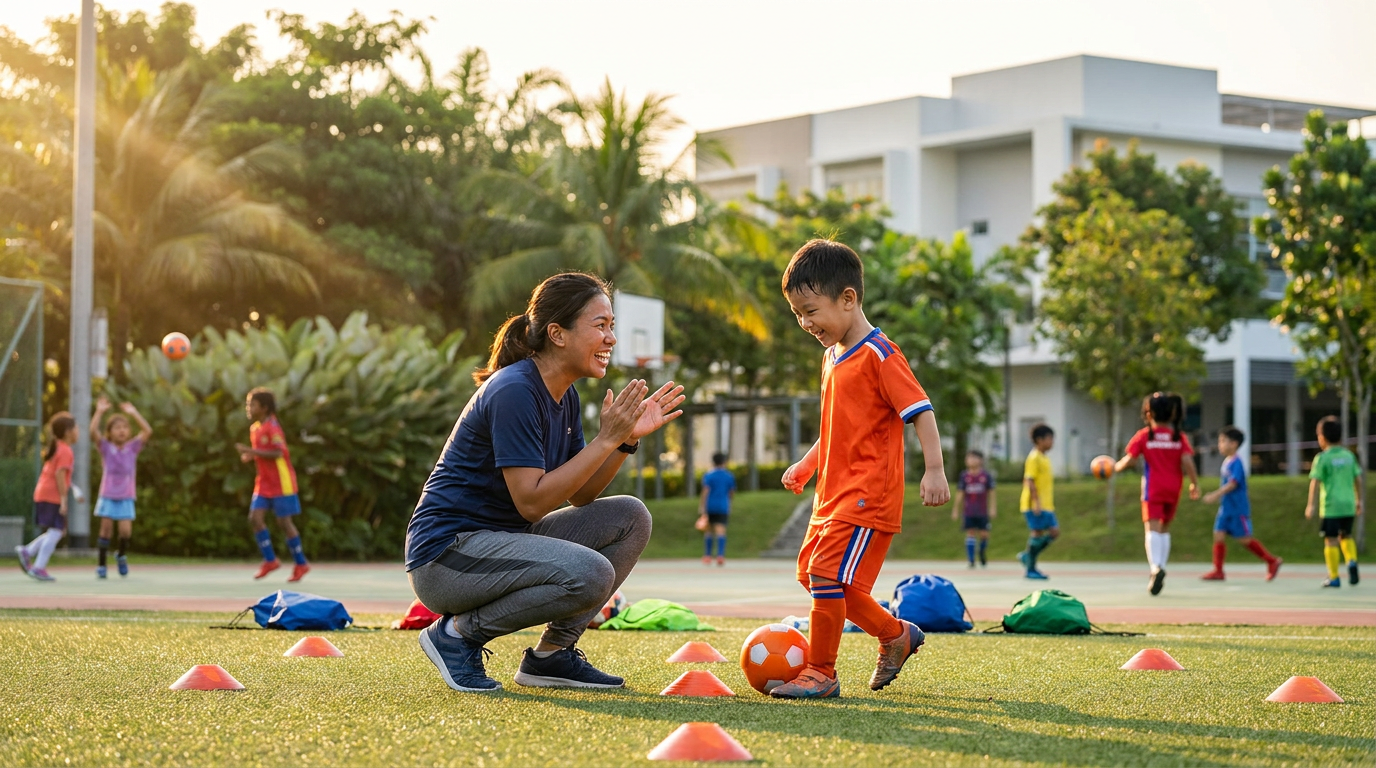
For toddlers and preschoolers (roughly ages 2 to 6), the priority should be play-based movement exploration rather than structured competition. At this stage, children are still developing fundamental motor skills — running, jumping, catching, kicking — and short, fun, low-pressure sessions work best. Multi-sport formats are particularly effective here because they expose young children to a wide variety of movements without the pressure of mastering a single discipline too early.
Vivo Kids, Vivo Kinetics' multi-sport programme for ages 2 to 6, is built around exactly this principle. With a curriculum that blends movement skill development, character building, and play, it gives younger siblings a rich sporting foundation while keeping sessions age-appropriate and engaging. This matters for scheduling, too: a well-structured programme that younger children genuinely look forward to is far easier to build a family routine around than one they resist.
For primary school-age children (ages 6 and up), more focused skill development becomes appropriate. Children at this stage can follow complex instructions, understand team dynamics, and begin to develop genuine passion for a particular sport. This is when sport-specific programmes start to make sense alongside broader multi-sport exposure.
Vivo Kicks, Vivo Kinetics' football academy for ages 6 to 12, is designed for this exact window. With expert coaches and an age-progressive curriculum, it develops technical skills, tactical thinking, and the confidence that comes from belonging to a team. For families with one younger sibling in Vivo Kids and an older one in Vivo Kicks, both programmes operating under the same Vivo Kinetics umbrella can meaningfully simplify the logistics of getting multiple kids to quality training.
Build a Family Sports Calendar That Actually Works
Once you've chosen programmes that fit each child, the single most impactful thing you can do is centralise all their schedules into one shared family calendar. The biggest scheduling mistake multi-sport families make is tracking information across different channels — one programme sends WhatsApp messages, another uses email, a third updates a website. When information is scattered, things get missed.
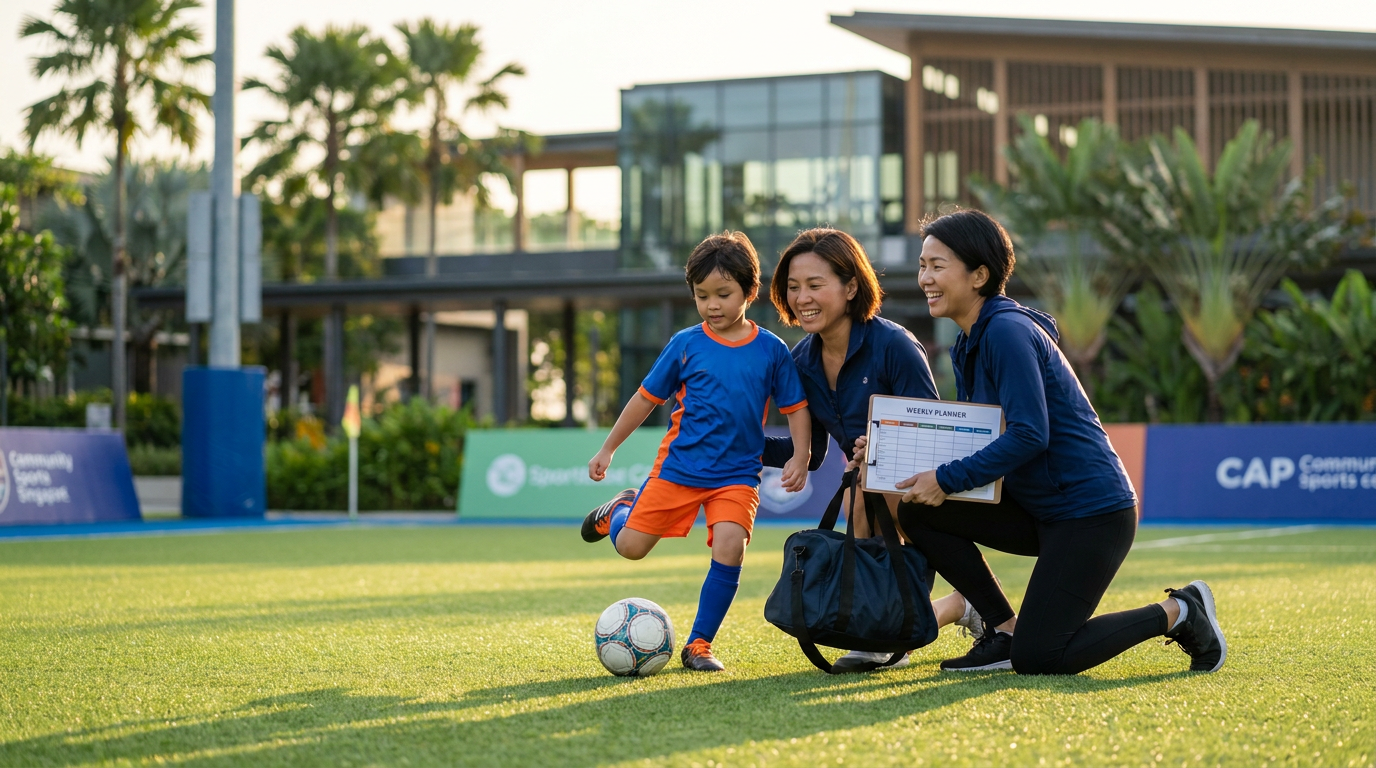
The fix is a single, shared digital calendar — accessible to both parents and any other caregivers such as grandparents or helpers. Google Calendar works well for this. Create a separate calendar for each child and assign a unique colour. When you look at the week ahead, you want to see immediately which child is where, not just which sport is on. Colour-code by child rather than by sport: your older child is always blue, your younger one always green, regardless of the activity.
Here are a few habits that make the family calendar genuinely useful rather than just well-intentioned:
Enter everything at the start of the season, including not just training days but tournaments, make-up sessions, and rest weeks.
Set reminders 24 hours and 2 hours before each session so nothing sneaks up on you on a busy school night.
Share the calendar with all caregivers — both parents, grandparents, and any helper — so everyone has real-time visibility.
Do a five-minute Sunday review to flag the week's conflicts and confirm who is taking whom where.
A physical whiteboard or wall calendar in the kitchen can work well alongside a digital calendar, especially as a visual reference that the children themselves can check. Seeing the week laid out visually also helps older children understand the family's commitments and develop their own sense of responsibility around being ready on time.
Plan for Conflicts Before They Happen
Every season will have conflict nights. Two children with sessions at the same time, in different locations, with one car. Rather than solving these problems in a panic on the day, the best approach is to identify every conflict at the start of the season and make a plan for each one in advance.
At the beginning of each term or season, sit down with the full schedule and mark every date where two or more children have overlapping commitments. For each conflict, decide in advance:
Can one parent handle each child independently?
Is there a carpool arrangement with another family from the same programme?
Which session is a training session (more flexible) versus a match or grading (less flexible)?
Is there a helper or grandparent who can cover one drop-off?
Making these decisions before the week arrives removes the stress of improvising in real time. It also prevents the situation where one child's activity is consistently deprioritised because the other child's seems more urgent in the moment — which, over time, can quietly chip away at a child's motivation and sense of being valued.
For last-minute changes (a session rescheduled due to rain, a venue change), make sure you're receiving real-time notifications from the programmes your children attend. Quality providers communicate these changes promptly through their preferred channels — know what those channels are and make sure you're set up to receive updates quickly.
Make Every Child Feel Equally Valued
Here's the dimension that scheduling articles rarely discuss: the emotional impact of sibling sports logistics on the children themselves. When families have multiple children in sports, it's easy for attendance patterns, parental attention, and family conversation to gradually skew toward the older or more competitive child — not out of intention, but simply because their schedule tends to be louder and more demanding.
Siblings who feel that their sport matters less, or that their parents are always rushing them to make it to their brother or sister's game, can quietly begin to disengage. Research on youth sport participation highlights that siblings who feel sidelined or overlooked by family dynamics are at real risk of losing motivation — not because they don't enjoy the sport, but because the emotional context around it stops feeling positive.
A few approaches that help every child feel seen:
Rotate your full presence. If you have to split up on a conflict night, keep a mental (or actual) tally of whose session each parent attended, and rotate. Children notice when a parent has never come to watch them.
Celebrate each child's specific milestones, whether that's a first goal, a new movement skill mastered, or simply showing up consistently and trying their best.
Keep sports talk balanced at home. It's easy for dinnertime to become dominated by the older child's match result. Actively ask each child about their own experience, their own progress, their own feelings about their programme.
Involve children in the scheduling conversation. Age-appropriate transparency about why certain logistics work the way they do helps children feel respected rather than managed.
Watch for Over-Scheduling and Burnout
With multiple children across multiple sports, the risk of over-scheduling compounds quickly. What looks manageable on paper — two sessions per week per child — can add up to a genuinely exhausting pace once you factor in school, homework, meals, and the unstructured downtime children actually need to process and recover.
Burnout in young athletes doesn't always look dramatic. Watch for a gradual decrease in enthusiasm for a sport they previously loved, increased irritability around training days, complaints of tiredness or minor physical discomfort, or a child who used to run ahead to the venue now dragging their feet. These are signals worth taking seriously.
Building in protected rest time is not a scheduling luxury — it's a performance strategy. Children who have regular downtime, consistent sleep, and sessions of unstructured play are more likely to sustain genuine enjoyment of their sports over the long term. The goal isn't to fill every available hour; it's to build a pattern of activity that children can happily sustain from early childhood through their school years and beyond.
If the schedule is creating consistent stress for parents or children, that's a sign to simplify. Choosing fewer activities done well — with real enthusiasm and genuine recovery time built in — will always serve children better than a packed roster managed under pressure.
Build Your Village: Carpooling and Community
One of the most practical things a multi-sport family can do is build a network of other parents from the same programmes. Carpooling arrangements, shared drop-off rotations, and informal updates from other parents at the same venue can all reduce the logistical pressure on any single family significantly.
Start by identifying one or two families from each of your children's programmes who live nearby and have compatible schedules. Even a loose arrangement where you cover their drop-off one week and they cover yours the next can free up significant time on a busy weeknight. Parents who coordinate this kind of mutual support consistently report that it makes a meaningful difference in the sustainability of a multi-child sports schedule.
Group chats with other team parents are useful for quick updates on schedule changes, venue questions, or reminders about upcoming events. Just be intentional about not letting these chats become another source of information overload — treat them as a supplement to your centralised family calendar, not a replacement for it.
Check In, Adjust, and Keep It Fun
Finally, the most important principle of all: a schedule that worked at the start of a season may not work at the end of it. Children's interests evolve, school demands shift, and a pace that felt manageable in the first month can become genuinely unsustainable by month three.
Build in regular check-ins with each child — not formal reviews, but casual conversations. Ask them what they're enjoying about their sport, what feels hard, and whether they want to keep going after the current term ends. Their answers will guide your planning for the next season far better than any external framework.
After each season, take a few minutes to reflect as a family: What worked well? What needs to change? Which programme genuinely lit each child up, and which felt more like obligation? These conversations, done with curiosity rather than pressure, help you build a schedule that evolves with your children rather than one they grow to resent.
The goal of sibling sports scheduling is never to achieve logistical perfection. It's to create the conditions where each child has the space, the support, and the genuine joy to discover what they love about being active — and to keep coming back to it, season after season.
Keeping the Whole Family Moving
Juggling multiple children's sports schedules is genuinely challenging, but it's also one of the most worthwhile things a family can invest energy in. Active children who feel supported in their sports develop not just physical skills but confidence, resilience, and a relationship with movement that can sustain them for life.
The families that make it work aren't the ones with perfect logistics. They're the ones who choose programmes thoughtfully for each child's age and stage, build simple shared systems, make every child feel equally seen, and stay flexible enough to adjust when life changes — as it always does.
Start with the right foundation: age-appropriate programmes that genuinely work for each child. Everything else becomes easier from there.
Ready to simplify your family's sports schedule?
Vivo Kinetics offers age-matched programmes for children from 20 months to 12 years — from the play-based Vivo Kids multi-sport programme for your littlest ones, to the skill-building Vivo Kicks football academy for older children. With expert coaches, nurturing environments, and programmes designed to grow with your child, Vivo Kinetics makes it easier to keep every sibling active, engaged, and thriving.
Explore all programmes at Vivo Kinetics and find the right fit for every child in your family.

Comments