


Nanny and Helper: How to Support Your Child's Sports Participation
Table Of Contents
Why Nannies and Helpers Are Key to Active Kids
The Real Benefits of Sports for Children Ages 2–12
Age-by-Age Guide: Supporting Sports at Every Stage
Toddlers and Preschoolers (Ages 2–5): Building the Foundation
Early Primary Years (Ages 5–8): Exploring and Engaging
Upper Primary Years (Ages 9–12): Building Commitment and Confidence
Practical Ways Helpers Can Champion Sports Participation
Communicating with Parents: Keeping Everyone Aligned
Finding the Right Sports Program in Singapore
Conclusion
When it comes to raising active, healthy children in Singapore, parents often focus on choosing the right sports program or enrolling their child at the right age. But there is another equally important piece of the puzzle that often goes unrecognised: the nanny or domestic helper who spends significant time with the child every day. Whether it is cheering from the sideline, managing the logistics of getting to training on time, or simply kicking a ball around in the park on a Tuesday afternoon, a helper's involvement in a child's sports life can make a real and lasting difference.
This article explores how nannies and helpers can actively support children's sports participation — from understanding why it matters developmentally, to age-appropriate encouragement strategies, to practical tips for managing sports routines alongside parents. Whether you are a parent looking to align your helper's role with your child's active lifestyle, or a helper wanting to better support the children in your care, this guide is for you.
Why Nannies and Helpers Are Key to Active Kids
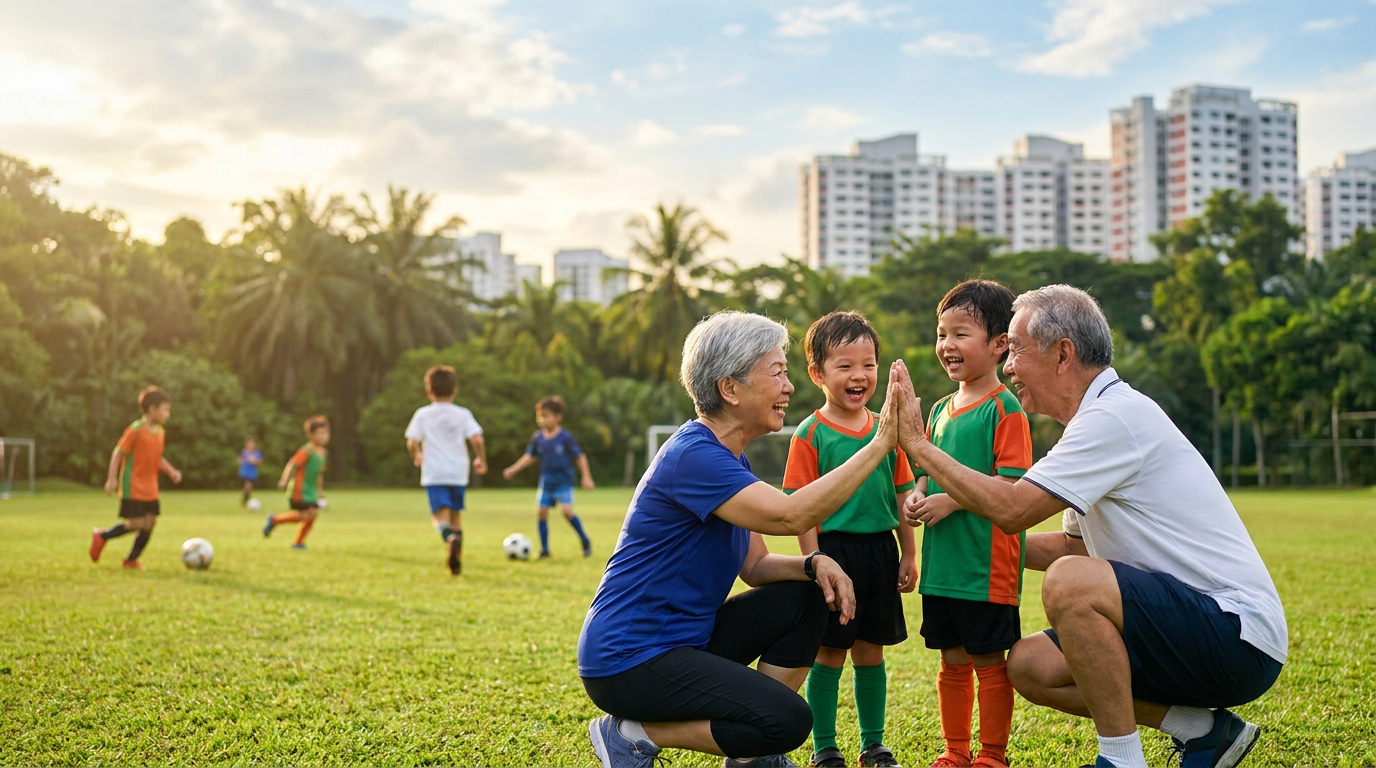
In Singapore households, nannies and domestic helpers are often the adults most present during the hours between school and bedtime — exactly when sports training sessions, active play, and physical routines take place. The modern role of a caregiver has evolved well beyond cooking and cleaning. Today, helpers are increasingly recognised as developmental partners who contribute meaningfully to a child's emotional, cognitive, and social growth through their daily interactions and activities.
This makes them uniquely positioned to either spark or sustain a child's love for sport. A helper who enthusiastically prepares a child's kit before training, arrives at the park ready to practice passing drills, or calmly reassures a child after a tough match is doing something deeply valuable. They are reinforcing the message that being active is normal, enjoyable, and worth showing up for — a message children absorb more from consistent, trusted caregivers than from any formal lesson.
Of course, this only works well when helpers feel informed, empowered, and aligned with the family's goals for the child. That starts with understanding why sports matter in the first place.
The Real Benefits of Sports for Children Ages 2–12
The value of sports participation during childhood extends far beyond physical fitness. Research consistently shows that children who engage regularly in sports and physical activity develop advantages across multiple areas of their lives.
On the physical side, sports help children develop strong bones, muscles, and cardiovascular health while building coordination, balance, and endurance. These physical foundations, laid during the early years, support a healthier body weight, better sleep, and a reduced risk of chronic illness later in life. For toddlers and preschoolers, even unstructured movement — running, jumping, throwing — is laying down the motor skill foundations they will need for more organised sport as they grow.
The mental and emotional benefits are equally compelling. Participation in sports builds self-confidence as children develop new skills and experience the rewards of effort and perseverance. Studies show that youth sports participation is linked to lower rates of anxiety and depression, improved cognitive performance, and greater creativity. Children who play sports also tend to have better attention spans and academic outcomes — a finding that is especially relevant for school-age children in Singapore's demanding educational environment.
Socially, sports provide an environment unlike any other. Team activities teach children to communicate, cooperate, resolve conflict, and work toward shared goals. The friendships formed on a sports field often become among the most formative of a child's early life, giving them a sense of belonging and identity that extends well beyond the game itself.
For nannies and helpers, understanding these benefits reframes their role at training sessions and during active play. They are not simply supervising — they are participating in something that shapes who a child becomes.
Age-by-Age Guide: Supporting Sports at Every Stage
Toddlers and Preschoolers (Ages 2–5): Building the Foundation
Young children are natural movers. At this age, the goal is not to win matches or master techniques — it is to build a positive, joyful association with being physically active. Helpers working with toddlers and preschoolers play a hugely influential role in this, simply by making movement fun and frequent.
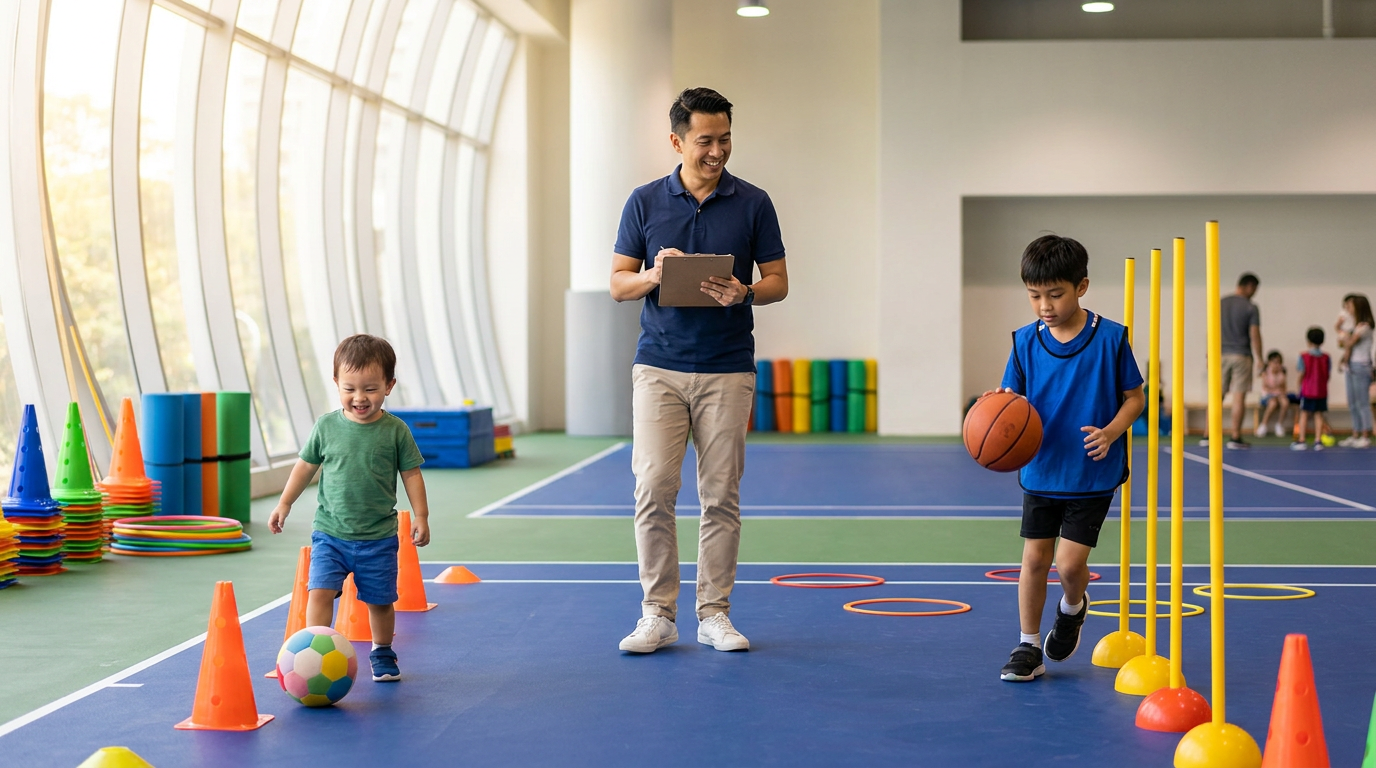
At this stage, children are still developing basic coordination and may not yet be ready to follow complex rules or play in organised teams. But that does not mean sports cannot be introduced. Activities like kicking and chasing a ball, running relay races, jumping over obstacles, and tossing a soft ball back and forth are all building the gross motor skills children will need for sport later on. Hide-and-seek, simple tag games, and free play in open spaces are equally valuable. The key is to follow the child's lead, keep things playful, and prioritise participation over performance.
For helpers, this stage is also about routine. Making outdoor active time a consistent part of the day — even just 30 minutes at the park — helps children associate physical activity with daily life rather than treating it as an occasional event. If the child is enrolled in a structured program, such as Vivo Kids, Vivo Kinetics' award-winning multi-sport program for ages 2 to 6, helpers can reinforce what is learned in class by practising simple movements at home and keeping the child's excitement alive between sessions.
Early Primary Years (Ages 5–8): Exploring and Engaging
As children enter primary school, their coordination improves, their attention spans lengthen, and they become genuinely curious about sports and competition. This is a wonderful age for exploration — trying different activities, discovering what they enjoy, and beginning to understand basic rules and teamwork.
At this stage, children benefit from a mix of free play and structured sports experiences. They are ready to engage with team sports like soccer, basketball, and swimming at an introductory level, and they may begin to show a preference for particular activities. Helpers can support this exploration by being enthusiastic participants rather than passive observers. Practising passing in the void deck, visiting the neighbourhood court for a casual shoot-around, or simply watching sports highlights together and talking about them all nurture a child's growing sporting identity.
It is also important at this age for helpers to offer encouragement rather than pressure. Children aged 5–8 are still developing emotional resilience, and their relationship with sport can be strongly shaped by the reactions of the adults around them. A helper who celebrates effort, brushes off mistakes with a smile, and frames challenges as fun puzzles rather than failures is giving the child one of the greatest gifts in early sports development.
Upper Primary Years (Ages 9–12): Building Commitment and Confidence
By the time children reach ages 9 to 12, many will have found one or two sports they genuinely love. Social connection becomes more important at this stage — children want to be part of a team, to belong to something, and to feel competent among their peers. They also begin to understand the connection between practice and improvement, which makes consistent training habits especially meaningful.
Helpers supporting children at this stage take on a more logistical and motivational role. Ensuring the child arrives at training on time, well-fed, and with all their equipment is a real and practical form of support. So is being present and engaged at the sideline — not as a critic, but as a consistent, warm supporter. Children at this age are highly attuned to adult reactions, and knowing that their caregiver is genuinely proud of their effort (regardless of results) can powerfully reinforce their commitment to sport.
For children showing a deeper interest in a specific sport, structured programs offer an important step up. Vivo Kicks, Vivo Kinetics' soccer academy for ages 6 to 12, provides this kind of purposeful, progressive training in a nurturing environment — combining technical football development with the character-building that matters most at this age. Helpers who understand and support a child's involvement in such a program become genuine partners in that developmental journey.
Practical Ways Helpers Can Champion Sports Participation
Beyond showing up to training sessions, there are many meaningful ways nannies and helpers can actively support a child's sports life. Here are some of the most impactful:
Make active outdoor time a daily non-negotiable. Even on days without structured training, building in park visits, walks, or backyard games ensures that physical movement stays woven into the child's routine rather than becoming something that only happens at class.
Participate in the play. Helpers who kick the ball back, join in a game of catch, or race the child to the next lamppost are doing more than filling time — they are making sport feel social, joyful, and worthwhile. Children are far more motivated when an adult they trust is actively involved.
Prepare the child's sports kit together. Making kit preparation a shared ritual before training teaches children responsibility and builds anticipation. Let the child check off their own list — boots, water bottle, shin guards — while the helper supervises and helps. These small moments build ownership and excitement.
Offer calm, positive feedback after sessions. Rather than focusing on performance or comparing the child to others, helpers can ask open questions: "What was your favourite part today?" or "Was there anything tricky that you want to try again?" This models a healthy, growth-oriented relationship with sport.
Manage energy and nutrition around training. A child who arrives at sports class hungry or overtired will not get the most out of it. Helpers who understand the schedule can plan meals and rest accordingly — ensuring the child is fuelled, rested, and ready to engage.
Handle setbacks with reassurance. Children will sometimes not want to go to training. They may feel nervous before a match or disappointed after a loss. Helpers who respond with calm empathy — validating the feeling while gently encouraging participation — play a vital role in helping children push through the natural ups and downs of sport.
Communicating with Parents: Keeping Everyone Aligned
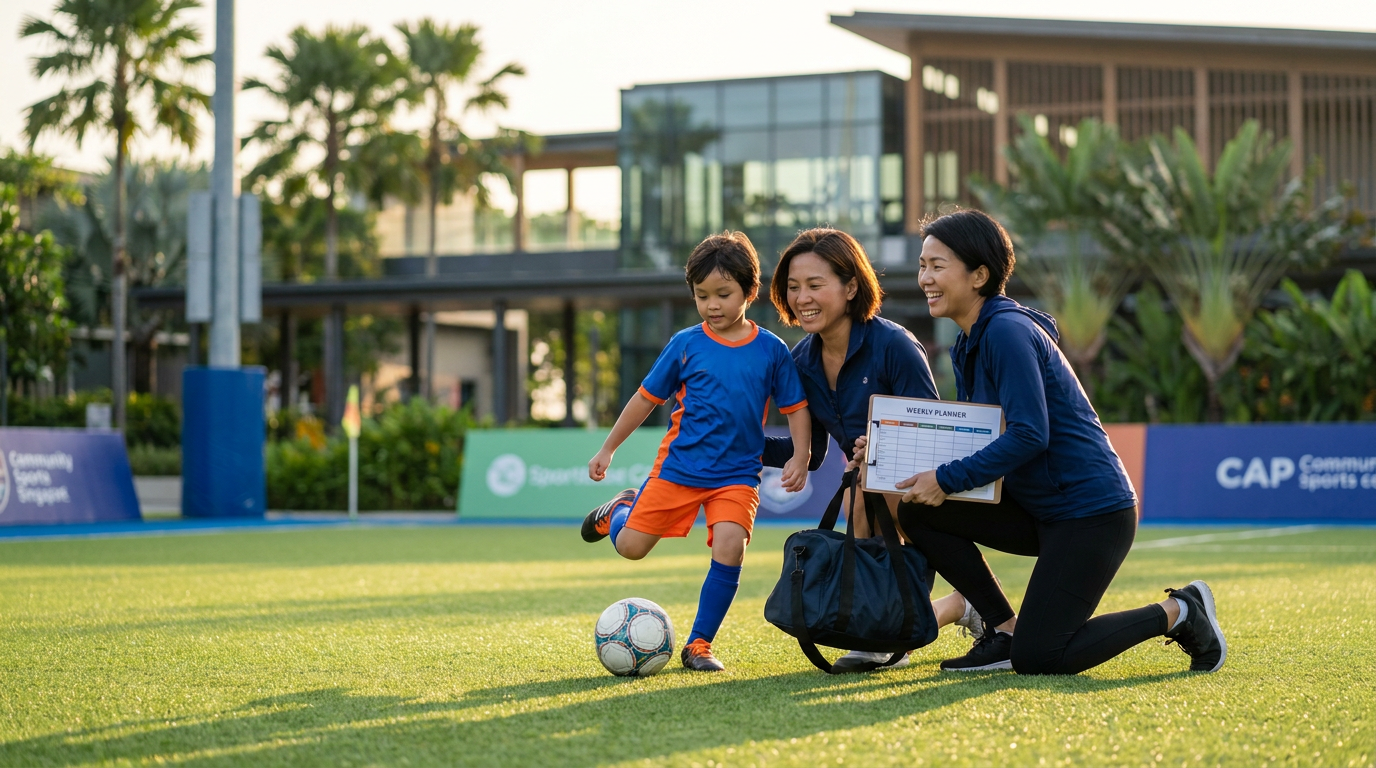
For all of this to work well, helpers and parents need to be on the same page. A helper who clearly understands the parents' goals for the child's sports participation can reinforce those goals consistently. Regular, brief conversations about what the child is enjoying, any concerns that arise, or changes in the child's enthusiasm can help parents stay connected to their child's active life even during busy workweeks.
Helpers should feel comfortable flagging both positive developments — "She scored her first goal today and was so proud!" — and any concerns, such as a child expressing reluctance about a particular sport or showing signs of stress around competition. These observations are genuinely valuable and parents should actively welcome them. The helper, as the adult most often present during sports activities, often has a uniquely close view of how the child is experiencing sport emotionally.
Some families also find it helpful to keep a simple shared note or group chat where the helper can log training attendance, report on the child's mood after sessions, or flag logistical needs like equipment that needs replacing. These small communication habits prevent things from falling through the cracks and make the helper feel like a respected, informed part of the child's support network.
Finding the Right Sports Program in Singapore
Singapore has a rich ecosystem of children's sports programs, particularly for the preschool and primary school age groups. When helping parents evaluate options, it is worth looking for programs that prioritise age-appropriate challenge over early specialisation, maintain small class sizes with qualified coaches, and create an environment where children feel safe to try, fail, and try again.
For children aged 2 to 6, a multi-sport approach is widely recommended by child development experts. Exposing young children to a variety of movement experiences — rather than committing early to a single discipline — supports broader physical literacy and keeps options open as interests develop. Vivo Kids by Vivo Kinetics takes exactly this approach, combining soccer, basketball, and other movement activities in a play-based, character-focused curriculum designed for Singapore's youngest sports participants.
For primary school-aged children ready to engage more deeply with the sport of football, Vivo Kicks offers a progressive, age-appropriate soccer academy experience that develops both technical skill and a genuine love for the game — all within the kind of warm, supportive environment that builds confident young athletes rather than anxious ones.
Helpers who are familiar with these program options can be an excellent resource for parents — sharing observations about which activities seem to energise the child most, and helping parents make informed decisions about next steps.
Conclusion
A nanny or domestic helper who actively supports a child's sports participation is doing something that goes far beyond logistics. They are helping to build physical health, emotional resilience, social confidence, and a lifelong love of active living — all values that compound quietly over years and shape who a child becomes.
The most effective helpers in this role are not necessarily the most knowledgeable about sport. They are the ones who show up consistently, participate with enthusiasm, respond to setbacks with warmth, and communicate openly with parents. Combine that kind of caregiving support with a quality, age-appropriate sports program, and you have a powerful foundation for a child's healthy, active future in Singapore.
Ready to find the perfect sports program for your child?
Vivo Kinetics offers award-winning, play-based sports programs for Singapore children aged 20 months to 12 years — from multi-sport exploration to progressive soccer training. Expert coaches, age-appropriate curricula, and a warm, nurturing environment your child (and their caregiver) will love.
Explore Vivo Kinetics Programs →
Comments