


CCA vs External Sports: Which Is Better for Your Child?
Table Of Contents
What Is a School Sports CCA?
What Is an External Sports Programme?
Key Benefits of School Sports CCAs
Key Benefits of External Sports Programmes
CCA vs External Sports: A Side-by-Side Comparison
Does Your Child Have to Choose Just One?
How to Choose What's Right for Your Child
Starting Early: What About Children Under Primary School Age?
Every Singapore parent eventually faces this question: should my child join the school sports CCA, or would an external sports programme serve them better? It's not as straightforward as it might seem. Both options offer real value, but they work in very different ways — and the right choice depends on your child's age, personality, interests, and the kind of development you're hoping to nurture.
School Co-Curricular Activities (CCAs) have long been a cornerstone of Singapore's education system, shaping character and teamwork from Primary 3 onwards. External sports programmes, on the other hand, offer something different: specialist coaching, flexible scheduling, and a learning environment designed entirely around the child. Neither is universally 'better' — but understanding what each offers will help you make a confident, informed decision.
In this guide, we break down the CCA vs external sports debate from every angle — from developmental benefits and scheduling realities to age-specific considerations and what it looks like to do both.
What Is a School Sports CCA?
In Singapore, a Co-Curricular Activity (CCA) is a structured non-academic programme that forms part of a student's holistic education. Introduced by the Ministry of Education (MOE), CCAs are strongly encouraged at the primary level and compulsory at secondary school. Students can choose from four main categories: physical sports, clubs and societies, uniformed groups, and visual and performing arts.
At the primary level, sports CCAs typically include football, basketball, badminton, swimming, and track and field. Sessions are usually held one to two times a week, lasting about two hours each, with a manageable workload designed to keep the balance between physical activity and academics. For secondary students, the stakes rise considerably — CCA achievements can contribute to LEAPS 2.0 points, which factor into Direct School Admission (DSA) applications and, eventually, secondary-to-post-secondary progression.
The school-based CCA system is deliberately designed to do more than teach a sport. It builds social bonds across year groups, nurtures school identity, and develops qualities like commitment and sportsmanship within a familiar, supervised environment. It is also one of the most accessible entry points into organised sport — available to every enrolled student, often at little or no additional cost.
What Is an External Sports Programme?
An external sports programme is any structured, coach-led sports activity that takes place outside of school — think private academies, specialist coaching centres, community club programmes, or dedicated children's sports companies. Unlike school CCAs, external programmes are not tied to the school calendar or MOE guidelines. They're designed by sports development professionals with specific developmental goals, age-appropriate curricula, and often a stronger emphasis on individualised coaching.
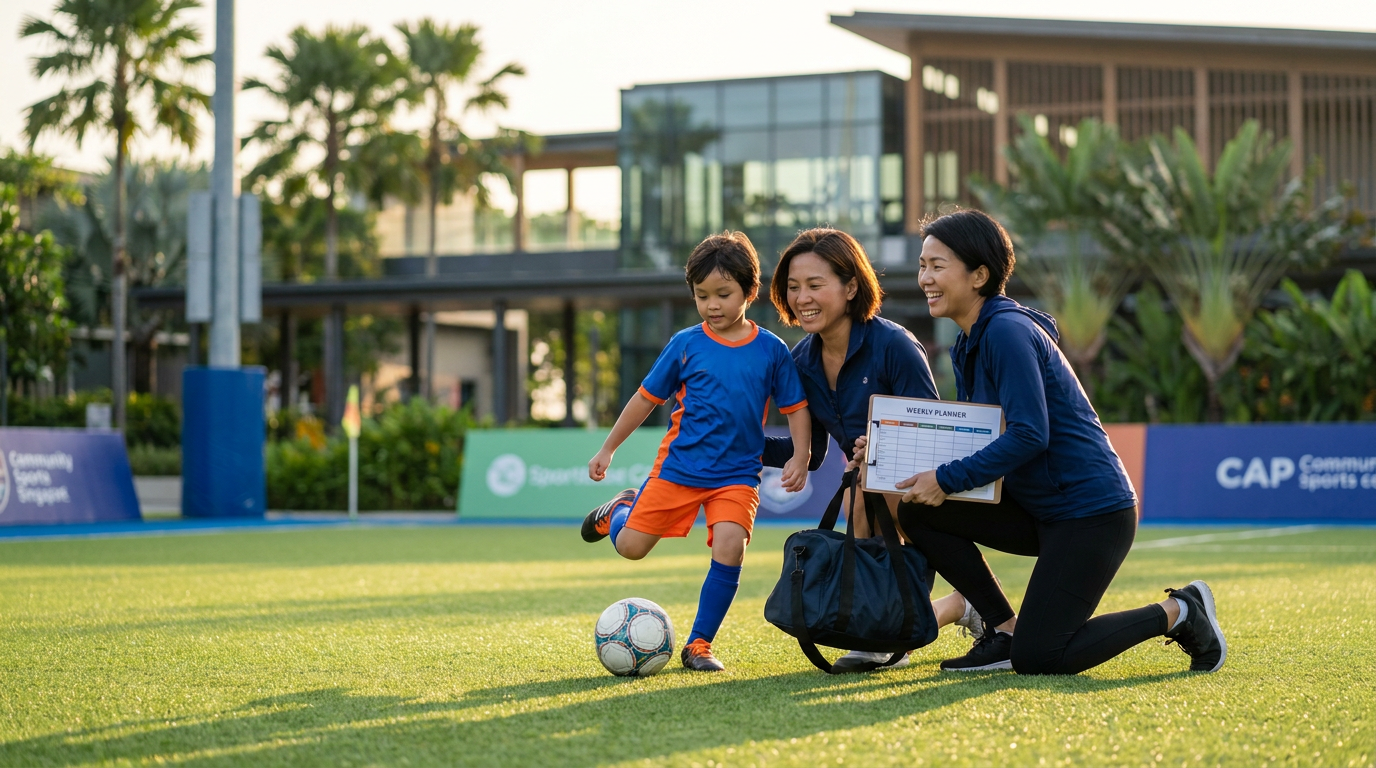
External programmes vary widely in focus. Some are recreational and play-based, ideal for younger children exploring movement for the first time. Others are more performance-oriented, designed to prepare children for competitive sport at the national or regional level. The key distinction from CCAs is that external programmes are typically chosen by the family rather than assigned by school, giving parents much greater control over the learning environment, coaching quality, and programme philosophy.
Importantly, some schools may allow CCA exemption for children competing or performing at a national level through an external programme. However, self-enrichment activities — such as recreational coaching classes — generally do not qualify for formal CCA exemption under MOE policy. This means most children who join an external sports programme will still be expected to participate in a school CCA once they reach Primary 3.
Key Benefits of School Sports CCAs
School sports CCAs offer a range of developmental benefits that are hard to replicate elsewhere. Here are the most meaningful ones for growing children:
Built-in social integration: Joining a school CCA gives children a shared identity and a stable social circle within their school community. Practices and training sessions create natural opportunities for friendships that stretch beyond classroom boundaries, helping children feel more connected to their school.
Character development through structure: CCAs are intentionally designed to cultivate resilience, discipline, teamwork, and responsibility. Whether your child is part of a football team learning perseverance or a swimming squad pushing personal bests, the lessons go well beyond sport.
Academic recognition: At the secondary level, strong CCA performance can directly benefit a student's academic pathway through DSA and LEAPS 2.0. Even at primary level, involvement in CCAs helps children develop the time management and organisational habits that support better academic performance.
Low barrier to entry: School CCAs are school-funded and school-run, making them highly accessible. For families exploring sport for the first time or with budget considerations, they offer structured activity at minimal cost.
Age-appropriate exposure: Primary school CCAs run on a lighter schedule — typically once or twice a week — which is well-suited to younger children who are still adjusting to school life and need balance between activity and rest.
Key Benefits of External Sports Programmes
External sports programmes bring a different set of strengths to the table — ones that are particularly compelling for children who have a specific sporting passion, or for younger children not yet in the school CCA system.
Personalised coaching and smaller group sizes: External programmes typically offer better coach-to-child ratios than school CCAs, allowing coaches to identify individual strengths and weaknesses, provide real-time feedback, and tailor progression plans for each child. This level of individualised attention is what accelerates skill development over time.
Age-appropriate and play-based approaches: Quality external programmes — especially those for younger children — are built on evidence-based, age-appropriate curricula. Rather than applying a one-size-fits-all structure, they meet children at their developmental stage, using play and movement to build foundational skills before introducing formal sport mechanics.
Flexible scheduling: External programmes can often be scheduled around your family's routine, with weekend, weekday, or holiday options available. This flexibility makes them especially valuable during school holiday periods when children would otherwise miss weeks of physical activity.
Specialist expertise and sport-specific depth: If your child has a genuine passion for football, multi-sport exploration, or another specific discipline, an external programme led by qualified specialist coaches provides a level of depth and expertise that generalist school CCAs may not always match.
Earlier access: School CCAs typically begin at Primary 3. External programmes can start from toddler age, giving children a significant head start in physical literacy, movement confidence, and sports fundamentals — benefits that research consistently shows compound over time.
The developmental case for early, structured sports activity is strong. Research consistently links regular physical activity in children to improved resilience, self-confidence, and emotional regulation. One meta-analysis found that sports activities contribute meaningfully to children's problem-solving, teamwork, and resilience skills — with team sports showing a particularly strong influence through social support. Another large-scale study involving over 67,000 school students found that increased sports participation was significantly associated with higher resilience scores in children and adolescents.
CCA vs External Sports: A Side-by-Side Comparison
Here's a quick reference to help frame your thinking:
Factor | School Sports CCA | External Sports Programme |
Availability | Primary 3 onwards | From toddler age |
Cost | Low / subsidised | Varies; typically fee-based |
Coaching depth | Generalist school coaches | Specialist, dedicated coaches |
Group size | Larger groups | Smaller, more personalised groups |
Scheduling | Fixed school terms | Flexible; weekends, holidays available |
Social circle | School peers | Broader mix from different schools |
MOE recognition | Fully recognised under LEAPS 2.0 | Only if competing at national level |
Curriculum approach | National standards | Programme-specific, often play-based |
Best for | School bonding, character, recognition | Skill development, early start, passion pursuit |
Does Your Child Have to Choose Just One?
For most families, the answer is no — and in fact, combining both approaches often delivers the best outcomes. Many parents in Singapore choose to enrol younger children in external sports programmes to build physical confidence and fundamental movement skills before Primary 3, then continue external training alongside the school CCA once formal education begins. Others use school CCAs to explore a range of sports at low commitment, then invest in an external programme once a genuine passion emerges.
The key is managing the overall schedule thoughtfully. A child involved in both a school CCA and an external programme will have a full week, so it's important to ensure there's still adequate time for rest, family, and schoolwork. Children who strike this balance well often benefit enormously — the discipline, routine, and physical outlet from sport consistently support better focus and academic performance. The challenge is not whether to do both, but how to structure it sustainably.
If your child is in lower primary or pre-school, an external programme is often the natural first step. School CCAs won't be available yet, but the early years (ages 2 to 6) are precisely when foundational movement skills, coordination, and love of physical activity are most naturally developed — and most influential for long-term sporting engagement.
How to Choose What's Right for Your Child
There's no formula that works for every child, but these questions can guide your thinking:
1. How old is your child? For children aged 2 to 6, an external play-based sports programme is likely the most appropriate and available option. For Primary 3 and above, a school CCA becomes both accessible and recommended. For older primary children with a specific sporting interest, combining both delivers the best of both worlds.
2. What is your child's personality? A highly social, energetic child who thrives in group environments may love the team spirit of a school CCA. A child who benefits from more direct feedback and a quieter, smaller group setting may respond better to the personalised attention of an external programme.
3. Is sport a passion or exploration? If your child is still discovering what they enjoy, a school CCA — with its low pressure and wide exposure — is ideal. If they've fallen in love with football or are showing real athletic potential, an external specialist programme is likely the better investment for their development.
4. What does your family schedule look like? External programmes offer flexibility, but they do come with fees and logistical coordination. School CCAs are built into the school week. Be realistic about what your family can sustain consistently, because consistency matters far more than intensity when it comes to long-term child development in sport.
5. What outcomes matter most to you? If school recognition, peer bonding, and LEAPS points are priorities, the school CCA is central. If early skill development, specialist coaching, and age-appropriate physical literacy are the goal — particularly for younger children — an external programme is worth the investment.
Starting Early: What About Children Under Primary School Age?
For children under 7, the CCA vs external sports question doesn't quite apply yet — school CCAs simply aren't available at this stage. But this is arguably the most important window for building a child's lifelong relationship with physical activity. Movement skills, body confidence, and the simple joy of play all develop most naturally in the early years, and structured play-based sports programmes provide the ideal environment to nurture them.
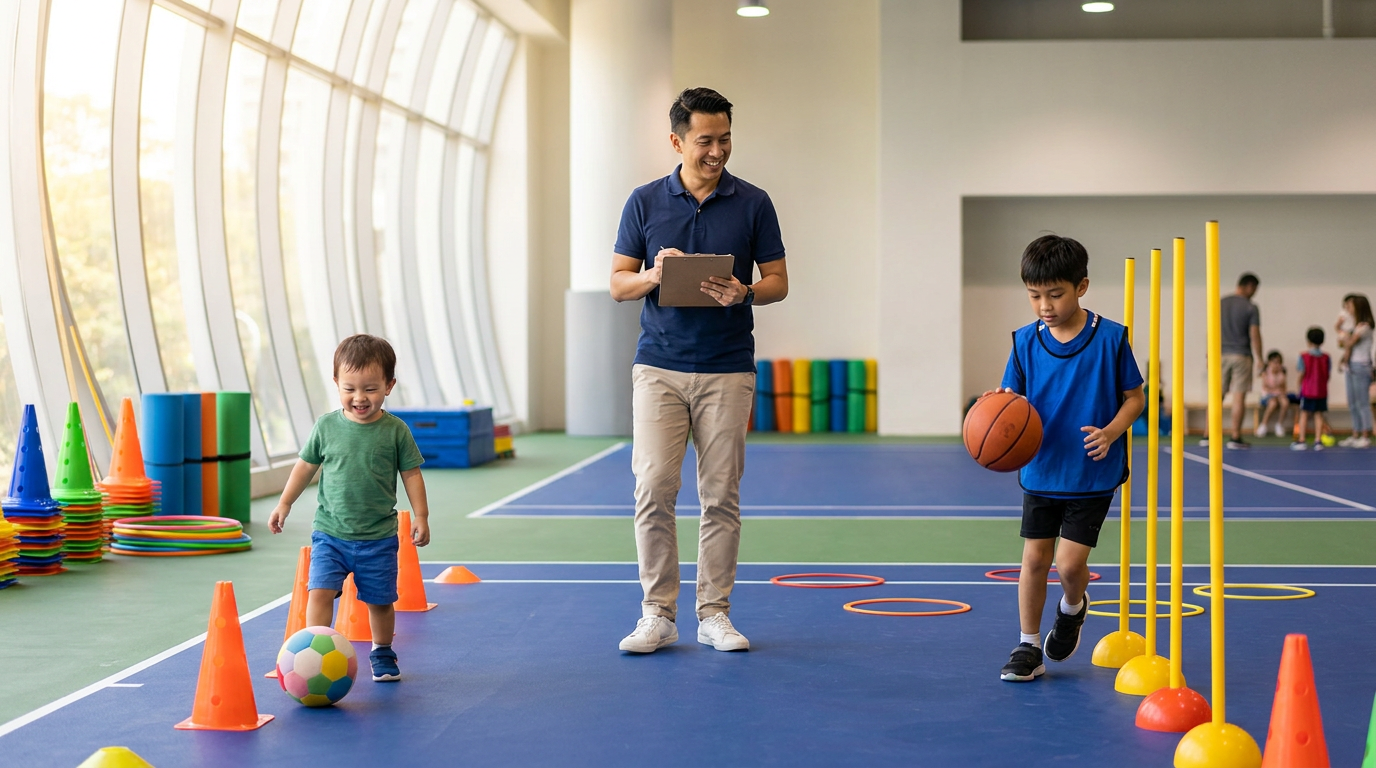
This is exactly where programmes like Vivo Kids come in. Vivo Kids is a multi-sport programme designed for children aged 2 to 6, blending movement skill development with character-building through age-appropriate, play-based activities. Rather than drilling sport-specific techniques too early, Vivo Kids introduces children to a wide range of movement experiences — building the physical and emotional foundations that will serve them in any CCA or sport they choose later on.
For primary-school-aged children with a growing love of football, Vivo Kicks offers a dedicated soccer academy experience for ages 6 to 12, led by expert coaches with a curriculum built around skill progression, teamwork, and the confidence that comes from mastering a sport they genuinely love. Vivo Kicks can sit beautifully alongside a school CCA, providing the specialist depth and consistent development that a school programme may not always offer.
Both programmes reflect Vivo Kinetics' core belief: that children develop best when sport is joyful, age-appropriate, and guided by coaches who understand the whole child — not just the athlete.
The Verdict: CCA vs External Sports
The honest answer is that neither school CCAs nor external sports programmes are universally 'better' — they serve different purposes, different ages, and different developmental needs. School sports CCAs build community, character, and academic recognition within the school system. External sports programmes offer earlier access, specialist coaching, and a more personalised developmental journey.
For most children, the ideal approach isn't choosing one over the other — it's understanding what each does well and using both, in the right combination, at the right time. Start early with a quality external programme to build movement confidence and a genuine love of sport. Embrace the school CCA for the social and structured development it offers. And when your child finds the sport that truly lights them up, invest in the specialist support that helps them flourish.
What matters most, above all, is that your child is moving, growing, and enjoying the journey.
Give Your Child the Best Start in Sport
Whether your child is taking their first steps into movement or ready to level up their football skills, Vivo Kinetics has a programme built just for them.
Vivo Kids — Multi-sport play-based programme for ages 2–6. Build movement skills, confidence, and character through joyful, age-appropriate play.
Vivo Kicks — Soccer academy for ages 6–12. Expert coaching, skill progression, and a love of the beautiful game.
👉 Explore all Vivo Kinetics programmes and register today — because the best time to start is now.

Comments