


Combat Sports for Kids: A Parent's Complete Safety Guide
Table Of Contents
What Do We Mean by "Combat Sports for Kids"?
What the Research Actually Says About Safety
Not All Combat Sports Are Created Equal
Age and Developmental Readiness: The Most Important Factor
Key Safety Considerations to Evaluate Any Program
The Hidden Benefits Parents Often Overlook
Red Flags to Watch For
Building the Right Foundation First
When a child comes home buzzing with excitement about wanting to try karate, taekwondo, or Brazilian jiu-jitsu, a parent's mind often races straight to one question: Is this actually safe? It's one of the most common concerns we hear from families, and it's a completely valid one. After all, the words "combat sport" don't exactly sound child-friendly at first glance.
But here's what the research and child development experts consistently show: when properly structured and age-appropriately taught, combat sports and martial arts can be among the safest, most developmentally beneficial activities a child participates in. The key phrase, though, is properly structured — and knowing what that looks like makes all the difference.
This guide walks Singapore parents through everything they need to know about combat sports for kids: what the injury data actually says, how different disciplines compare on safety, what developmental readiness really means, and exactly what to look for (and look out for) when evaluating a program. Whether your child is 4 or 12, curious or keen, you'll come away with a clear, confident picture of how to make the right choice for your family.
What Do We Mean by "Combat Sports for Kids"?
The term "combat sports" covers a wide spectrum, and that spectrum matters enormously when it comes to child safety. At one end, you have non-contact traditional martial arts like karate kata, taekwondo forms, and aikido — disciplines where children practise techniques, build physical literacy, and develop discipline without any striking of a partner. Moving along the spectrum, you encounter light-contact styles like sparring-based taekwondo and judo, where controlled contact is introduced progressively with proper equipment. At the far end sits full-contact competitive formats such as competitive MMA and Muay Thai — formats that carry meaningfully higher injury risks and are not generally recommended for young children.
Most children's programs, even those branded as "martial arts" or "combat sports," operate firmly at the non-contact or light-contact end of that spectrum. When parents picture UFC-style bouts when they hear the word "combat," they're picturing something that reputable children's programs bear almost no resemblance to. Understanding this distinction is the first step to evaluating any program your child might join.
What the Research Actually Says About Safety
Parents deserve real data, not just reassurance. The good news is that the research is largely encouraging — with some important nuances worth knowing.
A comprehensive study published in the American Journal of Sports Medicine, which analysed pediatric martial arts injuries treated in US emergency departments from 2004 to 2021, found that injury rates were 1.15 per 10,000 children for the 3–11 age group, and 2.22 per 10,000 for those aged 12–17. That's a remarkably low figure, particularly for younger children. The most common injuries recorded were strains and sprains (28.4%), typically associated with falling, which tells us that serious or life-threatening injuries are genuinely rare in structured training environments.
The American Academy of Pediatrics (AAP) acknowledges that martial arts can be an excellent form of exercise for children when conducted safely, with qualified instruction and appropriate safety measures in place. Importantly, the same research shows that competition carries significantly greater risk than regular class training — one study found that competition carried a 2.56 times greater risk of head and neck injuries compared to formal class settings. This underscores a key principle: a child attending regular, non-competitive classes is in a very different risk environment from one entering tournaments.
The takeaway for parents isn't that combat sports are risk-free — no physical activity is. It's that the risks are modest, manageable, and far lower than popular perception suggests, especially for children under 12 in well-run programs.
Not All Combat Sports Are Created Equal
One of the most useful things a parent can do is understand how different disciplines differ in their safety profiles, so they can make an informed comparison rather than treating "combat sports" as a monolithic category.
Traditional martial arts (karate, taekwondo forms, aikido, silat) generally offer the most controlled environments for children. The emphasis in these disciplines is on precision of technique, respect for training partners, and progressive skill development — all of which create inherently lower-risk conditions. Many children's programs in these styles involve no physical contact with other students at all, particularly for younger age groups. Injury rates for traditional karate and judo in structured class settings are comparable to, and in some cases lower than, popular team sports like basketball and football.
Grappling arts (judo, Brazilian jiu-jitsu, wrestling) introduce physical contact in the form of throws, takedowns, and ground control. With proper coaching and padded surfaces, these can be very safe for older children and teens who are developmentally ready. Judo carries a slightly higher proportion of shoulder and upper arm injuries compared to striking arts, largely due to the nature of throwing techniques — something to factor in, particularly for younger or smaller children.
Striking-based combat sports (boxing, kickboxing, Muay Thai) carry the highest injury potential of the group when conducted with full contact. However, children's boxing and Muay Thai programs worth their salt operate in a non-contact or padwork-only format until children are significantly older and more developed — typically well into their teens for any meaningful sparring. Reputable programs for children aged 6–12 focus on pad work, footwork, coordination drills, and fitness, with no partner striking involved.
Competitive MMA is generally not recommended for children. The multi-discipline full-contact nature of competitive MMA creates injury patterns that are not appropriate for developing bodies, and any program introducing young children to competitive MMA-style formats deserves close scrutiny.
Age and Developmental Readiness: The Most Important Factor
Perhaps more than the specific discipline, a child's developmental stage is the most important safety variable in combat sports. Matching the activity to where your child actually is — not where you hope they are — makes the difference between a positive, safe experience and a frustrating or harmful one.
Ages 2–5: Movement and play come first. At this stage, children are still developing fundamental movement patterns — balance, coordination, spatial awareness, and basic body control. What they need is not technique; it's joyful, guided physical exploration. Programs that use play-based movement, simple games, and age-appropriate challenges build the physical literacy that will later make any sport, including martial arts, much safer and more enjoyable. Children under five generally lack the motor skills for proper technique and the emotional regulation to understand the context of "combat" — and that's completely normal. The priority here is building a love of movement and active play.
Ages 5–7: Introduction to structure and basic skills. Children in this window are beginning to follow more complex instructions, engage with rules, and work alongside peers. A well-designed program introduces very basic stances, movement patterns, and partner-awareness exercises — always in a non-contact format. The emphasis should remain heavily weighted toward fun, with short attention spans accommodated through varied activities and positive reinforcement. Research from Evolve MMA and child development experts consistently highlights that children under eight learn primarily through play, so any program leaning too heavily on rigid drills at this age is missing the mark developmentally.
Ages 8–12: Ready for more structure and technique. Around age eight, children begin to genuinely enjoy rules, structure, and the satisfaction of measurable progress. This is the developmental sweet spot for beginning more formal martial arts or combat sports training. They can understand belt progressions, absorb technical instruction, and start experiencing the discipline and goal-setting that make these activities so valuable. Light-contact activities with appropriate equipment can be introduced in this age range by qualified instructors who assess individual readiness — not as a blanket rule, but thoughtfully and gradually.
Developmental readiness is also individual, not just age-based. A child's emotional maturity, ability to follow instructions, and genuine interest all factor into whether a given program will be safe and beneficial for them specifically.
Key Safety Considerations to Evaluate Any Program
Once you understand the landscape, evaluating a specific program becomes much more straightforward. Here are the factors that genuinely matter:
Instructor qualifications and child development knowledge. The single biggest safety variable in any children's combat sports program is the quality of the instructor. Look for coaches who have specific training in working with children — not just martial arts credentials, but demonstrated understanding of child development, age-appropriate methods, and emotional wellbeing. An instructor who is a brilliant fighter but has no experience with young children is not the right fit for a 6-year-old. Before enrolling, watch a class and observe how the instructor manages the group, responds to anxious or struggling children, and communicates expectations.
Age-appropriate curriculum. A credible program will have clearly differentiated curricula for different age groups — what's taught to a 4-year-old should look completely different from what's taught to a 10-year-old. If a school runs mixed-age classes with identical content, or introduces sparring and contact at the same stage regardless of age, that's a meaningful red flag. Ask specifically how the program is adapted for your child's age group and what contact, if any, is involved.
Proper protective equipment and facility standards. For any activity involving contact, age-appropriate and properly fitted protective gear is non-negotiable. Equipment that doesn't fit correctly provides little protection. The training space itself should have appropriate matting, adequate room for movement, and be kept clean and well-maintained. Ask about the school's hygiene and equipment maintenance protocols — it's a fair question that reputable programs will answer confidently.
Student-to-instructor ratios. In classes for young children especially, adequate supervision matters. A single instructor managing 20 young children cannot provide the individual attention and safety monitoring that the activity requires. Smaller class sizes or the presence of assistant coaches significantly improves both safety and learning outcomes.
A culture of respect and emotional safety. Safety in combat sports isn't purely physical. The culture of the program determines whether children feel psychologically safe — whether they're encouraged to set their own pace, whether they feel supported when they make mistakes, and whether the environment cultivates mutual respect rather than toughness at all costs. Visit the school, observe the vibe, and trust your instincts as a parent.
The Hidden Benefits Parents Often Overlook
Most parents considering combat sports focus entirely on the safety question — which is understandable. But once that question is answered, it's worth appreciating why these activities are genuinely valuable beyond physical fitness.
Research consistently shows that structured martial arts training actually reduces aggressive behaviour in children, rather than increasing it. An analysis of twelve studies involving 507 children found that in nine of the twelve studies, martial arts had a positive effect on aggressive and violent behaviour, with no negative effect in the remaining three. The discipline of learning to channel physical energy in a structured, rule-based environment, combined with the explicit teaching of respect and self-control, appears to have a measurable calming effect.
Beyond behaviour, combat sports build a particular kind of functional confidence — the kind that comes from genuinely earning progress through effort, rather than receiving praise. A child who earns their yellow belt, successfully executes a technique after weeks of practice, or holds their ground respectfully in a partner drill is developing real self-belief. This translates powerfully into school settings, social situations, and the general resilience children need to thrive.
For children who struggle with focus, anxiety, or low self-esteem, the structured, repetitive, and achievable nature of martial arts training can be especially beneficial. The combination of physical movement, clear expectations, and consistent positive reinforcement creates an environment where many children flourish in ways that surprise even their parents.
Red Flags to Watch For
Knowing what a good program looks like is important, but so is knowing when to walk away. Parents should be concerned if they observe any of the following:
Full or heavy contact for young children. Any program that introduces unsupervised full-contact sparring for children under 10 warrants serious scrutiny. Controlled partner work is very different from unsupervised contact, and the distinction matters enormously.
Pressure to compete or advance quickly. Quality programs allow children to progress at their own pace. If you or your child feel pressured into competitions, belt tests, or intensity levels they're not ready for, that's a signal the program's priorities may not be child-centred.
Poor response to safety concerns. Instructors and program managers should welcome safety questions from parents, not deflect or dismiss them. A defensive response to reasonable safety queries is a significant red flag.
Mixed-age, mixed-level classes with no differentiation. Age-appropriate programming requires different approaches for different developmental stages. A single undifferentiated class serving 5-year-olds and 12-year-olds simultaneously, without individual attention and differentiation, is not structured for safety.
An aggressive or intimidating culture. The atmosphere of the school should feel encouraging, not intimidating. Children should be visibly enjoying themselves, and interactions between students and instructors should be respectful and warm.
Building the Right Foundation First
For children under 6 especially, the most important thing a parent can do before enrolling in any combat sport is ensure their child has a strong foundation in fundamental movement skills — balance, coordination, spatial awareness, agility, and body control. Children who develop these skills early not only stay safer in any physical activity, they also learn sport-specific techniques far more quickly and enjoyably when the time comes.
This is exactly the philosophy behind Vivo Kids, Vivo Kinetics' award-winning multi-sport programme for children aged 2 to 6. Rather than specialising early, Vivo Kids uses play-based, expert-guided activities to build a broad range of movement competencies across multiple sports and physical challenges. Children develop the physical literacy, confidence, and body awareness that makes every subsequent physical activity — including martial arts and combat sports — safer and more rewarding.
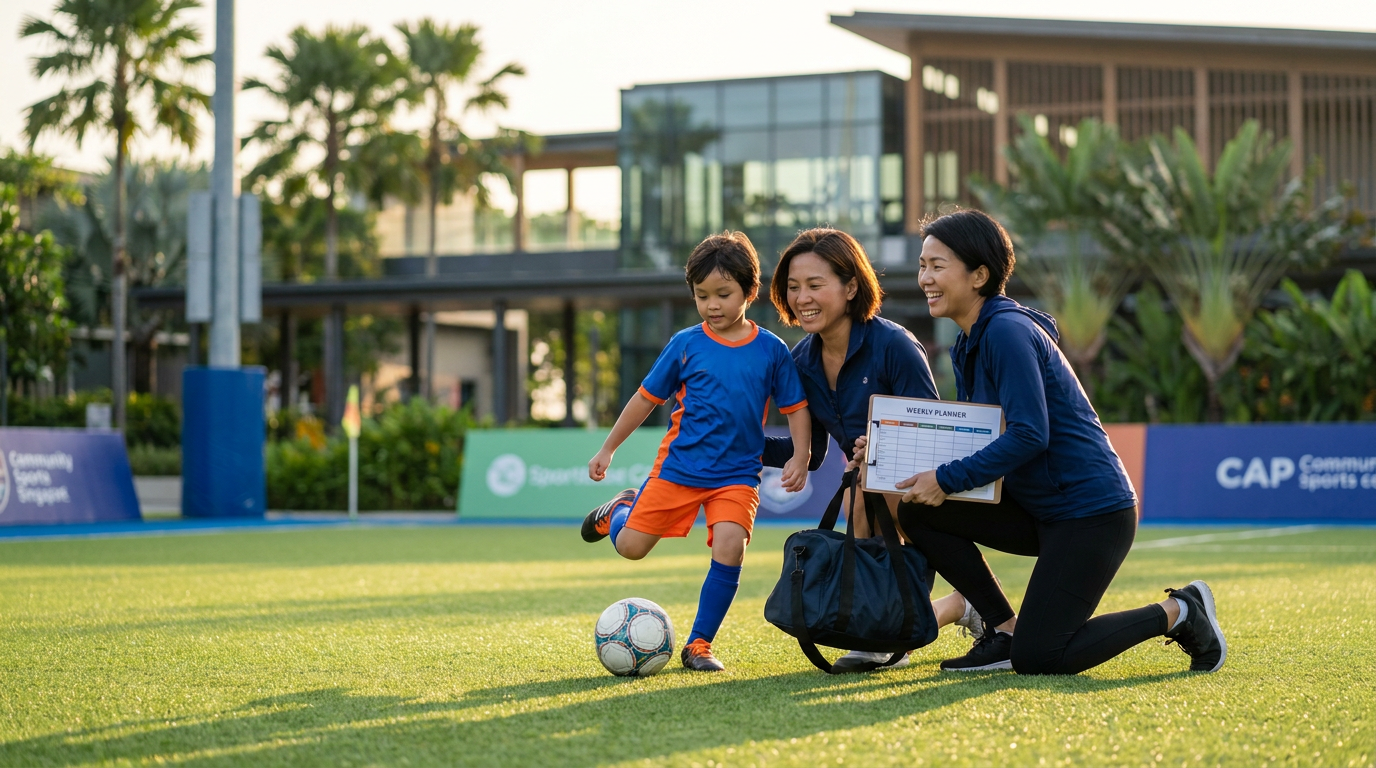
For children aged 6 to 12 who are ready for structured sport, Vivo Kicks, Vivo Kinetics' dedicated soccer academy, builds the same values of teamwork, discipline, and perseverance that parents admire in martial arts — within a sport context that is highly social, progressively structured, and designed specifically for developing minds and bodies.
The broader principle is this: children who are physically literate, emotionally confident, and experienced in structured group activities are simply better positioned to engage with combat sports safely and successfully, at whatever age they're ready. A solid multi-sport foundation isn't a detour from martial arts — it's the best possible preparation for it.
Combat sports and martial arts, when properly structured and developmentally matched to your child's age, are not the dangerous activities their name suggests. The injury data is reassuring, the developmental benefits are real and well-documented, and the values these activities cultivate — respect, discipline, perseverance, and genuine self-confidence — are exactly what parents hope to instil in their children.
The most important variables are not the specific discipline, but the quality of the instructor, the age-appropriateness of the curriculum, the culture of the program, and your child's individual readiness. Take the time to observe classes, ask questions, and trust your instincts as a parent. A program that prioritises your child's safety and development will welcome your scrutiny.
And if your child is still in their early years — the magical window between 2 and 6 — there's no better investment you can make than building a strong, joyful foundation in movement, play, and physical confidence. That foundation will serve them in every sport and physical activity they encounter for the rest of their lives.
Ready to give your child the best possible start in active life?
At Vivo Kinetics, we believe every child deserves a safe, nurturing environment to explore movement, build confidence, and fall in love with being active. Whether your child is taking their very first steps into sport or ready for a structured academy experience, we have a programme designed just for them.
Explore our programmes and book a trial at Vivo Kinetics today.


Comments