


Corridor Games: Fun Active Play Ideas for Kids in HDB Spaces
Table Of Contents
Why Active Play Matters More Than Ever in HDB Living
Understanding the HDB Corridor as a Play Zone
Corridor Games Your Kids Will Love
Beyond the Corridor: Indoor Active Play for Every Room
Void Deck and Common Area Play Ideas
Safety and Neighbourly Tips for HDB Play
When Home Play Isn't Enough: Structured Sports for Growing Kids
Picture this: it's a Saturday afternoon, the rain is hammering down on the void deck below, and your child is bouncing off the walls with energy. Sound familiar? For the majority of Singapore families living in HDB flats, the challenge of keeping kids physically active at home is a real and daily one. Space comes at a premium, neighbours share walls, and the tropical heat often rules out impromptu outdoor runs.
But here is the thing — your child does not need a sprawling backyard or a fancy gym to build strength, coordination, and confidence. In fact, one of the most underused play spaces in any HDB home is right outside your front door: the corridor. With a little creativity and a few ground rules, that stretch of shared walkway (and the rooms inside your flat) can become a thriving arena for active play.
This guide explores practical, age-appropriate corridor games and active play ideas designed for Singapore's unique HDB environment. Whether your child is a curious toddler taking their first confident steps or an energetic six-year-old ready for more challenge, you will find ideas here that support their physical development, sharpen their minds, and most importantly, keep them moving and having fun.
Why Active Play Matters More Than Ever in HDB Living
Gross motor skills are the foundation of physical development, helping children move confidently, maintain balance, and explore their surroundings. In Singapore, where early education often prioritises academics, physical play is sometimes overlooked — but it's crucial for a child's growth. This tension is felt especially keenly in HDB households, where space constraints can tempt parents to default to screen time rather than active play.
According to the Health Promotion Board, only 32% of Singapore preschoolers meet daily physical activity guidelines of 60 minutes of moderate activity. That gap often widens once Primary school starts — which makes building early habits of active play all the more important.
The good news is that movement does not have to be elaborate to be effective. Research has established that active play plays an essential role in children's physical and psychosocial health. Early math skills and school readiness have been linked to the types of fine motor and perceptual skills that are typically developed through active play. Beyond academics, active play naturally promotes language skills because children use words to share ideas, negotiate roles, express their feelings and listen to others — improving their vocabulary and conversational abilities.
For parents in HDB flats, the key is reframing the spaces available. Rather than focusing on what you lack, consider what you have: a hallway, a corridor, a void deck, and a living room that can all be transformed into purposeful play environments.
Understanding the HDB Corridor as a Play Zone
The HDB corridor is an often-overlooked resource for children's active play. Running the length of an entire block floor, it provides a long, flat, covered stretch that remains usable even on rainy days — a rare commodity in Singapore's unpredictable weather. Compared to the interior of a flat, it offers more linear space for movement games, gentle running, and balance challenges.
That said, using the corridor for play comes with important responsibilities. The rules set by the Singapore Civil Defence Force (SCDF) for HDB corridors require at least 1.2 metres of clear walking space to be maintained along common corridors at all times, so neighbours can move around safely and emergency crews can access the area. This means that corridor games should never involve permanent equipment setups, large mats, or any items that block the path. The common corridor is more than a walkway — it is a shared escape route, and keeping it clear is one of the simplest ways to look after everyone on your floor. In an emergency, a corridor free of clutter lets people move quickly, lets firefighters bring in equipment, and gives everyone the best chance of getting out safely.
The ideal approach: use temporary, low-footprint game setups that can be cleared away in seconds. Think chalk lines (if permitted and washable), soft balls, and imaginative games that require only the child's body and a bit of floor space. Always keep noise levels considerate of sleeping babies or neighbours on shift work.
Corridor Games Your Kids Will Love
Here are tried-and-tested corridor games that work within HDB rules, develop key motor skills, and are genuinely fun for kids aged 2 to 10.
1. The Long Walk Challenge Using a piece of removable tape or chalk on the floor (check with your TC if chalk is permitted outdoors), create a straight line along the corridor and challenge your child to walk heel-to-toe without stepping off. Progress to walking backwards, side-stepping, or carrying a small soft toy on one outstretched hand. This develops balance, body coordination, and concentration — foundational skills in any sports setting.
2. Animal Parade Call out animals and have your child move down the corridor imitating them: crab-walk sideways, bunny-hop forward, bear-crawl on all fours, or flamingo-balance on one leg. Every moment children spend moving, crawling, climbing, dancing, or hopping supports more than just physical strength — these activities build coordination, confidence, and curiosity while helping children understand their bodies and surroundings. This game requires no equipment and can involve siblings or neighbours' children for social play.
3. Sock Slide Races On smooth corridor floors, have children slide in socked feet between two designated points. You can introduce gentle turning challenges or try sliding in a low squat position. This low-noise activity builds leg strength, core stability, and spatial awareness — and requires zero equipment beyond the socks your child is already wearing.
4. Corridor Bowling Set up five or six lightweight paper cups or empty plastic bottles at one end of the corridor and have your child roll a soft foam ball from the other end to knock them down. Reset and take turns. This classic activity develops aim, arm strength, and cause-and-effect reasoning. Use a soft ball to keep noise minimal and avoid stray projectiles.
5. Target Toss Place a laundry basket or cardboard box at varying distances and have your child toss rolled-up socks or small beanbags into it. Gradually increase the distance as accuracy improves. For children aged 2 to 6, activities like jumping and hopping look like simple play, but they are excellent for strengthening legs and improving balance — and the same holds true for throwing and aiming games, which train upper-body control and hand-eye coordination.
6. Freeze Tag (Solo Version) For a single child, play music from your phone and let them move freely along the corridor. When the music stops, they must freeze in a pose and hold it for five seconds before the music starts again. This develops listening skills, body control, and self-regulation in a lively, fun format.
7. The Obstacle Shuffle If space allows, briefly set out two or three soft pillows or folded towels at intervals and ask your child to step over, hop over, or weave around them. Always clear these away promptly when other residents need to pass, and never leave anything unattended in the shared corridor.
Beyond the Corridor: Indoor Active Play for Every Room
On days when the corridor is busy or the weather is stormy even under cover, the inside of your HDB flat can host plenty of purposeful movement. Indoor gross motor activities are especially useful for families living in HDB flats or condominiums, where space is limited.
In the Living Room: Push furniture to the sides to create a temporary open floor. Balloon volleyball — keeping an inflated balloon off the ground using different body parts — is a low-noise, high-engagement activity that sharpens eye-hand coordination. An indoor dance party lets children express themselves while building rhythm and coordination. For toddlers especially, "sensory stepping stones" made from cushions, folded towels, and textured mats placed across the floor invite jumping and balancing in a safe, contained space.
In the Hallway: The indoor hallway functions like a mini-corridor. Set up a simple balance beam using a strip of masking tape and challenge your child to walk it while carrying something or walking backwards. Hallway yoga poses — tree pose, warrior pose, downward dog — can be done in almost no space and build strength, flexibility, and body awareness simultaneously.
Rainy Day Treasure Hunts: Create a scavenger hunt that incorporates movement instructions: "Crawl under the dining table to find the next clue" or "Do five star jumps, then look behind the sofa cushion." This combines cognitive engagement with physical activity, keeping children mentally and physically stimulated. Physical activity helps children handle stress, regulate their mood, and sharpen their cognitive skills — making it a genuinely holistic tool, not just a way to burn off energy.
Void Deck and Common Area Play Ideas
The ubiquitous playgrounds in HDB estates have evolved from being just simple play areas into vibrant civic spaces and iconic landmarks. Playgrounds bustling with energy from young children are a familiar sight in Singapore's public housing estates. Beyond the playground itself, the void deck and surrounding common areas offer additional space for active play — especially during off-peak hours.
Classic void deck games have deep roots in Singapore's heartland culture. Hopscotch drawn in chalk, hula hooping, simple cone dribbling, and kicking a soft ball back and forth are all activities that require minimal equipment and deliver real developmental benefits. More than just adding colour and bustle to the HDB heartland, these shared spaces promote social bonding between family, friends, and neighbours — meaning void deck play is as good for a child's social confidence as it is for their physical fitness.
Stair climbing is another underused tool. A supervised trip up and down a few flights develops leg strength, cardiovascular fitness, and spatial awareness in a completely free, always-available setting. Hold hands with younger children and set playful challenges: "Can you take two steps at a time on the way up?"
Timing outdoor excursions thoughtfully makes a real difference in Singapore's climate. Early mornings between 7 and 9am and late afternoons after 5pm are the coolest windows for outdoor activity, reducing heat exposure while still providing fresh air and natural light.
Safety and Neighbourly Tips for HDB Play
Active play in shared HDB spaces is entirely possible — it just requires a little awareness and consideration. Keep these principles in mind:
Maintain clear passage at all times. Never block the corridor with toys, mats, or equipment. Games should use only your child's body and any items you can pick up instantly.
Manage noise levels. Avoid games that involve loud shouting, stamping, or bouncing heavy objects, especially during early morning, lunchtime, and late evening hours.
Supervise closely. Corridors and void decks are shared public spaces. Always keep young children within arm's reach, and avoid play near staircases or lift landings.
Use soft equipment. Foam balls, rolled socks, and fabric beanbags are the ideal tools for corridor play — they bounce safely and don't cause damage or noise.
Talk to your child about community living. Being considerate of neighbours is itself a values lesson. When children understand that their play space is shared with others, they develop empathy, responsibility, and social awareness alongside their motor skills.
When Home Play Isn't Enough: Structured Sports for Growing Kids
Children who participated in organized physical activity and sports at ages 5.5 and 8 years had higher mean executive function scores. Those who participated in organized sports at age 8 had higher mean academic achievement at age 9. This suggests that while free play at home is valuable, structured, coach-led sports programs offer a different and complementary kind of developmental benefit — one that home corridors simply cannot replicate.
Corridor games and indoor play build the foundations: balance, coordination, spatial awareness, and a love of movement. But as children grow, they benefit enormously from learning to apply those skills within a structured setting, alongside peers, with expert coaching and progressive challenges.
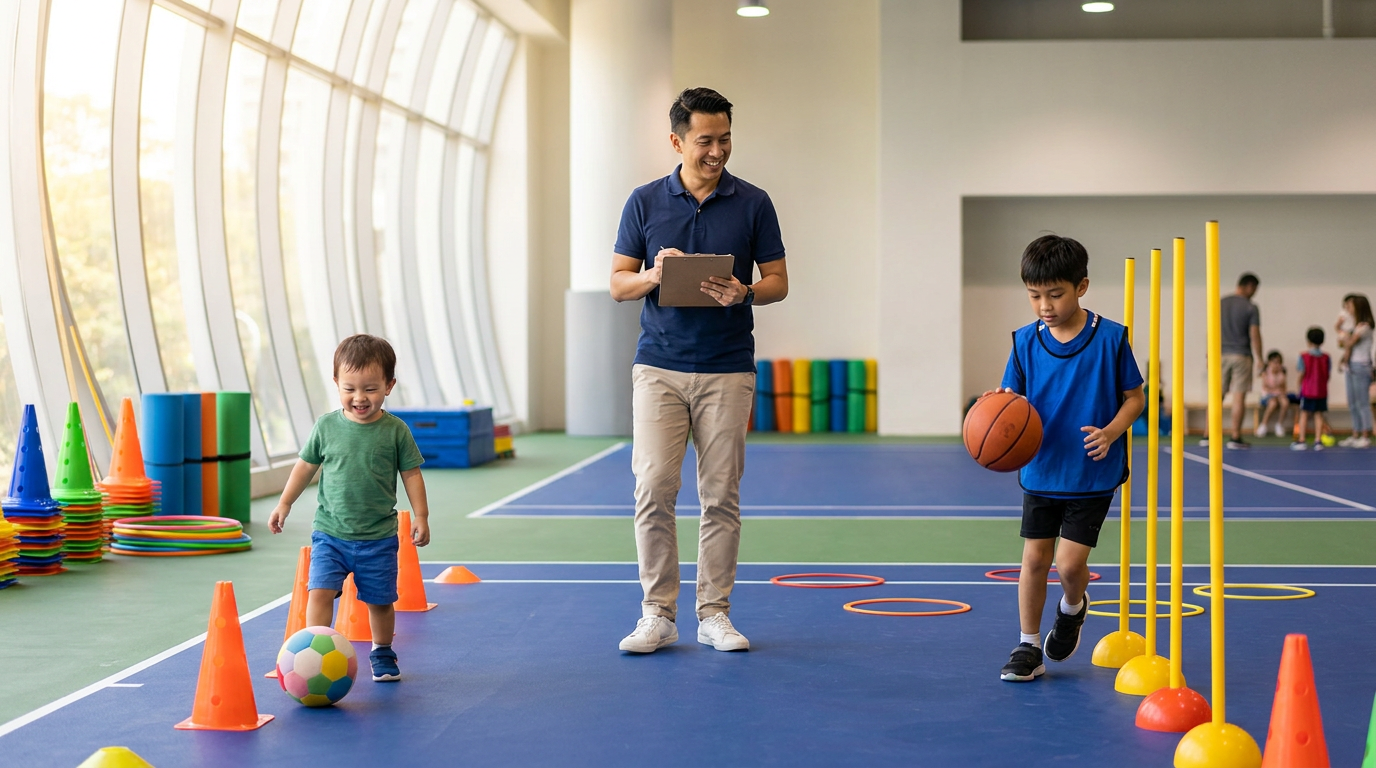
This is exactly what Vivo Kinetics is designed to deliver. Through Vivo Kids, Singapore's award-winning multi-sport programme for children aged 2 to 6, kids develop fundamental movement skills and character through age-appropriate activities guided by expert coaches in a safe, nurturing environment. The programme goes beyond physical fitness, supporting children intellectually, socially, and emotionally — creating well-rounded young athletes who are confident in their bodies and eager to take on new challenges.
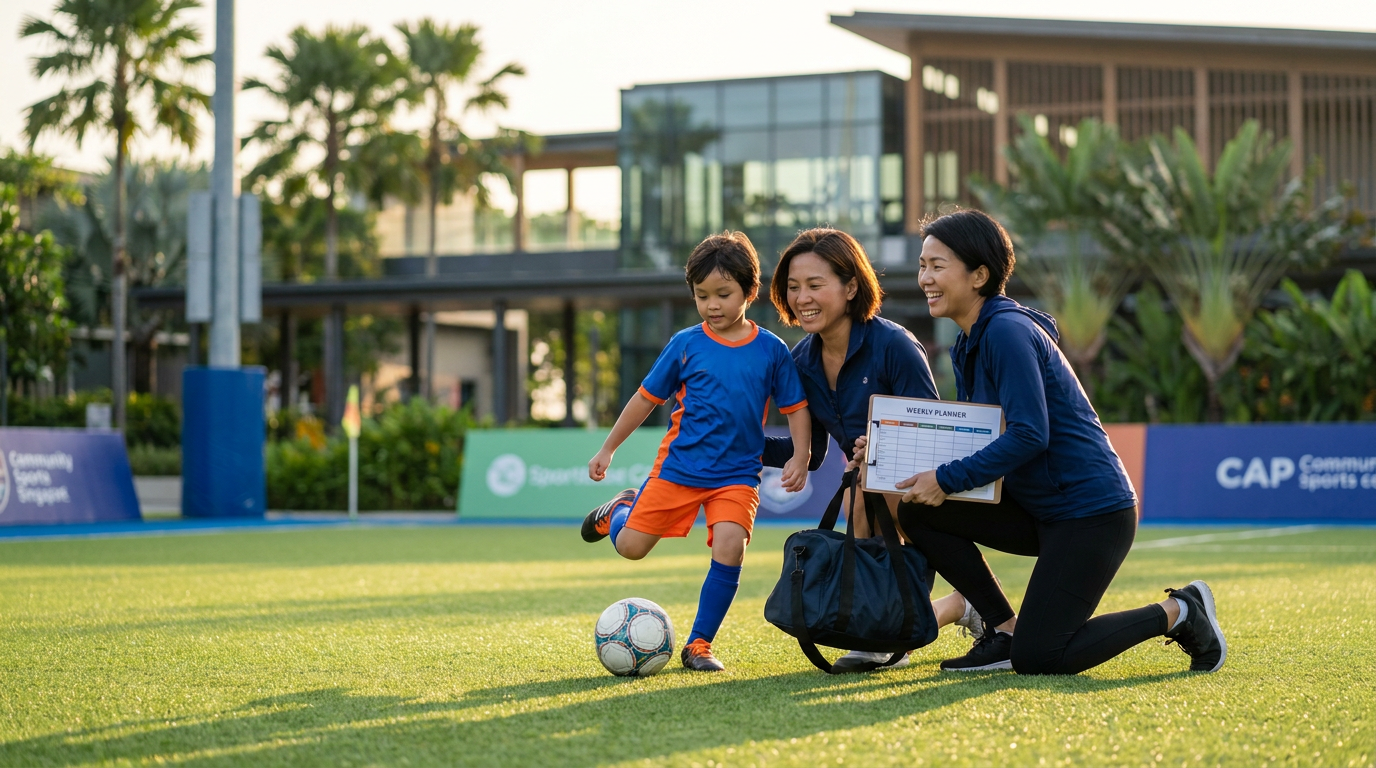
For older children who are ready to go deeper into a specific sport, Vivo Kicks offers a dedicated soccer academy for ages 6 to 12. With structured drills, teamwork exercises, and age-appropriate progressions, Vivo Kicks takes the energy and enthusiasm that corridor games ignite and channels it into real skill development on the pitch.
As children encounter new active play experiences, their brains adapt by forming new neural connections. Their social skills, creativity, and problem-solving develop in tandem with their movement skills and physical literacy. Structured sports programmes accelerate this process by introducing children to rules, team dynamics, and coached progression — all while keeping the experience joyful and play-based.
The journey from corridor games to the football pitch is a natural one. Every hop, skip, and target toss at home is quietly building the body awareness, confidence, and love of movement that will one day make a child thrive in a team sport setting.
Moving Forward: Small Spaces, Big Development
Living in an HDB flat does not mean compromising on your child's active development. From the corridor just outside your front door to the void deck downstairs, the spaces available to Singapore families are more versatile than they first appear. With the right games, a respect for shared community spaces, and a consistent commitment to making movement part of daily life, parents can give their children a rich physical foundation without ever needing a sprawling backyard.
In Singapore's compact and fast-paced environment, simple and intentional movement opportunities can have a lasting impact. Making active play part of daily life helps children grow strong, confident, and ready to take on new challenges.
Start small: pick one corridor game this weekend, or clear the living room for a ten-minute dance session after dinner. Watch how quickly your child's eyes light up — and how naturally movement becomes a habit they look forward to every day. Then, when they are ready to take that energy to the next level, know that expert coaching and a world-class programme are ready to meet them.
Ready to Take Active Play Further?
At Vivo Kinetics, we believe every child deserves expert-led, joyful, and age-appropriate sports experiences. Whether your little one is just finding their feet or ready for their first football drill, we have a programme designed just for them.
Explore Vivo Kinetics Programmes and discover how we can support your child's physical, social, and emotional development — beyond the corridor and onto the field.

Comments