


DIY Obstacle Course at Home: 20 Creative Ideas for Kids
Updated: 7 days ago
Table Of Contents
Why a DIY Obstacle Course Is One of the Best Things You Can Build for Your Child
What You Need to Get Started
10 Indoor DIY Obstacle Course Ideas
10 Outdoor DIY Obstacle Course Ideas
How to Make It More Exciting: Themes and Challenges
Safety Tips to Keep in Mind
When to Level Up Beyond the Backyard
DIY Obstacle Course at Home: 20 Creative Ideas for Kids
Some of the best play moments don't come from expensive toys or elaborate trips — they come from a handful of cushions, a roll of painter's tape, and a child who has been challenged to figure out what their body can do. A DIY obstacle course at home is one of the simplest, most rewarding activities you can set up for kids of almost any age, and the benefits go far deeper than burning off energy before bedtime.
At Vivo Kinetics, we believe that movement is the foundation of learning. The same principles that guide our award-winning programs — age-appropriate challenge, play-based exploration, and building confidence through physical achievement — apply just as powerfully in your living room or backyard. Whether your child is a toddler just finding their feet or a school-age kid who craves a real physical challenge, there is an obstacle course idea in this guide for them.
Below you will find 20 creative DIY obstacle course ideas, split between indoor and outdoor setups, along with developmental insights, safety guidance, and tips for keeping things fresh every time.
Why a DIY Obstacle Course Is One of the Best Things You Can Build for Your Child
Obstacle courses look like pure fun — and they absolutely are — but they are also quietly doing some serious developmental work. Every crawl, jump, balance, and weave through a homemade course strengthens a child's gross motor skills, builds coordination, supports motor planning (the brain's ability to organise movement before it happens), and develops the kind of problem-solving confidence that carries over into school and social life.
Physically, activities like crawling, jumping, climbing, and balancing strengthen the large muscle groups and improve full-body coordination. Cognitively, a child navigating a course has to sequence tasks, follow a path, and adapt when something feels tricky. Emotionally, each completed obstacle delivers a genuine sense of achievement. When children run the course alongside a sibling or friend, social skills — turn-taking, cheering each other on, and working together — develop entirely naturally, without a single lecture from an adult.
The other great advantage of building your own course is flexibility. You can dial the difficulty up or down in minutes, swap out obstacles to match a theme, or redesign the whole thing every weekend. Unlike a fixed piece of play equipment, a DIY course grows with your child.
What You Need to Get Started
You do not need specialist equipment or a large garden. Most of the best obstacle course ideas use items that are already in your home. Here is a handy starting list:
Common household items: - Sofa cushions and throw pillows - Dining chairs and blankets (for tunnels) - Painter's tape or chalk - Hula hoops - Pool noodles - Cardboard boxes - Plastic cups and soft balls - A jump rope or length of yarn - Laundry basket - Stepping stones (paper plates, small cushions, or coloured spots)
Optional extras for outdoors: - Traffic cones (or DIY cones made from sand-filled plastic bottles) - Hose or sprinkler - Sidewalk chalk - Buckets
The golden rule: keep all materials stable, soft where possible, and appropriately sized for your child's age and height.
10 Indoor DIY Obstacle Course Ideas
Rainy days, school holidays, or those restless after-school hours — an indoor course solves all of these. These ideas work in a living room, hallway, or any open floor space.
1. The Pillow Hop
Scatter sofa cushions and pillows across the floor, leaving small gaps between them. Challenge your child to hop from cushion to cushion without touching the "lava" floor. This classic activity builds balance, leg strength, and spatial awareness, and it takes less than two minutes to set up. For toddlers, keep the cushions close together and flat; for older children, vary the heights and distances.
2. The Tunnel Crawl
Line up four or five dining chairs in a row and drape a blanket or bed sheet over the top to create a cosy crawl-through tunnel. Crawling is often underestimated as a developmental activity — it builds upper and lower body strength simultaneously and works on the coordination between both sides of the body. You can make the tunnel as long as your space allows, and younger children especially find the enclosed, den-like feeling genuinely exciting.
3. Painter's Tape Paths
Grab a roll of painter's tape and create a course on the floor: straight lines to balance-walk along, zig-zags to hop between, circles to jump in and out of, and a grid for hopscotch. Assign different tasks to different colours — blue means tiptoe, yellow means jump. This is a fantastic no-mess, zero-cost idea that can be reconfigured in minutes and adapted for any age from toddler upward.
4. The Yarn Laser Maze
Thread a length of yarn or string back and forth between furniture legs at varying heights, so children must duck under, step over, and squeeze through without touching the "lasers." This indoor spy training challenge is brilliant for body awareness, flexibility, and focus. For extra drama, attach a jingle bell at a few points — if it rings, that "alarm" has been triggered. Older children love the stealthy, problem-solving element of this one.
5. Ball Toss Station
Place a laundry basket at one end of the room and mark a throw line with tape. As part of the broader course, children must land three soft balls in the basket before moving to the next obstacle. Throwing and catching activities develop hand-eye coordination and upper body control. You can also swap in beanbags or rolled-up socks for variety.
6. The Balance Beam
Lay a pool noodle flat on the floor, or use a length of painter's tape, and challenge your child to walk along it heel-to-toe without stepping off. For an added challenge, have them carry a small object — like a stuffed toy balanced on an outstretched hand — while they walk. Balance activities like this directly target core strength and proprioception, and they mirror the kind of movement skills we focus on in our Vivo Kids multi-sports programme for children aged two to six.
7. Cushion Mountain Climb
Stack a pile of firm cushions or fold a thick duvet several times to create a soft "mountain" to climb up and over. Add a flag at the top for extra fun. Climbing challenges require whole-body strength, grip, and motor planning, and toddlers especially find this endlessly repeatable. Always supervise closely and keep the height age-appropriate.
8. Follow the String
Unroll a ball of yarn through several rooms, weaving it under tables, around chair legs, and through doorways. The rule is simple: hold the string and follow it all the way to the end, where a small prize or treasure can be waiting. This idea encourages sequencing, problem-solving, and sustained focus — and it transforms an ordinary home into a surprising adventure for young children.
9. Hula Hoop Hopscotch
Lay hula hoops flat on the floor in a pattern — single, double, single, double — and call out different ways to move through them: two-footed jump, one-footed hop, sidestep, shuffle. Changing the movement pattern keeps the challenge mentally and physically engaging. This activity builds bilateral coordination and listening skills at the same time.
10. Clothes Hanger Curtain
Hook a row of plastic clothes hangers together and hang them from a doorframe or over a tension rod. Vary the height so children must bend, duck, or stretch to get through without touching. This imaginative little obstacle works beautifully as a station within a larger course and builds spatial awareness and body control.
10 Outdoor DIY Obstacle Course Ideas
When the weather allows, take the fun outside. Outdoors, you have more space for running, jumping, and larger obstacles — and the fresh air itself is a bonus.
11. Cone Weave and Sprint
Set up a zigzag row of traffic cones (or sand-filled plastic bottles) for children to weave through, then sprint to a finish line. For a soccer-ready twist, have them dribble a ball through the cones instead of running. This is a direct foundation skill for our Vivo Kicks Academy, which focuses on agility and coordination for children aged six to twelve. Time each run and encourage children to beat their own personal best.
12. Sidewalk Chalk Challenge
Use chalk to draw a full course on a driveway or paved area: hopscotch grids, circles to jump between, winding paths to follow, and shapes to balance inside. No equipment is needed whatsoever, and the course washes away with the next rain. You can also add learning elements — spell your name by jumping on the right letters, or hop the sequence of numbers — which makes this equally appealing for school-readiness practice.
13. Pool Noodle Hurdles
Push pool noodles into the ground (or rest them across two objects) to create a row of low hurdles to jump over. Vary the spacing and height to suit different ages. Younger children can step or hop over; older ones can work on a running hurdle technique. Pool noodles are soft and forgiving, which makes this one of the safest outdoor obstacles you can create.
14. The Hula Hoop Toss
Hang hula hoops from a fence or a low tree branch and have children throw a soft ball or beanbag through each one before moving to the next station. This combines throwing accuracy, arm strength, and focus, and can be made progressively harder by increasing the distance or using smaller hoops.
15. Water Splash Run
On a warm day, set up a sprinkler to run through, a shallow paddling pool to splash across, and a water balloon toss station. A water obstacle course is one of the most memorable outdoor activities for children, and it adds a natural cool-down to the physical effort. Always supervise young children around water, however shallow.
16. Tyre or Spot Jump Run
Lay hula hoops, chalk circles, or rubber stepping spots on the ground in a staggered pattern and have children jump from one to the next. Increase the distance between spots as skills improve. For an extra challenge, call out a colour or number as children approach so they have to identify the right spot before they land — combining physical agility with cognitive responsiveness.
17. Tunnel and Crawl Net
Set up a play tunnel (or make one with garden stakes and a tarpaulin draped over) alongside a section of rope net or rope ladder laid flat on the ground for children to crawl across. Combining different crawling and climbing textures adds rich sensory and proprioceptive input that is excellent for young nervous system development.
18. The Nature Course
Head to the garden or a local green space and collect long sticks, stones, and logs. Use them to mark out a course: sticks laid parallel for balance walking, a stone slalom to weave through, and a log to step over. Nature-based obstacle courses encourage environmental awareness and creative thinking alongside physical skill, and children who help build the course gain extra pride of ownership.
19. Scooter or Balance Bike Finish
Build the first half of the course on foot (weaving, jumping, crawling), then position a scooter or balance bike at a mid-point cone. Children must mount it and ride to the finish line. Adding a wheeled vehicle shifts the challenge to dynamic balance and steering coordination, and the transition from running to riding adds a fun problem-solving element.
20. The Backyard Ninja Challenge
Combine several stations into a timed full-circuit: a crawl-under section (rope strung between two chairs or posts), a jumping section (hula hoops on the ground), a balance section (a low plank or row of stepping stones), and a throw-to-score finish (soft balls into a bucket). Let children design and name their own version of the course — children who help create the obstacles are far more motivated to attempt them, and the planning itself is a wonderful exercise in spatial reasoning and sequencing.
How to Make It More Exciting: Themes and Challenges
Once your children have mastered the basics, introducing a theme or a progressive challenge structure keeps the energy high and the motivation even higher.
Theme ideas that work brilliantly: - Spy Training: Yarn laser maze, stealth crawl, and a "deactivate the bomb" (pop a balloon) finish - Jungle Safari: Crawl like a crocodile, jump like a frog between lily pads, balance along the "log bridge" - Superhero Academy: Complete five power challenges in order, with a costume element at the end - Ninja Warrior: Timed circuits with multiple rounds, letting children improve their score each attempt
Progressive challenge ideas: - Add a timer and challenge your child to beat their previous time - Introduce task cards at each station (e.g., do 5 star jumps before proceeding) - Run the course backwards for a completely fresh challenge - Turn it into a partner course where two children must hold hands through certain stations, building teamwork and communication skills naturally
Safety Tips to Keep in Mind
A well-designed course should feel challenging — but never unsafe. Here are the most important things to consider before your child sets off:
Match the difficulty to the age. For toddlers aged two to four, keep obstacles low, soft, and closely spaced, with an adult nearby. Children aged five to eight can handle more speed, height, and sequencing complexity.
Walk before you run. Always have children walk through the course once at slow speed before attempting it at full pace. This allows them to understand each obstacle and move with control.
Clear the area. Remove sharp objects, uneven surfaces, and any furniture with hard corners from the course perimeter.
Use soft or lightweight materials overhead. If anything is suspended above a child's path, make sure it is light enough that contact causes no injury.
Supervise, especially around water and height. Always have an adult watching, particularly with toddlers, water features, or any climbing element.
Let children skip. If a child is hesitant about a particular obstacle, encourage without pressuring. Confidence builds through positive experience, not forced repetition.
When to Level Up Beyond the Backyard
A DIY obstacle course at home is a brilliant starting point, and many children will want to keep coming back to it week after week. Over time, though, you may notice your child craving more structured challenge, coaching feedback, or the energy of working alongside other children. That is a natural and exciting sign of physical and social growth.
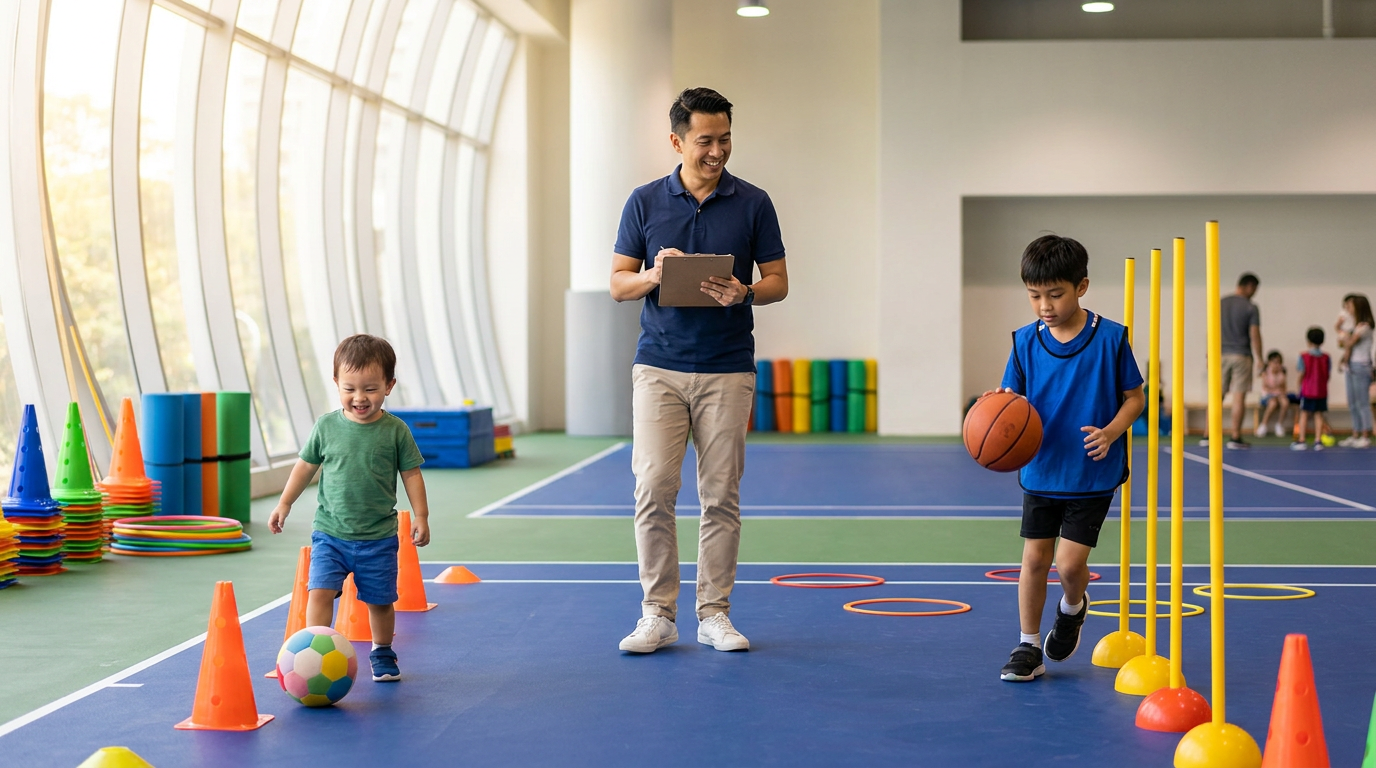
At Vivo Kinetics, our programmes are built around exactly this progression. Our Vivo Kids multi-sports programme introduces children aged two to six to a wide range of movement skills — running, jumping, balancing, throwing, and catching — through play-based activities led by expert coaches in a nurturing, age-appropriate environment. For children aged six to twelve who are ready for a more focused sporting challenge, our Vivo Kicks Academy builds agility, coordination, and sport-specific skills through a structured soccer curriculum.
Whether your child is conquering the pillow hop in the living room today or sprinting through a professional training circuit in a few years, the foundation is the same: joy of movement, confidence through challenge, and a body and mind that are ready for anything.
Keep the Fun Going
A DIY obstacle course at home does not have to be a one-weekend project. The best versions evolve alongside your child — a little harder each month, a little more creative with each rebuild. Start simple, watch their confidence grow, and let them take the lead in designing what comes next. That act of designing, planning, and then doing is itself one of the most valuable things play can offer a growing child.
Need more inspiration for keeping your child active, challenged, and loving movement? Explore the full range of play-based programmes at Vivo Kinetics and find the perfect fit for your child's age, interests, and developmental stage.
Ready to take your child's active play to the next level? Discover award-winning sports and fitness programmes designed for children aged 20 months to 12 years.
Explore Vivo Kinetics Programmes →
Comments