


Educational Holiday Camps in Singapore: How to Find the Perfect Blend of Learning and Fun
Table Of Contents
Why Educational Holiday Camps Are More Than Just a School Break
The Four Pillars of Child Development That Great Camps Nurture
Types of Educational Holiday Camps in Singapore
What to Look for When Choosing a Holiday Camp
The Magic of Sports-Based Learning at Holiday Camps
How Camposaur by Vivo Kinetics Brings It All Together
Tips for Preparing Your Child for Their First Holiday Camp
Frequently Asked Questions
Educational Holiday Camps in Singapore: Where Learning and Adventure Come Together
Every school holiday brings the same question for Singapore parents: how do you keep your child active, engaged, and growing — without them spending the entire break glued to a screen? Educational holiday camps are one of the most effective and joyful answers to that challenge. They give children structured time, new friendships, and meaningful experiences that no amount of home entertainment can replicate.
But not all holiday camps are created equal. The best ones do something remarkable — they make children want to learn. Whether it's discovering a talent for sport, building a robot for the first time, or simply gaining the confidence to try something unfamiliar, a well-designed educational holiday camp plants seeds that grow long after the camp week ends.
This guide is written for Singapore parents who want to understand what makes educational holiday camps truly valuable, what types of programmes exist across the island, and how to choose one that fits your child's age, personality, and developmental stage. We'll also walk through why play-based, sports-enriched camps like Camposaur by Vivo Kinetics are earning the loyalty of families across Singapore holiday after holiday.
Why Educational Holiday Camps Are More Than Just a School Break
School holidays in Singapore are precious windows of unstructured time — but research consistently shows that children thrive with purposeful activity, even when they're supposed to be resting. The concern many child development professionals raise is the so-called 'learning slump', where extended breaks without stimulation can slow cognitive momentum, particularly for younger children still building foundational skills. Educational holiday camps address this directly by keeping minds and bodies active in ways that feel genuinely fun, not like homework in disguise.
Beyond keeping skills sharp, holiday camps expose children to experiences they simply don't get in a regular classroom. A child who has never picked up a football might discover it's their favourite sport. A naturally shy child might surprise everyone (including themselves) by leading a team challenge on day three. These micro-moments of discovery and confidence-building are the quiet but lasting gifts that great holiday camps give. It's not about academic drilling — it's about opening possibilities.
There's also the social dimension that can't be overstated. During the school term, children are largely surrounded by the same classmates in the same structured environment. Holiday camps introduce an entirely different social mix: new children from different schools, different neighbourhoods, sometimes even different countries. Learning to navigate those new relationships — to communicate, cooperate, and build quick friendships — is social intelligence that no classroom worksheet can teach.
The Four Pillars of Child Development That Great Camps Nurture
The most effective educational holiday camps in Singapore are designed around holistic child development. Vivo Kinetics, for example, builds every programme around four interconnected domains of growth — intellectual, social, emotional, and physical — because children don't develop in silos. Here's what each pillar looks like in a well-run camp setting:
Physical development is the most visible pillar at sports-focused camps, but its benefits run deeper than fitness. When children run, jump, throw, and balance, they're building gross motor skills, proprioception, and body confidence. Regular physical activity during holidays also boosts mood, reduces stress, and supports better sleep. A child who has been physically active all day at camp is a calmer, happier child at home — something every Singapore parent can appreciate.
Cognitive development at a good educational camp isn't about worksheets or tests. It happens through problem-solving challenges, creative projects, STEM activities, and the critical thinking that sport naturally demands — anticipating an opponent's move, adjusting strategy mid-game, or figuring out how to build a structure that won't fall over. These are the same mental muscles children need for academic success, trained through play.
Social development flourishes in camp environments because the entire design is collaborative. Team sports, group art projects, and shared meal breaks all create organic opportunities for children to practise communication, leadership, empathy, and conflict resolution. Children who attend holiday camps consistently report making new friends as one of the most valued parts of the experience.
Emotional development may be the most underappreciated benefit of holiday camps. Trying something new and not immediately succeeding — and then trying again — builds resilience and a growth mindset that carries into every corner of a child's life. In a nurturing, low-pressure camp environment, children learn that effort is more important than perfection, and that it's safe to take risks.
Types of Educational Holiday Camps in Singapore
Singapore's holiday camp landscape is genuinely impressive in its variety. Families can find quality programmes across almost every interest area, from robotics to dance, language immersion to outdoor adventure. Understanding the main categories helps parents build a thoughtful shortlist rather than simply booking the nearest or cheapest option.
Multi-activity and sports camps are ideal for younger children and those still exploring their interests. These programmes rotate through different activities each day — sports, arts and crafts, team games, STEM challenges — keeping energy and curiosity high throughout the week. They're also excellent for children who don't yet have a strong single passion and benefit from broad exposure.
Specialist sports camps suit children who already love a particular sport and want focused skill development. Football academies, swimming intensives, tennis camps, and gymnastics programmes all fall into this category. The best specialist camps balance technical coaching with character development, teaching sportsmanship, teamwork, and perseverance alongside the actual sport.
STEM and coding camps have grown significantly in popularity as parents recognise the value of future-ready skills. Children learn through hands-on projects — building robots, programming games, experimenting with electronics — in ways that feel more like play than study. Age-appropriate curriculum is essential here; look for camps that clearly differentiate between beginner and advanced tracks.
Creative arts and performing arts camps give children an outlet for self-expression through music, drama, dance, and visual art. These camps build confidence, public presence, and emotional vocabulary in ways that sports camps may not. Many children who seem shy in a classroom find their voice on a stage or art studio.
Language immersion camps are increasingly popular among Singapore families wanting to strengthen Mandarin or English skills in an engaging, non-academic setting. The best of these use storytelling, role-play, and themed activities to make language feel natural and enjoyable rather than pressured.
Outdoor and adventure camps tap into children's natural love of nature exploration, from nature walks and beach days to team survival challenges. These programmes build independence, risk-assessment skills, and genuine appreciation for the natural world — things that are sometimes harder to cultivate in Singapore's predominantly indoor school environment.
What to Look for When Choosing a Holiday Camp
With dozens of options running across every school break, the challenge for Singapore parents isn't finding a holiday camp — it's finding the right one. These are the factors worth evaluating carefully:
Age-appropriate programming: The curriculum and activities should be designed for your child's specific developmental stage, not simply divided into 'young' and 'older' groups. A well-designed camp looks meaningfully different for a 4-year-old versus an 8-year-old.
Coach and facilitator qualifications: Look for camps run by trained coaches or educators with relevant credentials, genuine enthusiasm for working with children, and experience managing groups across ability levels.
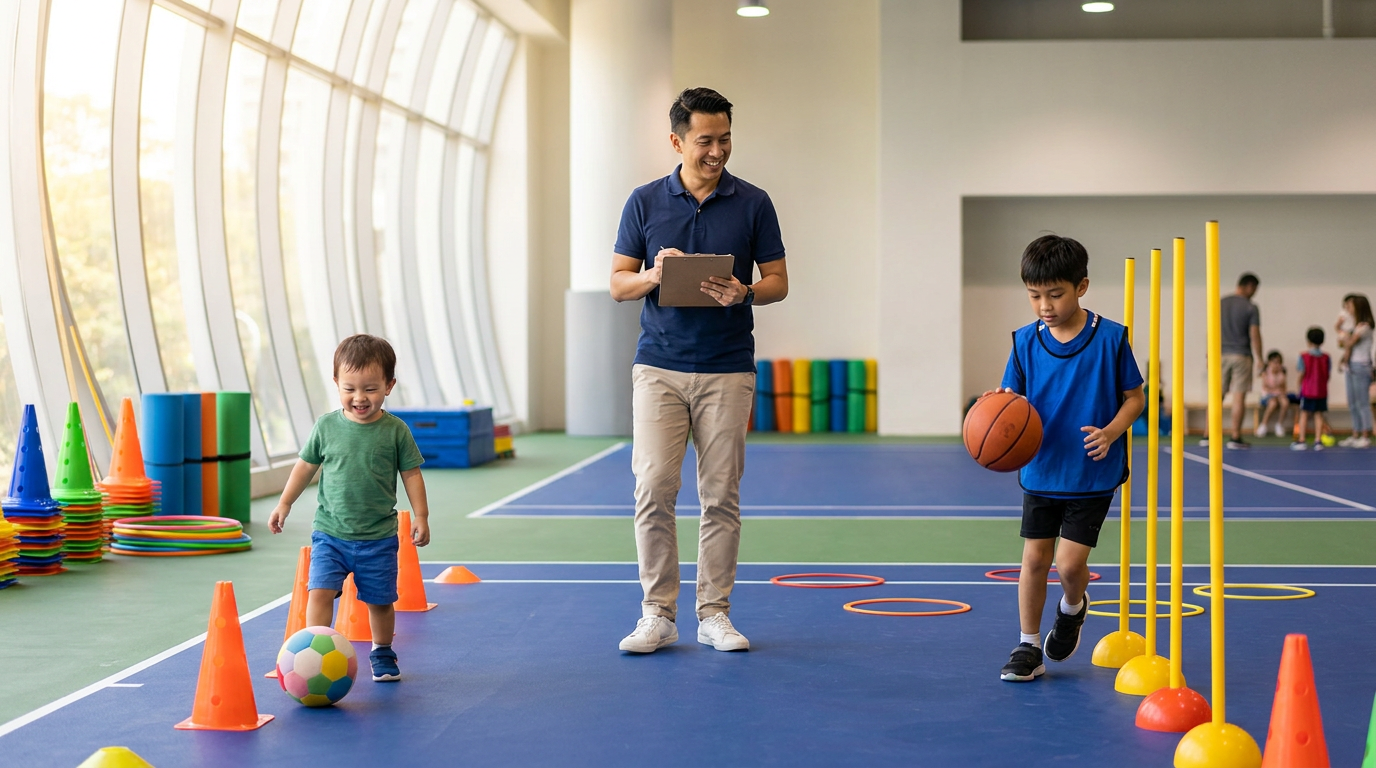
Coach-to-child ratio: A low ratio is one of the clearest signals of programme quality. For younger children (3 to 5 years), a ratio of 1 coach to 5 children is a strong benchmark. For older children, 1 to 7 is reasonable. Higher ratios mean less individual attention.
Safety protocols: Check whether the venue is safe and appropriate for the activities offered, whether coaches hold first aid certification, and whether there are clear procedures for managing injuries or emergencies.
Structured but flexible scheduling: The best camps have a clear daily schedule that balances coached activities with downtime, snack breaks, and free exploration — giving children both structure and space to breathe.
Reputation and parent reviews: Look beyond the marketing. Read detailed parent reviews and ask how staff responded when a child struggled or had a difficult day. That tells you far more about the camp culture than any promotional video.
Track record: A camp that families return to season after season is a very good sign. It suggests consistency in quality, not just a well-designed first impression.
The Magic of Sports-Based Learning at Holiday Camps
For children aged 2 to 12, movement is not separate from learning — it is learning. The research on play-based, physically active education is compelling: children develop cognitive skills more effectively when their bodies are engaged. Sports-based holiday camps that are thoughtfully designed don't just keep children fit; they create conditions for the whole child to grow.
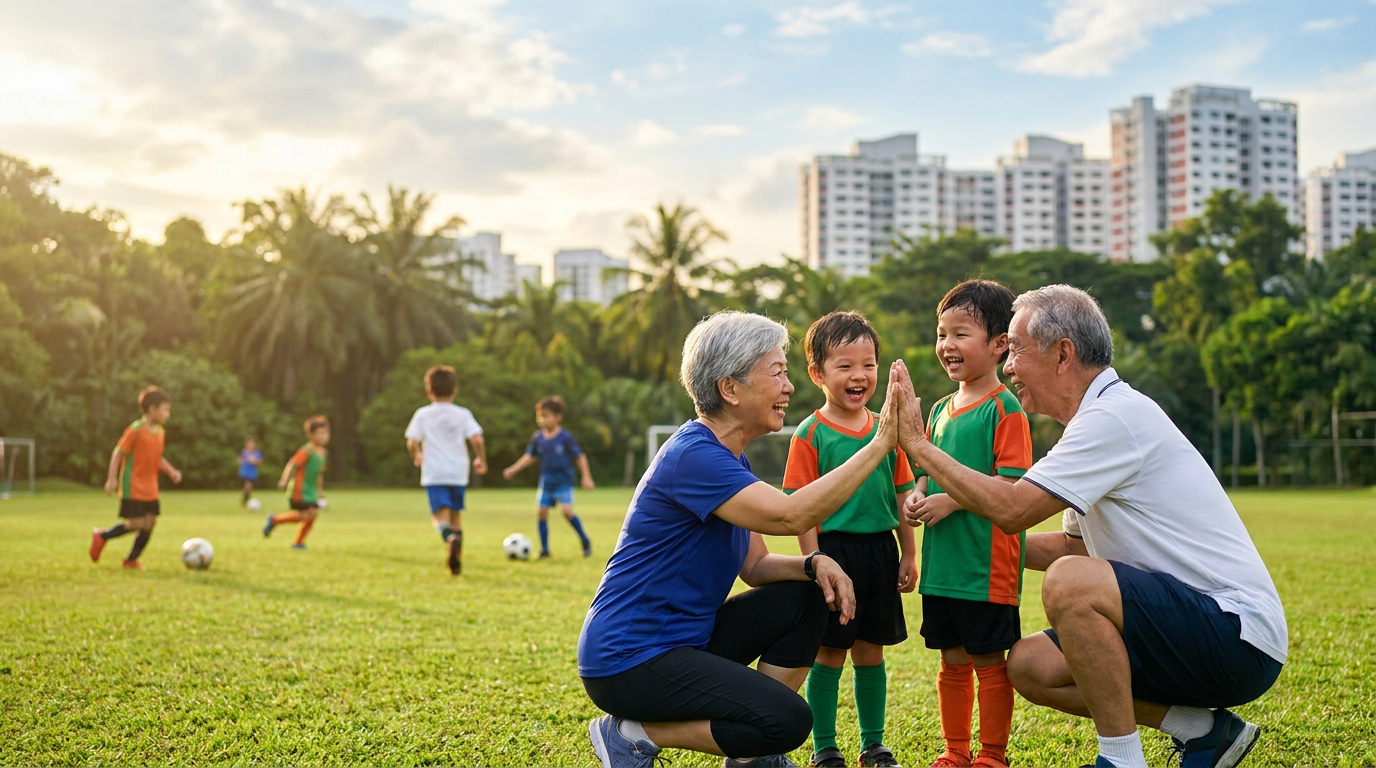
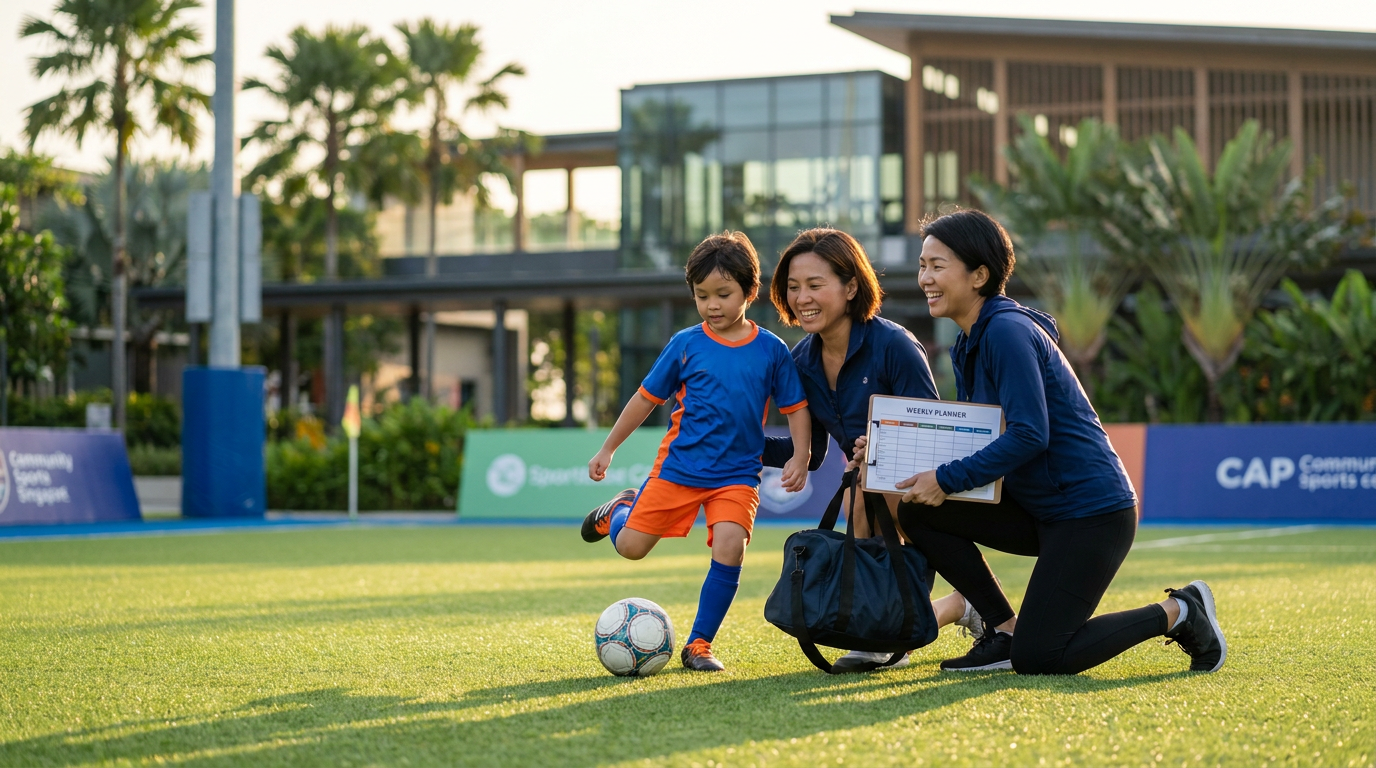
When a 5-year-old practises dribbling a ball or navigating an obstacle course, they're not just building coordination. They're learning to focus, to follow instructions, to manage frustration when something doesn't go right, and to celebrate small wins. When an 8-year-old joins a team sport for the first time, they're learning strategy, communication, and what it means to contribute to something larger than themselves. These are skills that transfer directly into academic performance, peer relationships, and emotional resilience.
Singapore's multi-sport holiday camps are particularly well-suited to younger children because they avoid early specialisation — a concern among child development experts who note that pressure to specialise too soon can undermine intrinsic motivation. Letting a 4-year-old try football on Monday, frisbee on Tuesday, and floorball on Wednesday builds athletic confidence and a love of movement that is far more valuable long-term than mastery of a single sport at age 6.
For children who are ready to go deeper, specialist soccer academies like Vivo Kicks offer the focused technical development and team culture that young athletes genuinely thrive in.
How Camposaur by Vivo Kinetics Brings It All Together
If you've been looking for a holiday camp in Singapore that genuinely earns the label 'educational', Camposaur by Vivo Kinetics is worth your full attention. As Vivo Kinetics' flagship holiday programme, Camposaur has been designed around the belief that the best learning happens when children are having the most fun — and the programme structure reflects exactly that philosophy.
Every Camposaur camp is a multi-activity experience that weaves together sports, arts and crafts, STEM challenges, team-building games, and outdoor exploration. Rather than simply filling the day with activities, the camp schedule is carefully crafted to balance high-energy sessions with creative downtime and social interaction. Children aren't rushed from one thing to the next — they're given space to fully experience each activity, ask questions, and connect with their teammates.
The sports component draws directly from Vivo Kinetics' expertise as an award-winning children's sports and fitness provider. Expert coaches lead age-appropriate multi-sport sessions that build fundamental movement skills, coordination, and confidence. Camposaur runs themed versions of the camp — past editions have included 'The Great Mythical Quest', where every sport, craft, and challenge is woven into an epic adventure narrative featuring dragons, unicorns, and team quests. That kind of immersive storytelling keeps children fully engaged and makes the whole experience genuinely memorable.
Beyond sports, Camposaur incorporates STEM and creative activities that nurture curiosity and problem-solving. Children explore basic engineering concepts, hands-on craft projects, and the kind of open-ended challenges that develop critical thinking in a pressure-free environment. Nature walks and outdoor excursions add real-world exploration to the mix, giving children sensory experiences that balance the structured activity sessions.
The coach-to-child ratios at Camposaur reflect Vivo Kinetics' commitment to genuine care: 1 coach to 5 children for the youngest campers (ages 3 to 5.5), and 1 coach to 7 children for ages 6 to 10. These are ratios that make individual attention genuinely possible, not just a marketing claim. It's one of the reasons families return to Camposaur holiday after holiday — some children have attended four or five consecutive camps, which speaks volumes about the experience.
For families interested in Vivo Kinetics' year-round programming, the Vivo Kids multi-sports programme extends the same movement-based, character-building approach into regular weekly sessions for children aged 2 to 6. It's the ideal complement to a Camposaur camp for families who want to maintain the momentum of active learning throughout the school term.
Tips for Preparing Your Child for Their First Holiday Camp
For children attending their first holiday camp, the experience can feel equal parts exciting and daunting. A little preparation at home goes a long way toward ensuring a smooth and positive start.
Talk it up, not down. Frame the camp as an adventure, not a drop-off. Describe specific things your child will get to do — play sports with new friends, make something in the crafts session, go on an outdoor adventure. Specific details are more reassuring than vague enthusiasm.
Visit the venue beforehand if possible. Many camps hold orientation sessions or open days. Familiar surroundings on the first morning significantly reduce anxiety, especially for younger children.
Practice independence at home. In the week before camp, give your child small opportunities to make their own choices, manage their belongings, and solve minor problems without immediate adult intervention. These micro-experiences build the readiness muscles that camp will call on.
Pack thoughtfully. Comfortable, activity-friendly clothes, a water bottle clearly labelled with your child's name, sun protection, and any necessary medication should all be sorted the evening before. Rushing on the first morning adds unnecessary stress for both of you.
Trust the coaches. Separation anxiety is completely normal, especially for first-timers. Well-trained coaches are skilled at transitioning children from a teary goodbye to a fully engaged participant within minutes. Trust the process — and check for the photo updates that good camps provide to give parents peace of mind throughout the day.
Frequently Asked Questions
At what age can my child attend a holiday camp in Singapore? Many quality holiday camps in Singapore accept children from age 3 upwards, though some specialist programmes cater to toddlers as young as 18 months with parent accompaniment. Camposaur by Vivo Kinetics is suitable for children aged 3 to 12, with age-appropriate groupings throughout.
How do I know if a holiday camp is genuinely educational? Look for camps with a structured curriculum designed by qualified coaches or educators, clear learning outcomes for each activity, and a philosophy that goes beyond 'keeping children busy'. Camps that speak specifically about child development — physical, cognitive, social, and emotional — and back that up with trained staff and low ratios are the ones to prioritise.
What if my child has never played team sports before? Great multi-sport camps welcome complete beginners warmly. Children are not expected to arrive with existing skills — they're expected to arrive curious and willing. At well-designed camps like Camposaur, activities are structured to build skills gradually, so children of all ability levels feel equally included and challenged.
How early should I register for school holiday camps in Singapore? Early registration is strongly recommended, particularly for June and December holiday camps, which tend to fill quickly. Aim to register at least four to six weeks before the holiday period begins to secure your preferred dates and age group.
Can my child attend for just a few days rather than a full week? Many camps offer flexible options including single-day or partial-week attendance, though full-week enrolment usually provides the richest experience and is often prioritised in slot allocation. Check directly with the camp provider for current availability.
Ready to Make the School Holidays Count?
Educational holiday camps in Singapore are one of the most powerful investments you can make in your child's development — not because they replace school, but because they offer something school rarely can: the freedom to learn through adventure, movement, creativity, and genuine fun. The right camp gives your child a week they'll talk about for months, and skills that stay with them for years.
The key is choosing a programme that genuinely aligns with your child's age, developmental stage, and personality — and that prioritises their holistic growth rather than simply filling the hours. Whether you're drawn to multi-activity exploration, specialist sports coaching, creative arts, or STEM discovery, Singapore's holiday camp landscape offers something truly excellent for every child.
For families looking for a trusted, award-winning option that combines sport, creativity, STEM, and character-building into one unforgettable experience, Camposaur by Vivo Kinetics is a programme worth putting at the top of your list.
Give Your Child a Holiday They'll Never Forget
Vivo Kinetics is Singapore's award-winning children's sports and fitness company, recognised as Best Children's Multi-sport Programme 2024 and a Recognised Leader in Children's Health & Fitness in Southeast Asia. From Camposaur holiday camps to the Vivo Kids multi-sports programme for ages 2–6 and the Vivo Kicks soccer academy for ages 6–12, every Vivo Kinetics programme is crafted by expert coaches in a safe, nurturing environment where children can explore, build confidence, and thrive.
Explore all programmes and register today at vivokinetics.com →
Comments