


Holiday Camp Age Groups: How to Find the Right Fit for Your Child
Table Of Contents
Why Age Groupings at Holiday Camps Actually Matter
The Toddler & Preschool Stage (Ages 2–5): Movement, Play, and Discovery
The Early Primary Stage (Ages 5–7): Building Confidence Through Exploration
The Primary School Stage (Ages 7–12): Skills, Teamwork, and Healthy Competition
What If My Child Is Between Age Groups?
Key Questions to Ask Before Enrolling
Finding the Right Fit in Singapore
Every parent wants to watch their child run through the gates of a holiday camp beaming with excitement — not dragging their feet because the activities are too hard, too babyish, or simply not designed with them in mind. Choosing the right holiday camp age group is one of the most important decisions you'll make when planning the school holidays, yet it's often an afterthought behind location and price.
The truth is, children develop at remarkable speed. A four-year-old and a six-year-old may look similar on a registration form, but they are at entirely different stages of physical coordination, social readiness, and emotional regulation. Put them in the same group without accounting for that, and the experience can fall flat for both. Match the camp to the child's developmental stage, however, and something genuinely magical happens.
This guide breaks down what each age group needs from a holiday camp, what the research says about children's developmental stages, and how to find a programme that grows your child — not just keeps them busy.
Why Age Groupings at Holiday Camps Actually Matter
It might be tempting to assume that any active, fun camp will do the job for any child. But child development experts and paediatric health bodies consistently emphasise that children's readiness for different types of activity, instruction, and social interaction changes significantly across age brackets. The American Academy of Pediatrics notes that as children grow, "appropriate practice, game schedules, and content become more important, taking into account athlete developmental stage and skills." A well-designed camp takes this seriously — not as a bureaucratic box-ticking exercise, but because grouping children developmentally is what makes learning stick and enjoyment last.
When a camp groups children by genuine developmental stage rather than simply by school year, coaches can pitch activities at exactly the right level of challenge. Younger children get the freedom to explore and play without the pressure of competing against older, more coordinated peers. Older children get to stretch themselves with technique, strategy, and team responsibility. Both groups feel capable, included, and genuinely engaged. That sense of rightness — of being in the right place at the right time — is what parents describe when they say their child "loved every second."
Age-appropriate groupings also matter for safety and supervision. A ratio that works for an eight-year-old navigating a multi-sport session is very different from what a three-year-old needs. At Vivo Kinetics' Camposaur holiday camps, for example, the coach-to-child ratio for the 3–5.5 age group is 1:5, while for the 6–10 age group it moves to 1:7 — a deliberate design choice that reflects exactly how much hands-on support younger children need compared to their more independent older counterparts.
The Toddler & Preschool Stage (Ages 2–5): Movement, Play, and Discovery
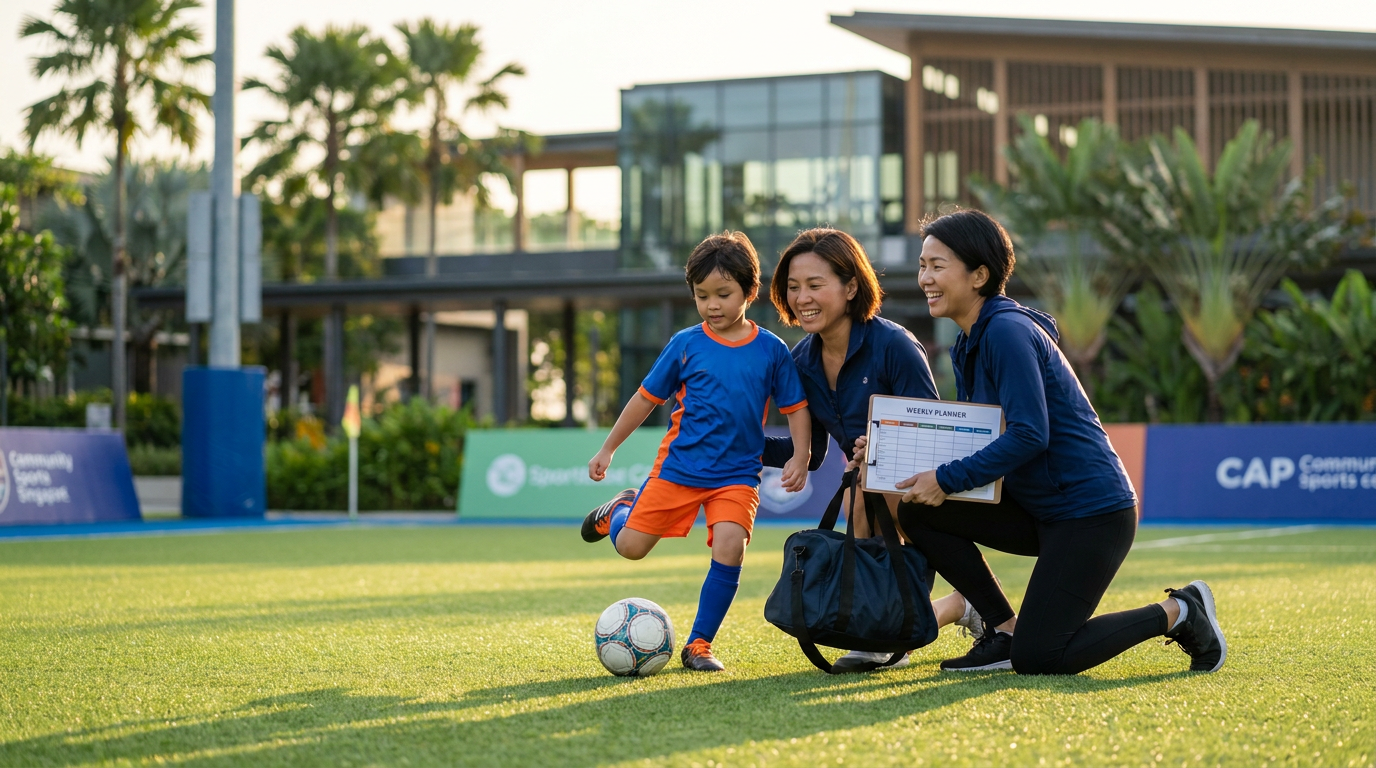
For the youngest campers, holiday camp is not about learning a sport. It is about learning to move — and loving it. Children aged two to five are in a critical window for gross motor development: running, jumping, throwing, kicking, and balancing are all skills being wired into the brain and body simultaneously. Research published in Pediatrics confirms that "fundamental motor skills, such as running, leaping, throwing, catching, and kicking, are essential for everyday functioning and are important building blocks for higher-level sports skills." What happens in these early years sets the physical foundation for everything that follows.
At this age, unstructured and guided play are equally powerful teachers. Preschoolers learn by watching, imitating, and exploring rather than by following detailed instructions or competing in structured games. Their attention spans are naturally short, their imaginations are boundless, and they thrive in environments that feel safe, playful, and low-pressure. The best holiday camp programmes for this age group prioritise joyful movement over measurable performance — obstacle courses over scoreboards, creative games over drilling technique.
Vivo Kinetics' Vivo Kids multi-sports programme is built precisely around this understanding. Designed for children aged 2–6, Vivo Kids focuses on movement skill development and character building through play-based activities — giving young children the physical vocabulary they'll draw on for years to come. When toddlers and preschoolers join the Camposaur holiday camp, they enter a world carefully paced for their developmental stage: high supervision, sensory-rich activities, and plenty of space to explore at their own pace.
What to look for in a camp for ages 2–5:
High coach-to-child ratios (1:5 or better)
Play-based, exploration-led activities rather than structured drills
Short activity rotations that match a young child's attention span
A calm, nurturing environment where shy or hesitant children feel welcomed
Familiar routines and consistent caregivers throughout the day
The Early Primary Stage (Ages 5–7): Building Confidence Through Exploration
The transition from preschool to primary school marks a fascinating shift in how children engage with the world around them. Around ages five to seven, most children begin developing the physical coordination and social awareness that make structured play genuinely rewarding. They start to understand simple rules, enjoy small-group games, and care about doing things "right" — even if their interpretation of the rules changes moment to moment. The emphasis at this stage, as child development experts consistently recommend, should be on "learning new skills, making friends, and having fun" rather than performance or competition.
Children in this bracket are also at a crucial point for social development. They are beginning to negotiate friendships, take turns, handle small disappointments, and experience the satisfaction of being part of a team. A holiday camp that understands this will blend coached activities with open play, mix sports with creative challenges, and ensure every child has moments where they shine regardless of ability. This is not the stage for rankings or rigorous selection — it is the stage for building the emotional confidence that sustains a child's love of activity for life.
The Camposaur holiday camp caters beautifully to this age group with its all-encompassing programme that blends multi-sport activities, arts and craft, STEM challenges, and team-building games into a single week. Children in this age range discover what they enjoy, build friendships with peers who share their energy, and develop the kind of holistic confidence that no single-sport camp can replicate.
What to look for in a camp for ages 5–7:
A mix of structured activity and free exploration
Multi-activity formats that let children sample different interests
Coaches trained specifically to work with younger primary-age children
Focus on participation, effort, and fun over winning
Positive reinforcement strategies that build genuine self-esteem
The Primary School Stage (Ages 7–12): Skills, Teamwork, and Healthy Competition
By the time children reach the upper primary years, something clicks. Their motor skills are sharper, their ability to retain and apply instructions improves dramatically, and they develop the cognitive capacity to understand strategy, position, and team dynamics. Research from the American Academy of Pediatrics notes that "by ages 10 to 12 years, most children are ready for more complex sports" with "the motor skills and cognitive ability to play sports that require complex motor skills, teamwork and strategies." Holiday camps for this age group can therefore afford to be more structured, more technique-focused, and more genuinely competitive — as long as the emphasis remains on development and enjoyment rather than pure performance.
This is also the stage when children begin to identify with specific sports or activities. Some will discover a passion for football; others will find they thrive in multi-sport environments where they can lead in one activity and be a willing beginner in another. Camps that recognise this by offering both breadth and depth serve this age group particularly well. The social dimension intensifies too — friendships formed at this stage can be deep and lasting, and the experience of working towards a shared goal with a team is one of the most formative things a child of this age can encounter.
For children aged 6 to 12 with a particular love of football, Vivo Kinetics' Vivo Kicks Academy offers a specialist soccer training pathway that combines technical skill development with the values of teamwork and discipline that carry well beyond the pitch. For those who prefer a broader experience, Camposaur's older-age programme delivers friendly sport competitions, mini-tournaments, and creative challenges that keep this age group energised, stretched, and thoroughly absorbed throughout the holiday week.
What to look for in a camp for ages 7–12:
Skill progression built into the weekly structure
Age-appropriate competitive elements that challenge without overwhelming
Qualified coaches who understand both technique and team psychology
Opportunities for leadership, responsibility, and peer mentorship
A balance between coached sessions and social free time
What If My Child Is Between Age Groups?
Age brackets are guides, not rigid rules — and good camp providers know this. Every child develops at their own pace, and some five-year-olds are socially and physically ready for activities typically suited to six or seven-year-olds, while some seven-year-olds still thrive most in a nurturing, exploration-led environment. When in doubt, consider your child's emotional readiness alongside their physical ability. Can they handle a new environment without a familiar adult nearby? Do they manage small frustrations without becoming overwhelmed? Are they excited about being with peers, or do they still prefer adult-led one-on-one interaction?
If you are genuinely unsure, a simple conversation with the camp team is the best first step. Experienced providers can usually offer a helpful steer based on what you share about your child's personality, experience, and current developmental stage. The goal is always the same: to place your child somewhere they feel capable, challenged, and completely at home.
Key Questions to Ask Before Enrolling
Before committing to any holiday camp, it pays to ask a few focused questions that reveal whether the programme truly understands age-appropriate development — or simply groups children by year level out of administrative convenience.
How are children grouped? Are they placed by age, developmental stage, skill level, or a combination?
What is the coach-to-child ratio for my child's age group? Younger children need closer supervision; the ratio should reflect this.
How do coaches handle children who are nervous, shy, or struggling? The answer reveals the culture of the camp far more than any brochure.
What does a typical day look like? Look for a balanced structure that includes coached activity, creative time, rest, and social play — not a relentless schedule that leaves no room to breathe.
Is there a pathway for my child to grow with the programme? The best camps and academies are not one-off experiences but part of a longer developmental journey.
These questions protect your investment, but more importantly, they protect your child's experience. A camp that answers them thoughtfully is one worth trusting.
Finding the Right Fit in Singapore
Singapore's holiday camp landscape is genuinely rich, but not all programmes are created equal when it comes to age-appropriate design. The most trustworthy providers are those who have invested in understanding child development — not just activity planning — and who build their entire curriculum around the needs of specific age groups rather than trying to stretch one programme across an impossibly wide range.
Vivo Kinetics has spent years refining exactly this kind of age-responsive approach. From the nurturing play-based environment of Vivo Kids for the youngest movers, to the structured skill-building of Vivo Kicks for football-keen primary school children, and the all-encompassing adventure of Camposaur for children aged 3 to 12, every programme is designed to meet children where they are — and help them take one confident step further. With recognition as "Best Children's Multi-sport Programme 2024" and a long-standing reputation as a leader in children's health and fitness across Southeast Asia, Vivo Kinetics is a name Singapore parents return to, holiday after holiday, because the fit is always right.
The Right Camp Changes Everything
Choosing a holiday camp based on age group is not about following a rule. It is about giving your child the experience they are genuinely ready for — one that stretches them just enough, surrounds them with the right peers, and sends them home tired, happy, and already asking when they can go back. When development guides the design, camp stops being childcare and starts being one of the most valuable weeks of your child's year.
Take the time to match the programme to the child, ask the right questions, and look for a provider who takes developmental appropriateness as seriously as you do. When those pieces align, the school holidays become something both you and your child genuinely look forward to.
Ready to find the perfect fit for your child this holiday?
Explore Vivo Kinetics' full range of age-appropriate programmes — from Camposaur holiday camps to year-round sports academies — and discover why thousands of Singapore families come back every school break.
Explore Programmes at Vivo Kinetics →


Comments