


Inclusive Sports Programs: Benefits for Every Child
Table Of Contents
What Makes a Sports Program Truly Inclusive?
Physical Benefits: Building Strong, Capable Bodies
Cognitive Growth: How Sport Sharpens Young Minds
Social-Emotional Development: Learning to Connect and Belong
Building Confidence Through Small Wins
Why Multi-Sport Exposure Matters More Than Early Specialisation
The Role of Play-Based Learning in Inclusive Sport
What to Look for in an Inclusive Sports Programme in Singapore
How Vivo Kinetics Brings Inclusive Sport to Life
Every child deserves the chance to run, jump, kick, and play — not because they're the fastest, the strongest, or the most coordinated, but simply because movement is where children come alive. Inclusive sports programs recognise this truth. They are built on the understanding that sport is not just for the naturally gifted; it is a powerful developmental tool for every child, regardless of ability, background, or starting point.
For parents in Singapore, the question is no longer whether physical activity matters for young children — the research is clear that it does. The more important question is: what kind of sports environment gives your child the greatest advantage, not just athletically, but intellectually, emotionally, and socially?
This article explores what inclusive sports programmes actually deliver for children from toddlerhood through primary school, why a multi-sport, play-based approach produces the most well-rounded young people, and what to look for when choosing the right programme for your child.
What Makes a Sports Program Truly Inclusive?
The word "inclusive" is used a lot in early childhood education, but in the context of sport, it carries a very specific and meaningful definition. An inclusive sports programme is one that welcomes children of all abilities, developmental stages, and learning styles — and then actively adjusts its structure, coaching methods, and activities to ensure every child can participate meaningfully and experience success.
This goes well beyond simply "allowing" children of different abilities to attend the same class. True inclusion means designing sessions where no child sits on the sidelines waiting to be "good enough." It means coaches who understand child development, not just sport mechanics. It means an environment where a child who takes longer to catch the ball feels just as celebrated as the one who caught it first. In Singapore, this philosophy aligns with a growing national commitment to sport as a tool for building cohesive communities, where the focus is on participation, belonging, and joy — not just performance.
Physical Benefits: Building Strong, Capable Bodies
The most visible benefit of inclusive sports programmes is, of course, physical. From the earliest toddler tumble class to structured team sports for older children, regular physical activity builds the body from the ground up. Cardiovascular health improves, muscular strength develops, and coordination sharpens with every session. But the physical gains go much deeper than visible fitness.
When children engage in diverse physical activities — running, jumping, balancing, kicking, throwing, and catching — they develop what researchers call physical literacy: the foundational movement competence that makes all future physical activities more accessible and enjoyable. Children who run, jump, throw, kick, climb, and balance in various contexts build the kind of body awareness and motor confidence that supports everything from playground play to classroom handwriting. Importantly, this broad physical foundation also reduces injury risk. When a child's body is trained across multiple movement patterns rather than just one, it develops in balance, protecting the joints and muscles that repetitive single-sport training would otherwise stress.
For the youngest children — toddlers between 20 months and 3 years — physical activity through play is the primary vehicle for developing gross motor skills like running and jumping, as well as fine motor coordination that will later support writing and self-care tasks. Every roll, skip, and balance attempt is the body learning how to be in the world.
Cognitive Growth: How Sport Sharpens Young Minds
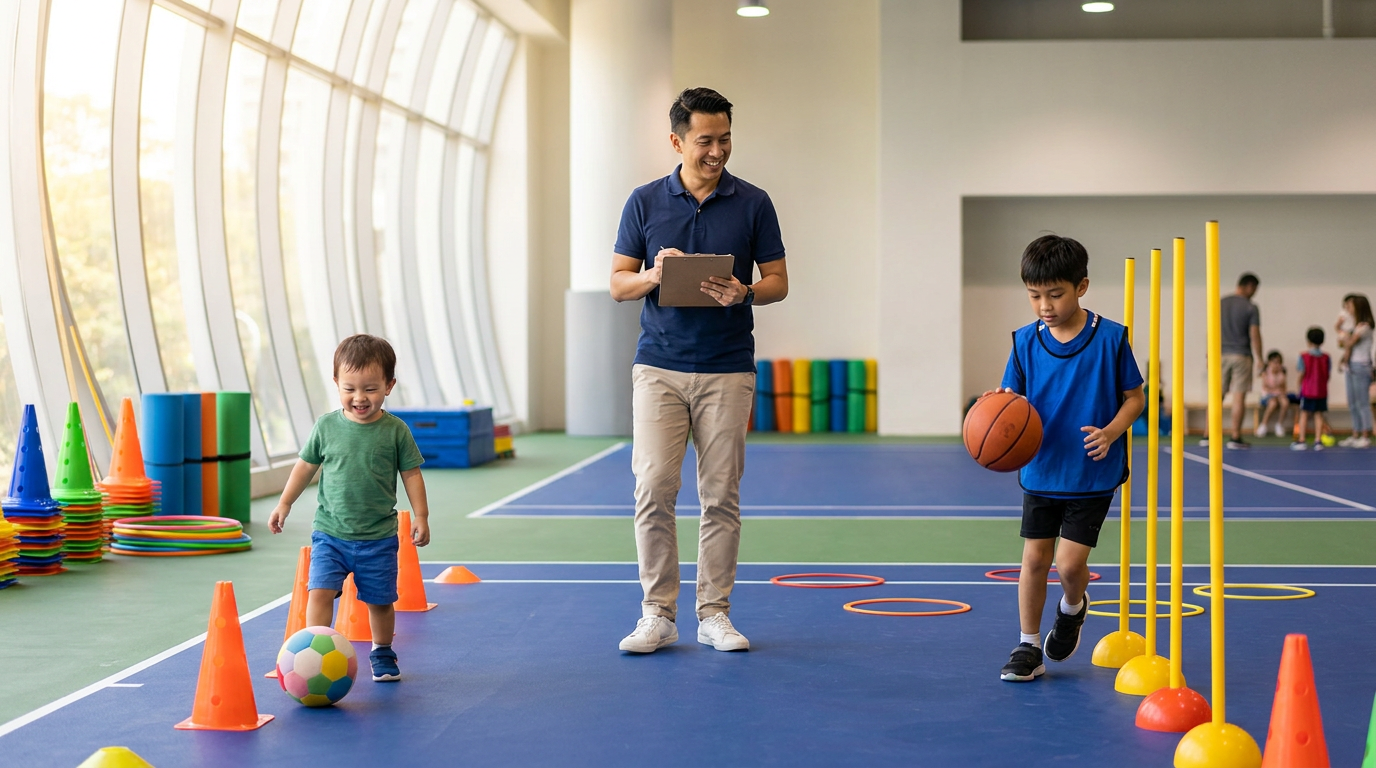
One of the most compelling and often underappreciated benefits of inclusive sports is its impact on children's cognitive development. Movement and thinking are not separate activities in a young child's brain — they are deeply intertwined. When a child navigates an obstacle course, remembers the rules of a new game, or figures out how to pass a ball around a defender, they are actively exercising the brain's executive functions: working memory, cognitive flexibility, and inhibitory control.
These are the same skills that predict school readiness and later academic success. Sports and play-based activities enhance problem-solving, decision-making, and critical thinking. When children strategise during a basketball game or figure out how to move around a defender, they strengthen their ability to think ahead and solve problems under pressure. Research supports the idea that game-based learning has a moderate to large effect on cognitive, social, emotional, motivation, and engagement outcomes in early childhood — making structured sport not just a physical activity, but a whole-brain workout.
The multi-sport format amplifies this cognitive benefit. When children are introduced to a different sport with new rules, new movements, and new strategies, they are forced to adapt quickly. This mental agility — the ability to shift thinking, hold new information, and adjust behaviour — transfers powerfully into academic and social settings.
Social-Emotional Development: Learning to Connect and Belong
Children don't just learn about the world in sports programmes — they learn how to be with other people. Every team game, partner drill, and group warm-up is a live lesson in communication, cooperation, empathy, and conflict resolution. These are the building blocks of emotional intelligence, and inclusive sport environments are among the most powerful settings for cultivating them.
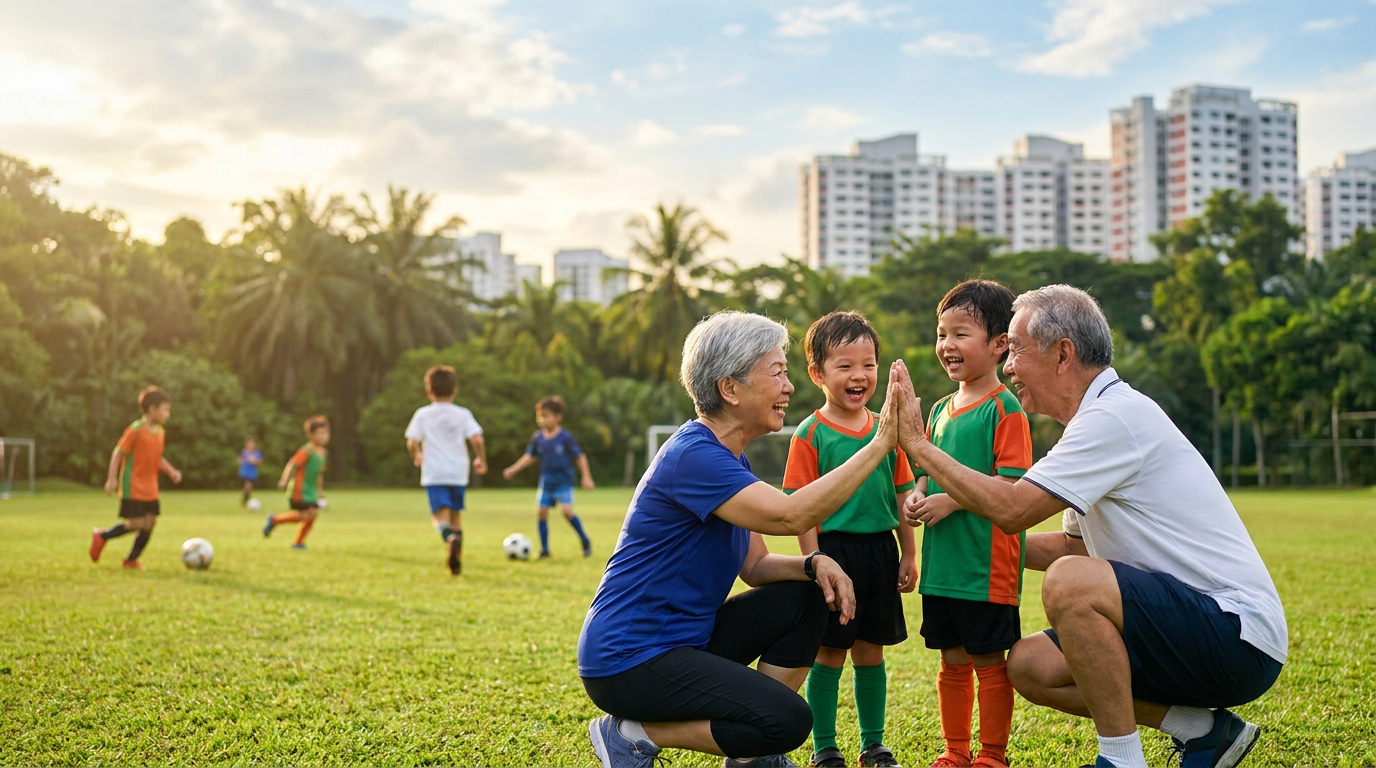
When a programme deliberately mixes children of different abilities, something remarkable happens. Children begin to see that everyone brings something different to the game. A child who is less coordinated may show exceptional persistence. A quieter child may turn out to be a thoughtful team strategist. Inclusive multi-ability settings reduce stigma, foster understanding, and build prosocial behaviours such as helping and encouraging others.
In Singapore, the value of social cohesion is woven into the national fabric, and sport has long been recognised as a bridge between communities. Participating in inclusive sports builds empathy, meaningful relationships, and a sense of belonging — all of which are critical for mental health and social harmony. For young children, these early experiences of belonging — of being welcomed, valued, and celebrated in a group — are formative. They shape how children see themselves in relation to others for years to come.
Team sports in inclusive environments also promote better interpersonal communication and emotional resilience compared to individual sports. Learning to win graciously, lose with dignity, support a struggling teammate, and celebrate someone else's success — these are character-building moments that no classroom worksheet can replicate.
Building Confidence Through Small Wins
For a child aged two or three, successfully kicking a ball into a goal for the first time is not a small thing — it is a profound personal victory. That moment of success, however modest it may look to an adult, sends a powerful message to a child: I tried, I kept going, and I did it. This is the seed of self-belief.
Research on motivation in children consistently shows that mastery experiences — succeeding through persistent effort — are the key foundation of lasting self-belief. When coaches and parents celebrate effort over outcome, children internalise the message that improvement matters more than perfection. They begin to develop a growth mindset: the resilience to try again even when things are hard.
Inclusive sports environments are particularly effective at generating these confidence-building moments because they are designed to meet each child where they are. When a programme is well-structured, children are not constantly comparing themselves to peers who are faster or more developed. Instead, they experience regular, achievable challenges that stretch their abilities and reward their persistence. Over time, these small wins accumulate into a deep, stable confidence that extends far beyond the sports field — into friendships, classrooms, and family life.
It is also worth noting that participation in inclusive sports is closely linked to improved self-esteem, lower levels of anxiety, and enhanced overall life satisfaction in children. Sport, at its best, teaches children that they are capable, that they belong, and that their efforts are worthwhile.
Why Multi-Sport Exposure Matters More Than Early Specialisation
It might feel intuitive to enrol a child who loves football in a football-only programme from the start. But developmental research strongly suggests that the opposite approach — broad multi-sport exposure in the early years — produces more capable, more resilient, and ultimately more skilled athletes in the long run.
Experts widely agree that physical literacy is best achieved through multi-sport development. Playing multiple sports increases a child's movement skills, which are necessary for all sports, and helps them develop and maintain a good standard of mobility. When children experience diverse movement patterns — the lateral agility of tennis, the spatial coordination of basketball, the full-body strength of gymnastics-style movement, and the ball control of football — they build a richer neurological network that underpins all athletic performance.
There are also protective benefits to this approach. Rotating between different sports prevents repetitive stress on the same muscles and joints, dramatically lowering the risk of overuse injuries. It also guards against burnout, keeping the experience of sport fresh, fun, and motivating. Children who grow up as multi-sport participants are more likely to remain physically active into adolescence and adulthood — because they associate movement with joy, not obligation.
For children ready to explore a specific sport in depth, multi-sport foundations prepare them extraordinarily well. A child who has developed agility, spatial awareness, and coordination across several sports will adapt to the demands of focused training far more quickly and effectively than one who has only ever practised a single discipline.
The Role of Play-Based Learning in Inclusive Sport
The word "play" can sometimes be misread as "unstructured" or "casual," but in the world of early childhood development, purposeful play is one of the most sophisticated teaching tools available. Play-based learning harnesses children's natural curiosity, intrinsic motivation, and love of imagination to deliver developmental goals that formal instruction struggles to reach.
In a play-based sports setting, a child doesn't just practise dribbling — they become a "dragon guarding its treasure" while manoeuvring a ball. They don't just work on jumping — they leap over "lava rivers" on their way to save a friend. This imaginative framing is not just fun (though it absolutely is). It engages the emotional and creative brain alongside the physical body, deepening learning, sustaining attention, and building genuine enthusiasm for movement.
Research confirms that learning through play supports emotional resilience and mental health in early childhood. When children engage in play, they experience joy, curiosity, and a sense of control — all of which contribute to emotional stability. These experiences in a safe, nurturing sports environment encourage children to express themselves, take age-appropriate risks, and process new challenges in ways that feel exciting rather than threatening. This is especially valuable for children who may be less naturally confident in new environments.
What to Look for in an Inclusive Sports Programme in Singapore
Not all sports programmes are created equal, and for parents in Singapore, the range of options can feel overwhelming. Here are the key markers of a genuinely high-quality, inclusive programme for young children:
Age-appropriate curriculum: Activities should be specifically designed for the developmental stage of the child, not simply scaled-down versions of adult sport. A 2-year-old and a 6-year-old need entirely different coaching approaches and game structures.
Trained, child-development-aware coaches: The quality of coaching is arguably the single most important factor in a child's experience. Look for programmes where coaches understand early childhood development, not just sport technique.
A nurturing and emotionally safe environment: Children should feel welcomed, encouraged, and celebrated — not ranked or embarrassed. The culture of the programme should make every child feel that their effort is valued.
Multi-sport variety: For younger children especially, programmes that rotate across different sports build broader physical literacy and keep children engaged and curious.
Genuine inclusion: Look for programmes that actively accommodate children of different abilities and temperaments, not just those who are already confident movers.
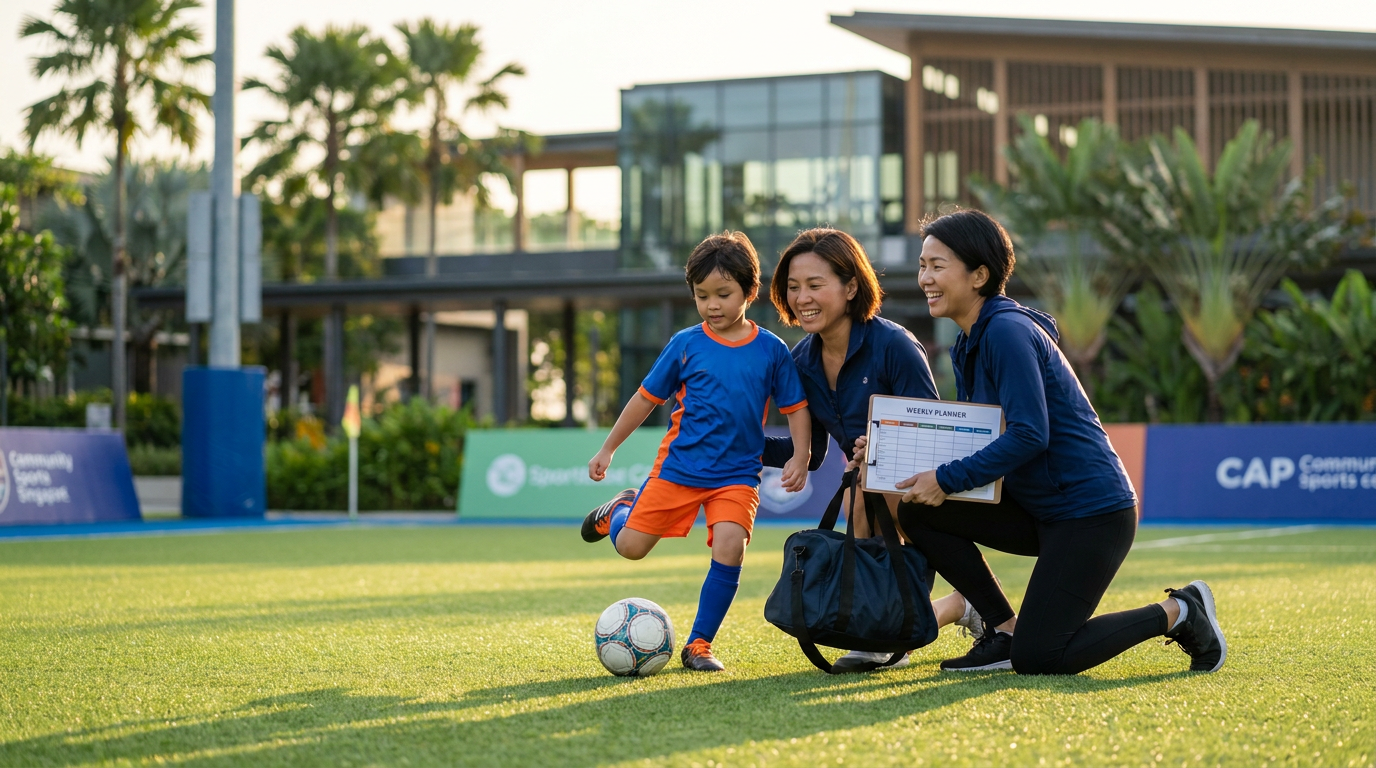
Strong parent communication: Quality programmes keep parents informed and involved, ensuring that the support children receive extends from the sports hall into the home.
How Vivo Kinetics Brings Inclusive Sport to Life
At Vivo Kinetics, inclusive, play-based sport is not a philosophy written on a wall — it is lived in every session, every week, for children aged 20 months to 12 years across Singapore.
The Vivo Kids multi-sports programme is designed precisely for the foundational years (ages 2–6), when physical literacy, character development, and social-emotional skills are at their most formative. Through a carefully crafted, age-appropriate curriculum guided by expert coaches, Vivo Kids gives young children a rich variety of movement experiences — building coordination, confidence, and the kind of whole-child development that prepares them not just for school, but for life. Every session is structured to meet children where they are, celebrate their progress, and make sport a source of joy and belonging.
As children grow and their abilities deepen, the Vivo Kicks Academy offers the perfect next step for ages 6–12 — a focused football programme that channels the broad physical literacy and confidence built in the early years into the precision, teamwork, and tactical thinking that football demands. It is the natural progression along a developmental journey that Vivo Kinetics has thoughtfully designed from the very beginning.
With recognition as "Best Children's Multi-sport Programme 2024" and as "Recognised Leaders in Children's Health & Fitness" in Southeast Asia, Vivo Kinetics brings the expertise, the environment, and the heart to give every child — not just the naturally athletic ones — the experience of sport done right.
Every Child Belongs on the Field
Inclusive sports programmes are not simply a kind idea — they are one of the most evidence-backed investments parents can make in their child's development. From the physical foundations of coordination and strength, to the cognitive benefits of adaptive thinking, to the emotional resilience built through teamwork and belonging, sport done inclusively reaches every dimension of a child's growth.
The most powerful thing a parent can do is find an environment where their child doesn't just participate — but truly thrives. Where a coach notices their progress. Where teammates celebrate each other. Where sport feels like something that belongs to them, regardless of how fast they run or how well they catch. That environment exists, and it changes children in ways that last a lifetime.
Give Your Child the Gift of Inclusive Sport
Ready to see the difference that purposeful, play-based, inclusive sport can make for your child? Whether they're taking their very first steps into movement or ready to level up their game, Vivo Kinetics has a programme built just for them.
Explore Vivo Kinetics Programmes →
Comments