


Neighborhood Sports Groups: How to Organise Play Dates That Kids Will Love
Table Of Contents
Why Neighborhood Sports Play Dates Matter
How Play Builds More Than Just Fitness
Getting Started: Building Your Neighborhood Sports Group
Step-by-Step Guide to Organising Your First Sports Play Date
Age-Appropriate Sports Ideas for Every Stage
Tips for Keeping the Group Going
When to Consider a Structured Programme
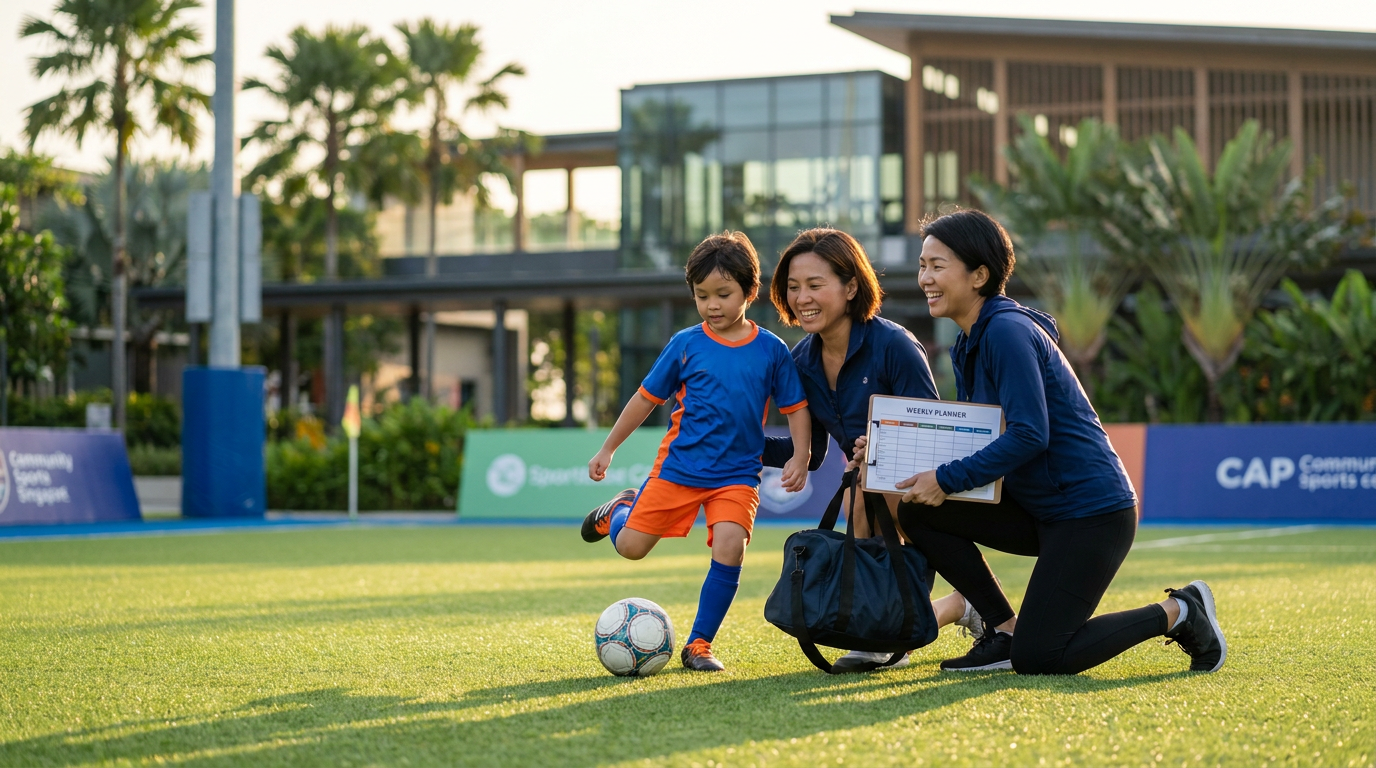
Picture this: a cluster of children spilling onto a patch of grass after school, dividing into teams for a impromptu game of football, laughing through arguments about who scored, and collapsing in a heap when someone finally calls time. No screens, no scripts — just kids being kids together. That kind of spontaneous neighborhood sports play is becoming rarer, and yet research consistently shows it is one of the most powerful environments for children's growth.
Organising neighborhood sports groups and play dates gives families a chance to bring that magic back intentionally. Whether you have toddlers who are just discovering what a ball does or primary-schoolers ready for something more competitive, a well-run neighborhood sports group can transform your block, your children's social lives, and their relationship with physical activity for years to come.
This guide walks you through everything you need to know — from the developmental case for sports play dates to practical steps for setting one up, age-appropriate activity ideas, and how structured programmes can complement the fun you build together in your community.
Why Neighborhood Sports Play Dates Matter
There is something quietly extraordinary about children who play together regularly in their own neighborhood. They learn to negotiate, to lose gracefully, to include the shy newcomer, and to pick themselves up after a tumble — all without a single worksheet in sight. Outdoor sports activities play a pivotal role in the holistic development of children, offering a platform for physical exercise, mental relaxation, social interaction, and creative expression. The neighborhood setting amplifies these benefits because the relationships formed carry over into everyday life — the child your son tackled on Tuesday is also the boy he sees at the letterbox on Thursday.
Yet despite these well-documented gains, the reality for many families is that children are spending less time engaged in this kind of active, peer-led play. Accessibility to screen-based activities has largely increased, leading to higher levels of sedentary time in children, and compared to previous generations, children play less outside nowadays. Organising a neighborhood sports group is one of the most effective things a parent can do to push back against that trend and create a consistent rhythm of active outdoor time for the children on their street or in their estate.
How Play Builds More Than Just Fitness
Before you send out the first WhatsApp invite, it helps to understand exactly what you are investing in. The benefits of organized sports play dates extend well beyond burning off energy after school.
Physical development is the most visible benefit. Outdoor play enhances motor skills such as agility, balance, and coordination, while helping to prevent obesity through increased physical activity. When children are running, throwing, kicking, and jumping alongside peers of similar age, those movement patterns consolidate in ways that solo backyard play rarely achieves.
Social and emotional growth is where neighborhood sports play dates genuinely shine. Outdoor play provides children with ample opportunities to engage in social interactions that are vital for their development — as they play together, they learn to navigate conversations, express themselves verbally, and listen to others, and these spontaneous moments of interaction often help children build lasting friendships. Over time, a regular group of neighborhood sports companions becomes a genuine social safety net for children navigating school years.
Cognitive and emotional resilience also gets a workout on the playing field. Outdoor play encourages children to empathize with each other's feelings and needs, and by engaging in shared experiences, they learn to cooperate and resolve conflicts constructively — a foundation of empathy and cooperation that is crucial as they forge deeper connections and develop interpersonal skills essential for their future.
Community belonging is a less-talked-about benefit that matters enormously for children's sense of security. Group sports activities create the sense of belonging through shared participation and cooperation. When children feel rooted in their neighborhood — when they know the names of the kids on the next floor and have a standing Saturday game to look forward to — that sense of place pays dividends for their confidence and mental wellbeing.
Getting Started: Building Your Neighborhood Sports Group
The good news is that starting a neighborhood sports group does not require a committee, a budget, or a detailed proposal. It starts with a conversation. The first step can be as simple as inviting neighbors, school friends, and casual playground acquaintances to meet semi-regularly to do an activity or play at a park.
That said, a little structure helps things take off and stay consistent. Think of your group as growing in three stages:
Sports play dates: Two or more families meet for a specific activity — a kick-around in the park, a relay race, or a frisbee session. Parents arrange the first few; the children gradually take ownership of what gets played.
Neighborhood sports team: A larger, recurring group that gathers at a regular time and place. Someone (usually a willing parent) helps coordinate logistics, but the children decide the games. This is the sweet spot for most families.
Community sports day: An annual or seasonal event that brings the whole neighborhood together — children, parents, grandparents — for a mini sports carnival. This strengthens community bonds well beyond the children themselves.
Most groups start at the first stage and naturally evolve. Do not feel pressure to formalise things before the group is ready. The goal is fun first, structure second.
Step-by-Step Guide to Organising Your First Sports Play Date
Find your founding families. Reach out to two or three families whose children are similar in age to yours. A small group of four to eight children is ideal for a first session — large enough to play team games, small enough to manage easily. Post in your condo chat, your estate's parent group, or simply knock on a few doors.
Choose a safe, accessible location. Speak to representatives of your local parks, schools, sports complexes, activity centers, and neighborhood fields to find somewhere that fits your budget and size needs. In Singapore, HDB void decks, condominium courts, and community park spaces are often ideal. Shade is important — especially for morning and evening sessions during warmer months.
Pick the right activity for your age group. Match the activity to the children attending, not the other way around. A mixed group of four-to-eight-year-olds will thrive with games like tag, simple relay races, or a gentle kickabout. Older children aged eight to twelve can handle more structured team games and friendly mini-tournaments.
Set clear logistics upfront. The qualities of a successful community playgroup include having a defined start and end time, providing sensory objects to interact with, and being unstructured with room to play. Pick a start and finish time you can stick to. Consistency builds the habit.
Communicate before the session. Use messaging features to answer questions before the first meetup — parents might want to know if the path is stroller-friendly or if they can bring a sibling. Clear communication builds trust before anyone even arrives. A simple group chat works well for this.
Keep the first session low-pressure. On the first day, focus on introductions. Start with a simple warm-up or a few games for the kids. The goal is to make everyone feel welcome so they want to come back the following week. Save the competitive games for once the children know each other.
Gather feedback and iterate. After the first couple of sessions, ask the children what they loved and what they want to try next. Their enthusiasm is the best indicator of whether the group is on the right track.
Age-Appropriate Sports Ideas for Every Stage
Not all sports play dates look the same, and they shouldn't. Children at different developmental stages need different levels of challenge, structure, and freedom.
Ages 2 to 5: Movement-First Play
At this age, the goal is not sport in any formal sense — it is movement exploration and joyful physical experience. The best sports play dates for this group are loosely structured, full of repetition, and overflowing with encouragement.
Balloon or soft ball kicking games
Simple obstacle courses using cones, hoops, and tunnels
Animal-themed movement ("hop like a frog to the cone!")
Chase and tag games with clear, forgiving rules
Parachute activities when you have a larger group
For families wanting expert guidance at this stage, Vivo Kids is Vivo Kinetics' multi-sport programme designed specifically for children aged two to six. It builds foundational movement skills and character development in a nurturing, play-based environment — a wonderful complement to the informal fun happening in your neighborhood.
Ages 6 to 8: Rules, Roles, and Early Teamwork
Children in this bracket are ready for simple rules and the thrill of belonging to a team. Engaging in outdoor activities, whether climbing, playing tag, or participating in team sports, promotes collaboration and teamwork — through these experiences, children learn to set common goals, share responsibilities, and communicate effectively with their peers. Good options for this age group include:
Kickball and four-square
Relay races with baton-style handoffs
Simplified versions of basketball or netball
Frisbee and catching games
Friendly five-a-side football
Ages 9 to 12: Competition, Strategy, and Skill Building
Older children are hungry for genuine challenge. They want to feel their skills developing and enjoy the strategic dimension of team sports. Research shows that adolescents obtain the most exercise during structured, outdoor activities, such as team sports. At this stage, consider:
Organised five-a-side or seven-a-side football
Mini basketball or volleyball tournaments
Athletics-style competitions (sprints, long jump, relay)
Touch rugby or flag football
Badminton round robins
For children aged six to twelve who have caught the football bug through neighborhood play, Vivo Kicks offers a dedicated soccer academy where they can develop their skills under expert coaching in a structured, age-appropriate environment.
Tips for Keeping the Group Going
The hardest part of any neighborhood sports group is not getting started — it is maintaining momentum after the first flush of enthusiasm fades. A few habits make all the difference.
Rotate the planning. Avoid the situation where one parent does everything. Assign a different family to choose the activity each week. This spreads the load and gives every child the excitement of seeing their favourite game on the schedule.
Keep a regular slot. Regularity is the lifeblood of a neighborhood group. A standing Saturday morning slot, rain-or-shine commitment, transforms a one-off event into a genuine community ritual. Research shows that involvement in organized physical activities and other children nearby to play with both predict more time in outdoor play. A scheduled group takes both boxes.
Celebrate milestones together. Mark the group's one-month or six-month anniversary with a slightly bigger session — a mini sports carnival or a pizza picnic afterwards. Shared rituals deepen the sense of belonging.
Adapt as children grow. A group that starts with balloon-kicking toddlers will need different activities two years later. Check in every school term and let the children themselves drive what the group plays.
Involve parents meaningfully. Playgroup relationships help toddlers and preschoolers with social skills, confidence, and building resilience, while parents and caregivers also benefit from playgroup participation by connecting with others in similar situations and sharing ideas. The parents are a community too. A group chat with the occasional shared resource or parenting tip keeps adults invested alongside the children.
When to Consider a Structured Programme
Neighborhood sports play dates and structured programmes are not competing ideas — they are complementary ones. Informal neighborhood play gives children freedom, peer connection, and the joy of self-directed sport. A well-designed programme gives them expert coaching, age-appropriate skill progression, and the confidence that comes from genuine mastery.
Many children find that their neighborhood play group sparks a passion for a particular sport, and that passion then flourishes beautifully in a structured setting. A toddler who falls in love with kicking a ball in the estate carpark may be ready to take her first steps in a coached environment. A nine-year-old who has been the best player on the Saturday kickabout for a year might be hungry for the next challenge.
Even as the amount of time children are spending outdoors is decreasing, research showing that outdoor play is hugely important for children's development has grown, with dozens of studies finding that spending time outdoors, especially in free play, benefits children's physical health, social skills, and even their concentration and school readiness. Structured programmes build on exactly these foundations.
Bringing It All Together
Organising neighborhood sports play dates is one of the simplest and most impactful things you can do for the children in your community. It does not demand a large budget, specialist equipment, or expert credentials — just a willing group of families, a patch of open space, and the shared belief that children thrive when they play together.
Start small. Invite two families, find a nearby park, and let the kids kick a ball around for an hour. Watch what happens when you show up again the following week, and the week after that. Over time, what begins as a casual play date can grow into a genuine community tradition — one that shapes how the children on your street see themselves as athletes, friends, and neighbors.
And when the time comes to take their love of sport to the next level, the expert coaches at Vivo Kinetics are ready to help. From the very first wobble of a toddler's kick to the focused determination of a twelve-year-old refining her footwork, every stage of the journey matters.
Ready to give your child a head start in sports and active living?
Explore Vivo Kinetics' award-winning programmes — from the play-based Vivo Kids multi-sport programme for ages 2 to 6, to the Vivo Kicks soccer academy for ages 6 to 12. Expert coaches, age-appropriate curriculum, and a genuinely nurturing environment await.
Discover All Programmes at Vivo Kinetics →


Comments