


Preschool Physical Education: What to Expect and Why It Matters
Table Of Contents
What Is Preschool Physical Education?
Why PE Matters in the Early Years
The Three Pillars of Preschool PE: Fundamental Movement Skills
What a Typical Preschool PE Session Looks Like
Structured vs. Unstructured Physical Play: Understanding the Balance
How Much Physical Activity Do Preschoolers Need?
How PE Supports More Than Just Physical Health
How to Support Your Child's PE Journey at Home
Frequently Asked Questions
Every time a toddler charges across the playground, leaps off a step, or giggles through a game of tag, something remarkable is happening beneath the surface. These aren't just moments of fun — they're the building blocks of a child's entire physical, cognitive, and social development. Yet many parents wonder: what does preschool physical education actually look like? Is it structured lessons or free play? What skills are being developed, and how do I know if my child is on the right track?
Preschool PE is far more purposeful than it might appear from the sidelines. A well-designed program weaves movement, play, and learning into a cohesive experience that shapes how children grow — not just physically, but intellectually, emotionally, and socially. Whether your child is attending a preschool with a dedicated PE component or joining an enrichment program, understanding what to expect can help you support their journey every step of the way.
In this guide, we break down everything Singapore parents need to know about preschool physical education — from the key skills children develop, to what a typical PE session involves, to how you can reinforce those gains at home.
What Is Preschool Physical Education?
Preschool physical education is a planned, age-appropriate program of movement and physical activity designed for children typically between the ages of 2 and 6. Unlike PE in primary school, which often centres on team sports and performance outcomes, preschool PE prioritises exploration, play, and the gradual mastery of foundational movement patterns. It's less about winning and more about discovering what the body can do.
In Singapore, early childhood physical development is recognised as a core learning area under the Ministry of Education's Nurturing Early Learners (NEL) Framework. This national framework, which guides curriculum across ECDA-licensed preschool centres, identifies motor skills development alongside language, numeracy, and social-emotional growth as essential outcomes for children aged 4 to 6. Physical activity is not an add-on — it's woven into the fabric of quality early childhood education.
Beyond the classroom, Singapore's Early Childhood Development Agency (ECDA) requires that children in licensed preschools spend at least one hour on physical activities daily, with a minimum of 30 minutes outdoors. This reflects growing recognition that movement isn't separate from learning — it is learning.
Why PE Matters in the Early Years
The preschool years — roughly ages 2 to 6 — represent a uniquely sensitive window for physical development. Research consistently shows that this period is the most critical time for establishing movement competence. Children who develop strong motor skills early are more likely to remain physically active throughout childhood and adolescence, forming habits that can last a lifetime.
Physical activity during the early years promotes healthy growth in multiple interconnected ways:
Physical health: Regular movement strengthens muscles and bones, improves cardiovascular endurance, and supports healthy weight management — all critical given rising rates of childhood inactivity.
Cognitive development: Active children show improvements in memory, attention span, and problem-solving abilities. Research published in Frontiers in Psychology found that structured physical education programs in preschools improved not only motor skills but also pre-literacy and cognitive abilities in young children.
Emotional regulation: Physical play releases pent-up energy and stress hormones, helping children manage their emotions and transition more smoothly between activities throughout the day.
Social skills: Games and group activities teach children to take turns, cooperate, handle winning and losing, and communicate with peers — all essential building blocks for school readiness.
Importantly, healthy physical development is not guaranteed simply through maturation. The environment children are placed in, and the adults who guide them, play a significant role in determining whether they acquire essential movement skills and sustain physical health over time.
The Three Pillars of Preschool PE: Fundamental Movement Skills
At the heart of any quality preschool PE program is the development of Fundamental Movement Skills (FMS) — the essential building blocks that underpin all future physical activity and sports participation. FMS are typically grouped into three categories, each of which plays a distinct role in a child's physical development.
1. Locomotor Skills
Locomotor skills involve moving the body from one place to another. These are often the first skills children explore naturally and include running, jumping, hopping, galloping, leaping, skipping, and dodging. In a preschool PE setting, these skills are practised through relay games, obstacle courses, and creative movement exercises. Strong locomotor skills form the foundation for virtually every sport and physical game a child will encounter later in life.
2. Object Control (Manipulative) Skills
Object control skills require a child to send, receive, or control an object — whether that's throwing a ball to a target, catching a balloon, kicking toward a goal, dribbling, rolling, or striking. These skills develop hand-eye and foot-eye coordination, spatial awareness, and reaction time. They progress gradually: a 3-year-old may beam with pride after landing a two-handed catch, while a 5-year-old begins practising overarm throws and directional kicks.
3. Stability (Balance) Skills
Stability skills focus on maintaining and regaining balance and control over the body. These include static balance (standing on one leg), dynamic balance (walking along a beam), rolling, twisting, bending, and landing safely from a jump. Often overlooked, stability skills are actually the foundation that makes all other movement possible. A child with poor core stability will struggle to run efficiently, throw accurately, or jump and land safely.
Beginners benefit most from focusing on stability skills first, then layering in locomotor and object control challenges as confidence grows. As children master each category in isolation, quality programs begin combining them — asking children to run, then kick, then catch in a single flowing activity.
What a Typical Preschool PE Session Looks Like
One of the most common questions parents ask is: what actually happens during a preschool PE class? The structure of a well-designed session looks quite different from a primary school sports lesson, and intentionally so.
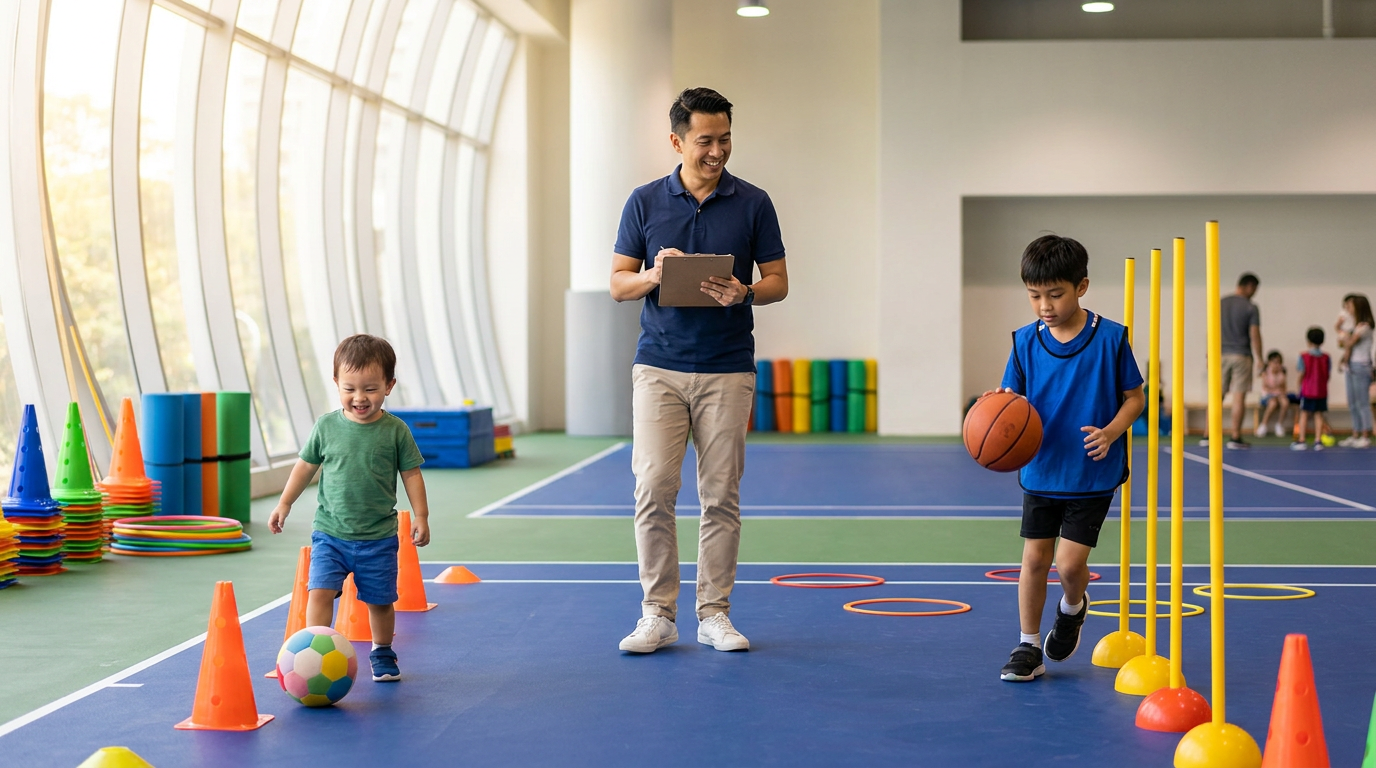
Experts recommend that preschool PE sessions run no longer than 30 minutes, with small groups of 12 to 14 children to ensure every child receives adequate attention and feels safe to participate. Within that time, children typically rotate through 4 to 5 different activities — each lasting around 5 to 6 minutes — rather than practising a single skill repeatedly. This variety keeps young children engaged, accommodates short attention spans, and exposes them to a broader range of movement experiences.
A typical session for children aged 3 to 5 might flow like this:
Warm-up (3–5 minutes) — A fun, guided activity like "Animal Walks" (crawling like a bear, hopping like a frog) to ease children into movement and stimulate body awareness.
Locomotor activity (5–6 minutes) — Obstacle courses, tunnel crawls, or jump-and-balance stations that challenge gross motor control.
Object control activity (5–6 minutes) — Rolling balls to targets, kicking toward a cone goal, or catching beanbags to develop hand-eye coordination.
Creative movement or game (5–6 minutes) — A guided group game like Freeze Dance or Follow the Leader that builds listening skills, rhythm, and social interaction.
Cool-down and reflection (3–5 minutes) — Gentle stretching paired with a short conversation about what the children did and how their bodies feel.
The best preschool PE programs also integrate character development naturally into these activities — practising patience while waiting for a turn, celebrating a classmate's effort, and navigating the small social challenges that group play brings.
Structured vs. Unstructured Physical Play: Understanding the Balance
Parents sometimes worry that structured PE takes something away from the natural joy of play. In reality, the two approaches complement each other beautifully — and children need both.
Structured physical play involves adult-led activities with clear objectives and gentle guidance. It helps children learn new movement patterns they might not discover independently, introduces the concept of following instructions, and creates a safe environment to try challenging things. Through structured play, coaches can observe each child's development, offer targeted encouragement, and identify any movement challenges early.
Unstructured physical play gives children the freedom to explore, invent their own games, and follow their curiosity without adult direction. This kind of play builds creativity, self-regulation, and intrinsic motivation to move. Free play on a playground or in an open space allows children to test their skills on their own terms.
Experts generally suggest that a well-rounded early childhood day includes more unstructured play than structured, with structured activities serving as intentional learning moments — not the dominant experience. The key is that neither replaces the other. A child who only has free play may miss out on guided skill development; one whose every movement is directed may miss the joy of self-directed discovery.
Quality PE programs strike this balance deliberately — using structured activities to introduce skills and then allowing children to practise and explore those skills more freely.
How Much Physical Activity Do Preschoolers Need?
Global guidelines point consistently in the same direction: young children should be moving throughout the day. For preschool-aged children (3 to 5 years), the recommended target is 90 to 120 minutes of moderate-to-vigorous physical activity within an 8-hour day, ideally including both adult-led structured movement and free active play.
Here's a simple reference by age:
Age Group | Recommended Daily Activity | Examples |
Toddlers (1–2 years) | At least 3 hours across the day | Free exploration, walking, sensory play |
Preschoolers (3–5 years) | 90–120 minutes moderate-to-vigorous | Running, jumping, climbing, ball games |
Early primary (6+ years) | At least 60 minutes moderate-to-vigorous | Sports, playground games, swimming |
In Singapore, ECDA-licensed preschools are required to incorporate at least one hour of physical activity daily, including 30 minutes of outdoor play. For children not meeting these targets through school alone, enrichment programs and multi-sport classes provide valuable additional movement time — especially in an urban environment where spontaneous outdoor play can be limited.
How PE Supports More Than Just Physical Health
One of the most exciting insights from recent research is that preschool PE benefits extend far beyond the body. Studies have found a compelling link between structured physical education programs and improvements in pre-literacy skills, with children who participated in PE interventions showing gains in visual analysis, spatial orientation, and attention — skills that directly support reading and writing readiness.
This makes sense when you consider how movement and cognition are intertwined. When a child hops on one foot while counting, navigates an obstacle course, or follows the rhythm of a movement game, they are simultaneously developing body awareness, sequencing ability, and focused attention. Physical activity, in this way, is one of the most powerful tools for whole-child development available to early childhood educators and parents.
At Vivo Kinetics, this holistic view of physical development sits at the core of every program. The Vivo Kids multi-sport programme for ages 2 to 6 is specifically designed around age-appropriate movement skills and character development — recognising that how a child moves shapes how they think, feel, and relate to others. Expert coaches guide children through activities that develop locomotor, object control, and stability skills in a nurturing, play-based environment that makes every session feel like an adventure.
For children who develop a love of soccer through early movement programs, the Vivo Kicks Academy provides a natural next step — a dedicated soccer program for ages 6 to 12 that builds on the fundamental skills established in the preschool years and deepens sport-specific competencies in a positive, confidence-building environment.
How to Support Your Child's PE Journey at Home
Preschool PE doesn't have to stop when the class ends. Parents play a powerful role in reinforcing movement skills and building an active lifestyle at home. Here are practical ways to extend your child's physical development beyond the classroom:
Make movement part of daily routines. Walk to the park instead of taking the stroller. Let your child climb stairs independently. Small choices accumulate into big habits.
Set up simple backyard or living room challenges. Tape a line on the floor for balance walking, roll a ball back and forth, or set up a pillow obstacle course. These activities mirror what children do in PE sessions and build the same skills.
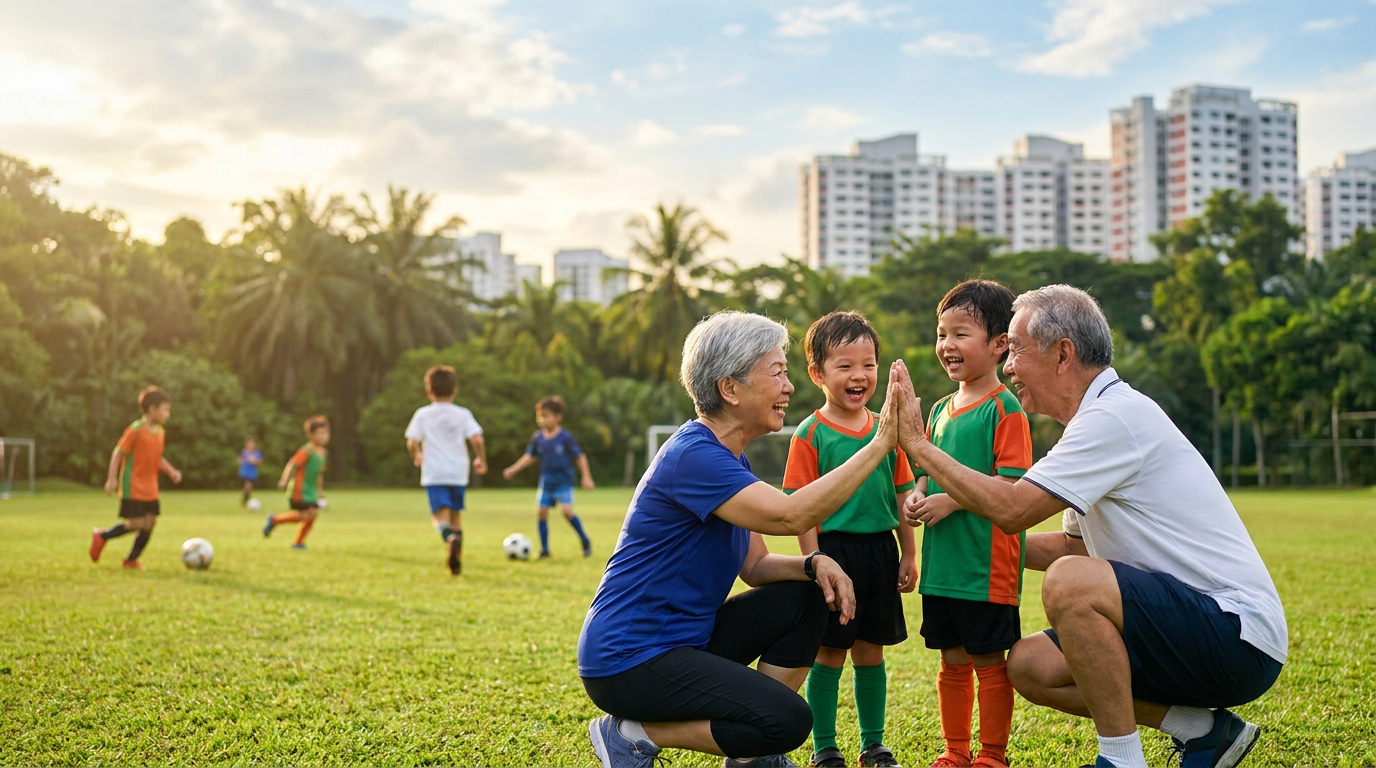
Join in. Research consistently shows that children are more physically active when adults participate alongside them. Your enthusiasm signals that movement is enjoyable, not just obligatory.
Reduce screen time before active play. Children who transition from screens to physical activity often need more time to engage. Establish movement-first rituals — a quick dance or stretch before screen time — to keep the body's activity instinct alive.
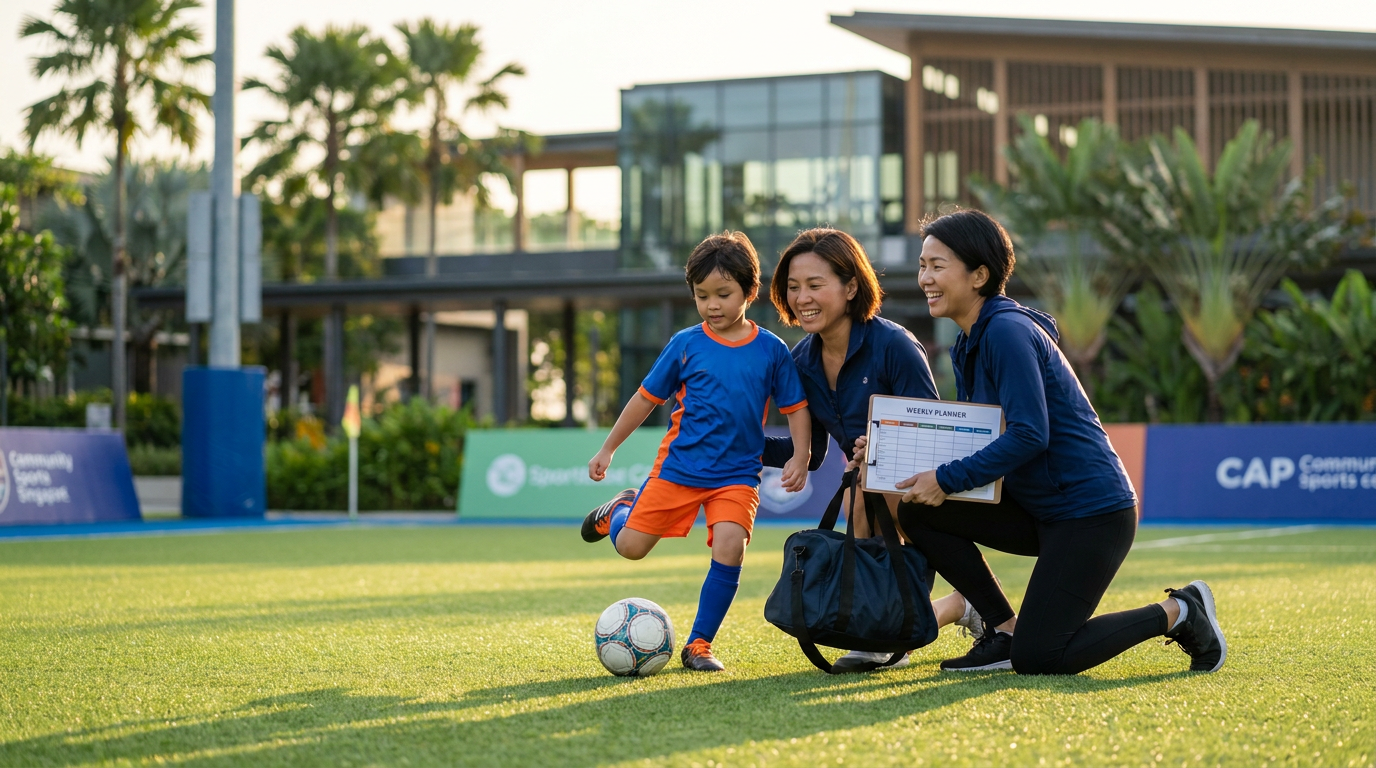
Follow your child's interests. A child who loves kicking a ball will develop object control skills faster through soccer-inspired play. One who loves dancing will build balance and coordination through rhythm. Supporting natural enthusiasm is the most sustainable path to an active childhood.
Celebrate effort, not just outcome. Praise the try — the wobble on the balance beam, the almost-catch, the brave attempt at jumping higher. Preschoolers who associate movement with positive feelings grow into children who choose to be active.
Frequently Asked Questions
At what age should children start structured PE?
Children as young as 2 years old can benefit from structured, play-based movement programs when they are designed to be age-appropriate and focused on exploration rather than performance. The key is that activities match the child's developmental stage — short in duration, varied in content, and guided by warm, patient instructors.
What's the difference between preschool PE and a multi-sport program?
Preschool PE within a childcare setting typically refers to the daily movement component built into the school curriculum. A multi-sport enrichment program, like Vivo Kids, goes further by providing dedicated, specialist-coached sessions that systematically develop fundamental movement skills across a variety of sports and movement contexts — offering greater depth, variety, and expert guidance than a school's general PE time alone.
How do I know if my child is developing movement skills at the right pace?
Every child develops at their own rate, but general milestones offer useful checkpoints. By age 3, most children can run (even if their gait is slightly unsteady), jump with both feet, and throw a ball forward. By age 5, they should be galloping, hopping on one foot, catching a bounced ball, and kicking with reasonable accuracy. If you notice your child consistently avoiding physical activities or struggling with basic movements, speak to their preschool teacher or a paediatric physiotherapist.
Should preschool PE be competitive?
Not at this age. The focus in quality preschool PE should always be on participation, exploration, and personal improvement — not comparison or competition. Introducing competitive elements too early can undermine intrinsic motivation and create anxiety around physical activity. The goal is for every child to feel competent, capable, and eager to move.
Preschool physical education is one of the most powerful investments in a child's early development — and it looks nothing like the PE classes most of us remember from our own school days. At its best, it's joyful, purposeful, and deeply connected to every dimension of how young children grow. From the first wobbly balance on one foot to the confident kick that sends a ball flying toward a goal, each movement milestone is a stepping stone toward a healthier, happier, more capable child.
Understanding what preschool PE involves — and why it matters — helps parents become more intentional partners in that journey. Whether your child is attending a preschool with a strong movement component, joining an enrichment class, or simply exploring the playground with you on a Saturday morning, every moment of quality physical activity counts.
Ready to Give Your Child the Best Start in Movement?
At Vivo Kinetics, we believe every child deserves a fun, expertly guided introduction to physical activity. Our award-winning programs — recognised as the Best Children's Multi-sport Programme 2024 — are designed specifically for children aged 20 months to 12 years, with age-appropriate curricula that develop movement skills, build confidence, and nurture character in a safe, caring environment.
Explore our programs and book a trial today at vivokinetics.com
Comments