


Secondary School Sports Opportunities in Singapore: What Every Parent Needs to Know
Table Of Contents
Why Secondary School Sports Matter More Than You Think
Understanding Sports CCAs: What Your Child Will Experience
Popular Sports CCAs in Singapore Secondary Schools
LEAPS 2.0: How Sports CCA Performance Is Recognised
The Connection Between DSA and Sports Excellence
Beyond the Grade: The Real Benefits of Sports CCAs
How to Help Your Child Prepare — Starting Now
Building the Foundation Early: Why the Pre-Secondary Years Are Critical
Tips for Parents: Supporting Your Child Through CCA Life
Every parent of a primary school child in Singapore has had some version of the same conversation at the dinner table: What CCA should you join when you go to secondary school? It feels like a question that belongs to the future — something to figure out later. But experienced parents and educators know that the sports journey that unfolds in secondary school is shaped, in large part, by experiences that happen years before Secondary 1 ever begins.
Secondary school sports CCAs in Singapore are more than after-school activities. They are structured programmes that develop discipline, resilience, leadership, and physical fitness — and they carry real weight in a child's academic future through Singapore's LEAPS 2.0 recognition framework. Whether your child goes on to represent their school at national competitions or simply finds their tribe in a team sport, the benefits extend far beyond the playing field.
This guide walks parents through everything they need to know about secondary school sports opportunities in Singapore: what CCAs are available, how they're assessed, what the stakes are, and — crucially — how the foundation for success in secondary school sports is built during the early childhood and primary school years.
Why Secondary School Sports Matter More Than You Think
In Singapore's education system, CCAs are compulsory at the secondary level, making them a non-negotiable part of every student's school experience. This isn't simply a scheduling requirement — it reflects a deeply held belief in holistic education. CCAs are structured activities outside the academic classroom, including sports, and are part of how schools support holistic development, helping students build teamwork, leadership, resilience, discipline, confidence, and friendships.
For many students, the sports CCA they join in Secondary 1 becomes one of the defining experiences of their teenage years. It shapes their social circle, tests their character under pressure, and — if navigated thoughtfully — can even improve their post-secondary prospects. Understanding this landscape early gives your family a meaningful head start.
Understanding Sports CCAs: What Your Child Will Experience
Sports CCAs at the secondary level are a significant step up from the exploratory, low-pressure sessions of primary school. CCA expectations change by school level: primary school CCAs are often lighter and more exploratory, while secondary school usually involves clearer attendance, training, and leadership expectations.
In practical terms, this means your child will commit to regular weekly training, work towards inter-school competitions, and be held accountable for attendance and conduct. Co-Curricular Activities play a key role in the holistic development of students, providing them with a platform to discover their interests and talents, and can fuel in students a lifelong love for a particular activity. Training sessions for secondary school sports CCAs typically run two to three times per week, with sessions lasting around two hours each — a serious commitment that rewards students who come prepared.
Popular Sports CCAs in Singapore Secondary Schools
Secondary schools across Singapore offer a wide range of physical sports CCAs, and the specific options vary by school. Some of the most common ones you'll find include:
Football (Soccer): One of the most popular choices, with structured training covering tactics, technique, and mental resilience. Most schools compete in the National School Games.
Basketball: Intense and competitive at the secondary level, with many schools participating in national inter-school tournaments.
Badminton: Consistently popular and widely available. Secondary schools often bring in specialist coaches for more rigorous training.
Track and Field / Cross Country: Develops individual athletic performance and conditioning. Some students go on to compete at the National Track and Field Championships.
Swimming: Training at this level shifts focus to racing technique and endurance, building self-discipline and perseverance alongside physical fitness.
Rugby: One of the more physically demanding options, requiring strong teamwork and conditioning.
Volleyball: Builds agility, coordination, and cooperative play.
Wushu and Taekwondo: Offered at an advanced level, with competition pathways that can lead to formal rank certifications.
Floorball and Netball: Increasingly popular choices in many schools, especially those emphasising inclusivity and fast-paced team play.
The CCAs available to students vary between schools, so it's worth researching the specific offerings of your child's secondary school during the Primary 6 posting period. Some schools are particularly well-known for certain sports, and if your child shows real aptitude or passion for a discipline, this can factor meaningfully into secondary school choice.
LEAPS 2.0: How Sports CCA Performance Is Recognised
One of the most important things parents need to understand is that secondary school CCA participation isn't just noted — it's formally assessed. Secondary school students' co-curricular attainment is assessed through the LEAPS 2.0 framework, which covers four domains: participation, leadership, service, and achievement. Depending on their overall level of attainment, students may receive one or two bonus points for admission to post-secondary institutions.
These bonus points are deducted from a student's O-Level aggregate score when applying for Junior Colleges, Polytechnics, or ITEs — making them genuinely valuable. Students can get a maximum of 4 bonus points from a combination of achievements, with CCA graded as Excellent earning 2 bonus points and Good earning 1 bonus point.
LEAPS 2.0 is a framework to recognise secondary school students' holistic development, with students being recognised with levels of attainment in four domains: Participation, Achievement, Leadership, and Service. For a sports CCA student, this means consistent attendance, demonstrating school values, striving for competition achievements, and taking on leadership roles such as team captain or committee member. Recognition is based on the number of years of participation and exemplary conduct and active contribution. Sustained engagement in the same CCA allows for progressive development of character, skills, knowledge, and friendships.
The key takeaway for parents: choosing the right CCA early and sticking with it consistently matters. Students who commit to a single sport throughout their secondary school years — turning up, leading, competing — are in the best position to achieve the Excellent band.
The Connection Between DSA and Sports Excellence
For students with notable sports talent, the Direct School Admission (DSA) pathway offers the opportunity to secure a place at a desired secondary school based on their sporting achievements — before O-Level results are even released. In secondary school, CCA performance can affect direct admissions to higher institutions.
This means that the years your child spends honing their skills in primary school — and even earlier — can open doors at top secondary schools with strong sports programmes. If your child has a clear talent and passion for a particular sport, researching DSA opportunities and the requirements of each school's sports programme is well worth doing during the upper primary years.
Beyond the Grade: The Real Benefits of Sports CCAs
It would be easy to view sports CCAs purely through the lens of LEAPS 2.0 points and DSA opportunities, but the most lasting rewards are far less transactional. Children learn to work in teams, handle winning and losing gracefully, persist through challenges, and build confidence through skill mastery. These character-building experiences become foundational life skills that serve children well into adulthood.
Team sports in particular teach students things that classrooms rarely can: how to trust a teammate, how to recover from a mistake in front of a crowd, and how to push past fatigue to deliver for others. Leadership roles within a sports CCA — whether as team captain, vice-captain, or committee member — give students real responsibility with real stakes, developing skills that serve them throughout their careers.
There is also a well-documented link between physical activity and academic performance. Physically active students tend to demonstrate stronger concentration and better time management — qualities that directly support examination preparation and school performance. Sports CCA participation also provides a structured social environment where students build close friendships and a sense of belonging to their school community.
How to Help Your Child Prepare — Starting Now
If you have a child in primary school — or even preschool — the groundwork for secondary school sports success can and should begin today. Here is a practical framework for parents:
1. Explore broadly before specialising early. Expose your child to a variety of sports and movement activities during the preschool and lower primary years. In the early primary years, children can follow simple rules, take turns, and absorb basic skill instruction, making this the sweet spot for sampling widely. They still do best in low-pressure, games-first settings. The broader the base of movement skills they build now, the easier any future sport becomes.
2. Build a foundation of fundamental movement skills. Coordination, balance, agility, catching, kicking — these are the building blocks that every sport draws upon. Early exposure to diverse movement patterns establishes motor skills that become building blocks for all future athletic endeavours. Children who develop strong fundamental movement skills between ages 2 and 7 have better coordination, balance, and body awareness throughout their lives.
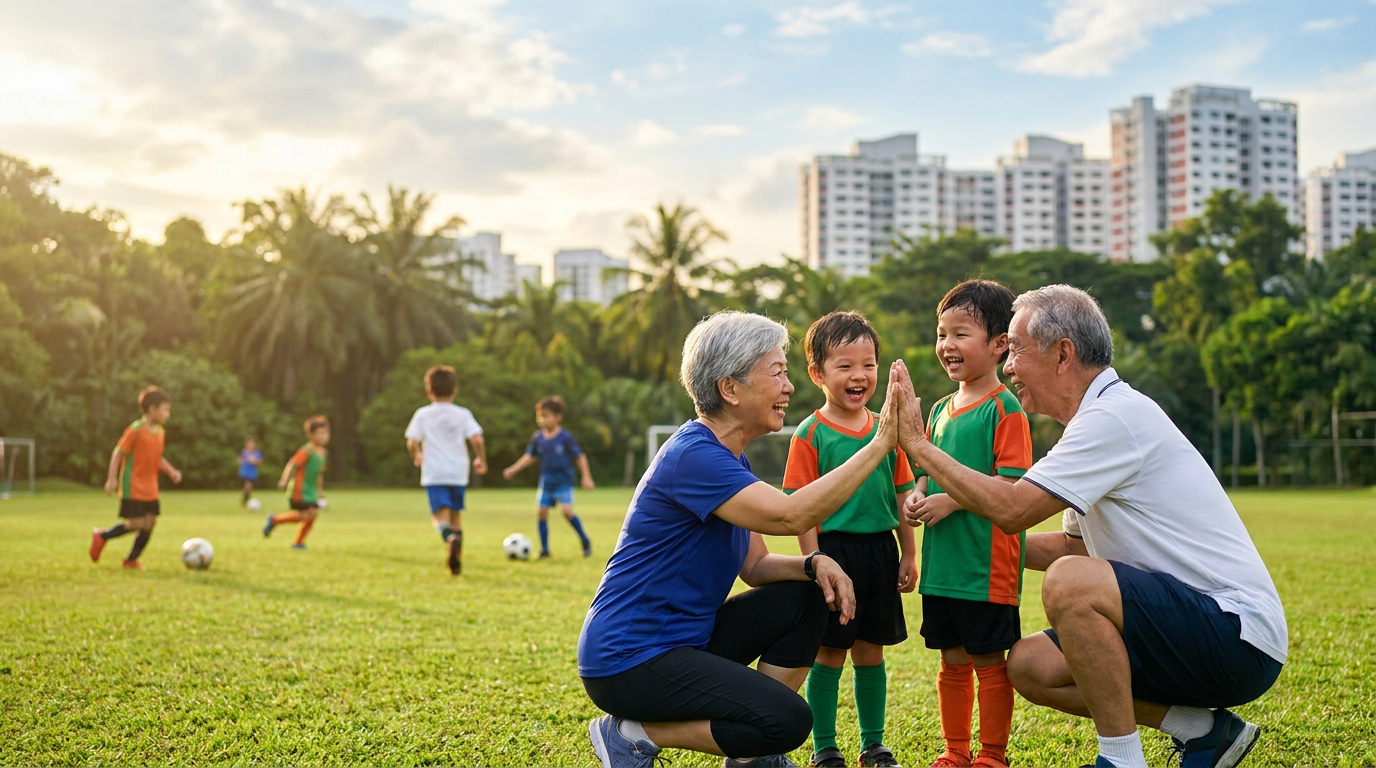
3. Nurture love of the game over performance pressure. Children who enjoy sport are children who stick with it. Keep the early years fun, exploratory, and pressure-free. A child who genuinely loves their sport will bring their best to secondary school training without being pushed.
4. Support physical fitness as a family habit. Regular running, cycling, swimming, or active family time in the park builds the cardiovascular fitness and muscular endurance that secondary school CCA training demands.
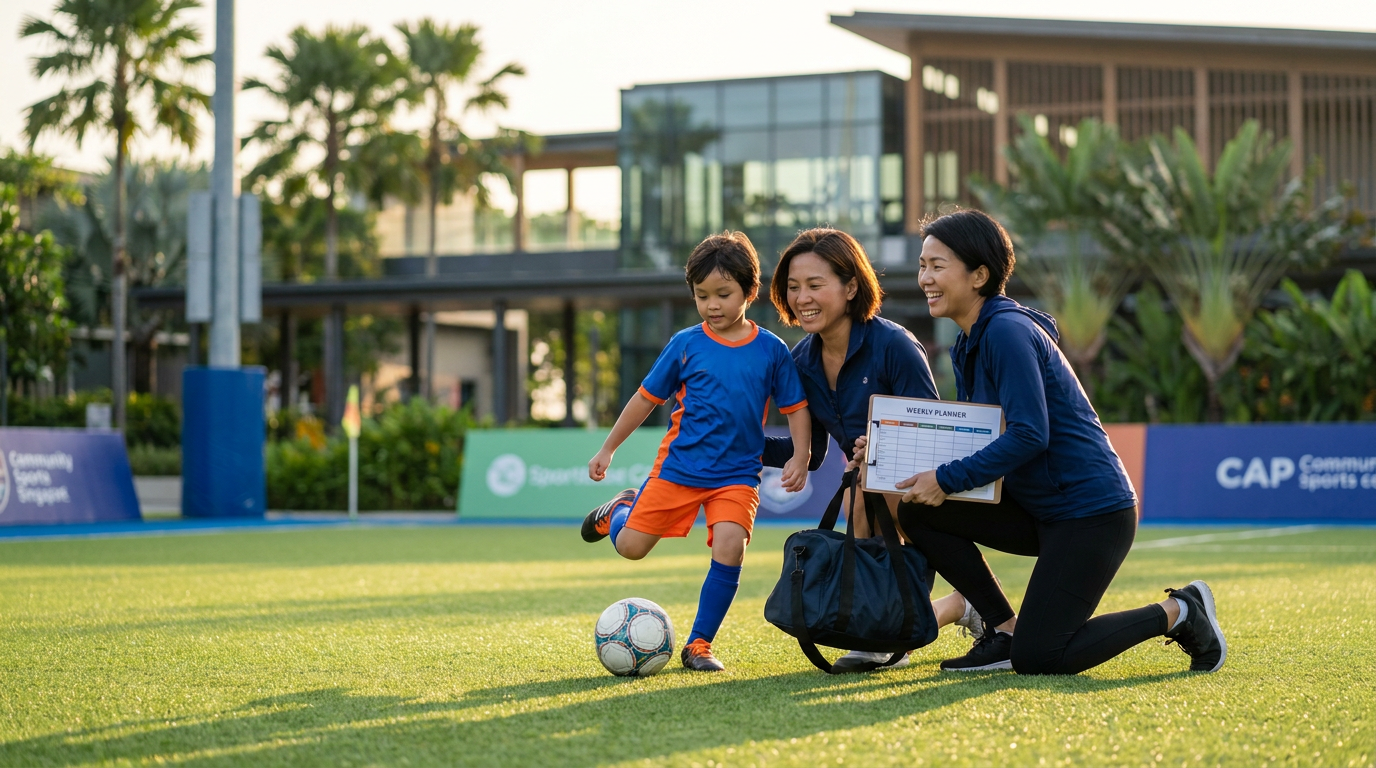
5. Help with time management early. Secondary school sports CCAs are a real time commitment alongside academic workloads. Help your child develop good planning habits during primary school — using a weekly schedule, completing homework before screen time — so the transition to managing CCA alongside studies feels manageable rather than overwhelming.
6. Prepare emotionally for competition. Secondary school sports include inter-school competition, which means both victories and losses. Teaching children from an early age that setbacks are part of growth — and celebrating effort over outcome — builds the resilience they'll need when it matters most.
Building the Foundation Early: Why the Pre-Secondary Years Are Critical
The relationship between early childhood sports experiences and secondary school sports readiness is more direct than most parents realise. Regular physical activity in early childhood is consistently linked with stronger motor skills, better fitness, and even sharper focus and cognitive development. The child who has grown up playing, moving, and exploring sport in a structured, nurturing environment arrives at secondary school with a distinct advantage: they already know how to compete, how to take coaching, how to function in a team, and how to keep going when things get difficult.
For families looking to give their children that head start, choosing the right sports programme during the early years is one of the most valuable investments you can make. At Vivo Kinetics, we've built our programmes specifically around this developmental philosophy.
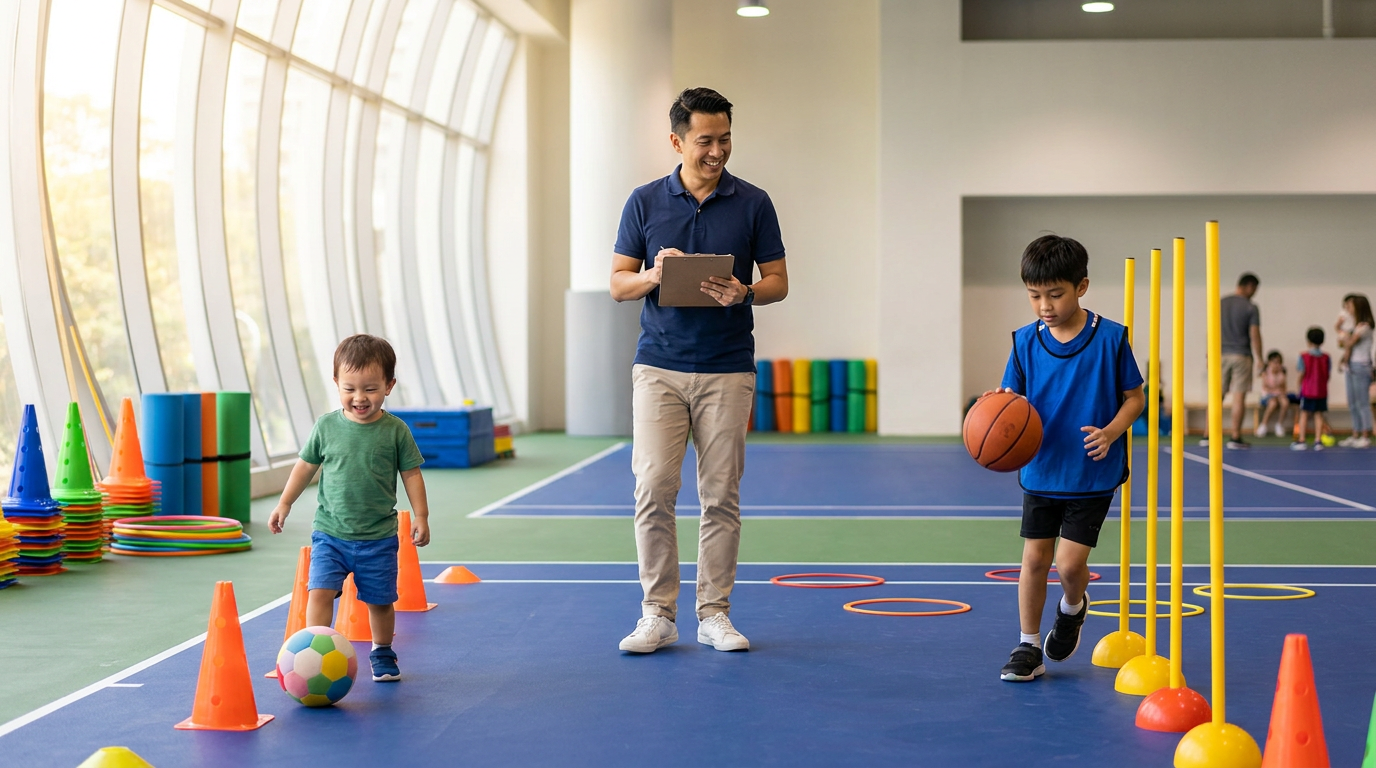
Our Vivo Kids multi-sports programme introduces children aged 2 to 6 to a wide range of movement skills — running, jumping, throwing, catching, balancing, and kicking — through play-based sessions designed to build both physical and character foundations. The Vivo Kids multi-sports programme introduces children to fundamental movement skills through diverse activities. This variety keeps young children engaged while building a broad athletic foundation. Children learn to follow instructions, work cooperatively, handle minor frustrations, and celebrate each other's achievements — all qualities that make for exceptional secondary school athletes and leaders.
As children grow and a love of football begins to emerge, the Vivo Kicks Academy offers a structured, age-appropriate soccer pathway for ages 6 to 12. With expert coaches and a curriculum designed to develop both technical skills and tactical understanding, Vivo Kicks gives children the specific football foundation that secondary school soccer CCA coaches genuinely notice when they see it. Children who arrive at secondary school already comfortable on the ball, already understanding the game, and already accustomed to training culture, are streets ahead of peers who are learning the basics from scratch.
Tips for Parents: Supporting Your Child Through CCA Life
Once your child is enrolled in their secondary school sports CCA, your role as a parent shifts — but it doesn't diminish. Here's how to be the support they actually need:
Show up and cheer. Attend matches and competitions when you can. Nothing tells a child their efforts matter like seeing a familiar face in the stands. Celebrate effort and attitude, not just results.
Stay connected with coaches. Teachers-in-charge and coaches see your child in a different light than you do. Regular communication helps you understand their progress and address any challenges early.
Keep health front and centre. Ensure your child gets adequate sleep, stays well-hydrated, and eats nutritiously to support the demands of training. If they report persistent pain or discomfort, consult a doctor rather than pushing through.
Don't turn every practice into a debrief. Children need space to process their own sports experiences. Resist the urge to critique every session — ask how it felt, and let them lead the conversation.
Keep the bigger picture in mind. The CCA programme provides students with a platform to discover their interests and talents and can fuel in students a lifelong love for a particular activity, helping students lead a balanced lifestyle. The goal was never just a bonus point — it was a child who loves to move, knows how to work with others, and has the confidence to take on whatever life throws at them.
The Long Game
Secondary school sports CCAs are a genuinely exciting chapter in your child's development — challenging, rewarding, and formative in ways that last a lifetime. The students who thrive in them are rarely the ones who stumbled into a sport at age 13 with no prior experience. They are the ones whose parents started early: who exposed them to movement and play from toddlerhood, who chose thoughtful programmes that built real skills, and who nurtured a love of sport long before the competition stakes were raised.
The good news is that it is never too early — or too late — to begin that foundation. Whether your child is two years old or ten, the choices you make about their sports development today are an investment in the confident, capable secondary school athlete they are becoming.
Ready to give your child the athletic foundation they deserve?
At Vivo Kinetics, we've spent years helping Singapore's youngest movers build the skills, confidence, and love of sport that set them up for success — in secondary school and beyond. Explore our award-winning programmes and find the perfect fit for your child today.
👉 Discover Vivo Kinetics programmes
Comments