


Sports Injuries in Kids: Prevention, Treatment, and When to See a Doctor
Table Of Contents
Why Children Are More Vulnerable to Sports Injuries
The Most Common Sports Injuries in Kids
Two Types of Sports Injuries: Traumatic vs. Overuse
How to Prevent Sports Injuries in Children
How to Treat Sports Injuries at Home: The RICE Method
When to See a Doctor
The Role of Multi-Sport Participation in Injury Prevention
Supporting Your Child's Emotional Recovery
Sports Injuries in Kids: Prevention, Treatment, and When to See a Doctor
Every parent knows the moment: your child is running, laughing, fully alive in the middle of a game — and then, suddenly, they're on the ground holding their knee. Sports injuries are a normal part of active childhood, but knowing how to prevent them, treat them quickly, and recognise the warning signs that need medical attention can make all the difference between a minor setback and a longer-term problem.
Research shows that more than 3.5 million children under the age of 14 receive medical treatment for sports-related injuries each year, and almost one-third of all injuries incurred in childhood are sports-related. The good news? A significant portion of these injuries are preventable with the right knowledge, the right environment, and the right approach to how children play and train.
This guide covers everything parents need to know — from understanding why children's bodies are uniquely at risk, to practical prevention strategies, first-aid treatment at home, and the powerful role that multi-sport participation plays in keeping young athletes healthy for the long run.
Why Children Are More Vulnerable to Sports Injuries
Kids are not simply small adults. Their bones, joints, and muscles are in a constant state of development, which means they face a different set of risks than older athletes. Understanding this biology is the first step to protecting your child effectively.
The most important factor is the growth plate. Growth plates are areas of developing cartilage located near the ends of long bones where bone growth occurs in children. Because they are softer and weaker than fully developed bone, growth plates are more susceptible to stress and injury. What this means in practice is that an ankle roll that would simply sprain an adult's ligament can cause a more serious growth plate fracture in a child — potentially affecting how that bone grows.
There is also an uneven growth dynamic at play. Bones grow faster than muscles in children, making younger athletes more susceptible to muscle, tendon, and growth plate injuries. Children's growth plates typically remain open until around age 15 for girls and age 17 for boys, meaning that for much of a child's sporting life, these vulnerable areas need careful management and protection.
Beyond the physical, there is a cognitive dimension too. Children are naturally more energetic but often unaware of their surroundings and physical limitations, which means they can develop overuse or fatigue-related injuries without realising it. Young athletes don't always recognise or communicate discomfort clearly — which places the responsibility of vigilance firmly in the hands of parents and coaches.
The Most Common Sports Injuries in Kids
The most common types of sports-related injuries among children are sprains, muscle strains, bone or growth plate injuries, repetitive motion injuries, and heat-related illness. While sprains and strains can happen in almost any sport, some injuries are more closely tied to specific activities:
Sprains: Stretching or tearing of ligaments, most often in the ankle or knee. Common in running, jumping, and contact sports.
Strains: Injuries to muscles or tendons, often felt as a sudden pull or tightness during exertion.
Growth plate injuries (apophysitis): Inflammation or damage to the cartilage growth zones. Conditions like Osgood-Schlatter disease (knee) and Sever's disease (heel) fall into this category and are seen frequently in active children aged 8–15.
Stress fractures: Small cracks in bone caused by repetitive impact, particularly in the feet, shins, and lower legs.
Concussions: CDC data shows that nearly 71% of emergency room visits for sports-related concussions involve children ages 10 to 19, making head injury awareness essential for all contact sport participants.
It is worth noting that most organised sports-related injuries — around 62% — occur during practice, not during games. This highlights how important a structured, well-supervised training environment is for keeping children safe.
Two Types of Sports Injuries: Traumatic vs. Overuse
Sports injuries in children generally fall into two categories, and understanding the difference helps parents respond appropriately.
Traumatic injuries happen in a single moment — a fall, a collision, or an awkward landing. Acute sports injuries are caused by a sudden trauma, such as a twist, fall, or collision, and common examples include joint sprains, ligament tears, and concussions. These injuries are often easier to identify because they come with immediate pain, swelling, and an obvious triggering event.
Overuse injuries are far more insidious. Overuse injuries are responsible for nearly half of all sports injuries to middle and high school students, and they develop gradually when the body is not given adequate time to recover between sessions. They tend to show up first as mild pain or discomfort, gradually getting worse over time — which makes them easier to dismiss until the damage has already deepened.
During periods of rapid growth, muscles, tendons, and bones may be growing at different rates, which can cause microtrauma, leading to irritation, inflammation, and pain. If an overuse injury is not caught and treated early, it can damage growth plates and affect long-term bone development. The lesson here is clear: pain that lingers after activity should never be ignored or played through.
How to Prevent Sports Injuries in Children
Most childhood sports injuries are preventable. The following strategies, when consistently applied, dramatically reduce the risk of both traumatic and overuse injuries.
Warm up properly before every session. A structured warm-up does more than loosen muscles — warm-up intervention programmes have been shown to significantly reduce the injury rate of upper and lower limb sports injuries in children and adolescents. Even five to ten minutes of dynamic movement — light jogging, leg swings, arm circles — primes the body for the demands ahead.
Ensure proper technique from the start. Kids need to be taught proper form and technique in their respective sports to reduce the risk of injury, especially when performing high-risk movements such as jumping, landing, and tackling. Poor mechanics learned early are difficult to unlearn and significantly increase injury risk over time.
Use the right protective equipment. Every sport has gear requirements for a reason. Ensure that children use proper equipment such as helmets, shin guards, knee pads, and ankle supports, and wear appropriate footwear for the sport. Gear should be correctly fitted — equipment that doesn't fit properly offers far less protection.
Schedule regular rest. Rest is not weakness; it is a critical part of training. Plan to have at least one day off per week and at least one month off per year from training for a particular sport, as this allows the body to recover. Allow for adequate rest between exercises, as muscles and joints need time to recover and regain strength.
Build strength and flexibility gradually. Conditioning exercises strengthen the muscles that support joints, reducing injury risk. Stretching after activity increases flexibility and helps prevent the muscle imbalances that contribute to overuse. During periods of rapid growth, extra attention should be paid to ensure that children are not pushing themselves too hard, and intensity should increase gradually.
Stay hydrated. Dehydration affects muscle function and coordination, both of which increase injury risk. Children should drink water before, during, and after physical activity — particularly important in Singapore's warm, humid climate.
Stop if it hurts. This cannot be overstated. When overuse injuries are caught and treated early, they are usually not a big deal — but if a child plays through the pain, they can create long-term problems. Instilling in children the confidence to speak up when something hurts is as important as any physical training tip.
How to Treat Sports Injuries at Home: The RICE Method
When a minor injury does occur, knowing how to respond in the first few minutes can reduce pain, limit swelling, and support faster recovery. The RICE method — Rest, Ice, Compression, Elevation — is a widely recognised first-aid treatment recommended by healthcare providers for handling acute musculoskeletal injuries such as sprains, strains, and soft tissue damage.
Here is how to apply each step:
Rest — Stop the activity immediately. Remove the child from play and avoid putting weight or stress on the injured area. Avoid movements that cause pain to the injured area to prevent further damage. Short, relative rest is the goal — gentle, pain-free movement can begin once acute swelling subsides.
Ice — Apply cold to reduce swelling. Apply an ice pack wrapped in a thin cloth or towel to the injured area for 15–20 minutes every one to two hours during the first 48 hours after the injury. Never place ice directly against the skin, as this can cause frostbite.
Compression — Wrap to limit swelling. Use an elastic bandage or compressive wrap to help control swelling, ensuring it is snug but not so tight that it restricts circulation.
Elevation — Raise the injured area. Keep the injured limb raised above heart level using pillows or cushions to reduce swelling by allowing excess fluid to drain away from the injured area. For ankle injuries, this means propping the leg up when resting.
Use the RICE method for the first one to three days after an injury. If pain and swelling have not improved within five to seven days, or if the injury appears severe, consult a doctor.
When to See a Doctor
Not every bump needs a hospital visit, but some injuries absolutely require professional evaluation. Seek medical attention promptly if your child experiences:
Severe pain that doesn't ease with rest and ice
Visible deformity of a limb or joint
Inability to bear weight or move the injured area
Significant swelling, bruising, or numbness
Any head injury with symptoms such as dizziness, confusion, vomiting, or sensitivity to light
Pain, tenderness, or discomfort that persists for more than a few days after activity
In a growing child, point tenderness over a bone should be evaluated further by a medical provider, even if there is minimal swelling or limitation in motion. Growth plate injuries in particular may not always show on a standard X-ray, so doctors may look for gaps between segments of bone or order additional imaging to get a clearer picture. When in doubt, always err on the side of caution and have a specialist assess the injury.
The Role of Multi-Sport Participation in Injury Prevention
One of the most evidence-backed strategies for protecting children from sports injuries is also one of the most enjoyable: letting them play multiple sports.
The rate of overuse injuries among children who specialise in a single sport at a young age is far greater than among those who experience a multitude of sports. This is because rotating sports prevents repetitive stress on the same muscles and joints, dramatically lowering the risk of overuse injuries. When a child swims, plays football, and practices gymnastics across different seasons, no single set of tissues is ever overloaded — and a much wider range of movement patterns, coordination skills, and muscle groups develop simultaneously.
Early specialisation (training in a single sport year-round before puberty) can raise the risk of overuse injuries, burnout, and mental health issues. By contrast, multi-sport participation until mid-adolescence helps avoid many of the pitfalls of early specialisation and gives children the physical literacy foundation they need for lifelong active health.
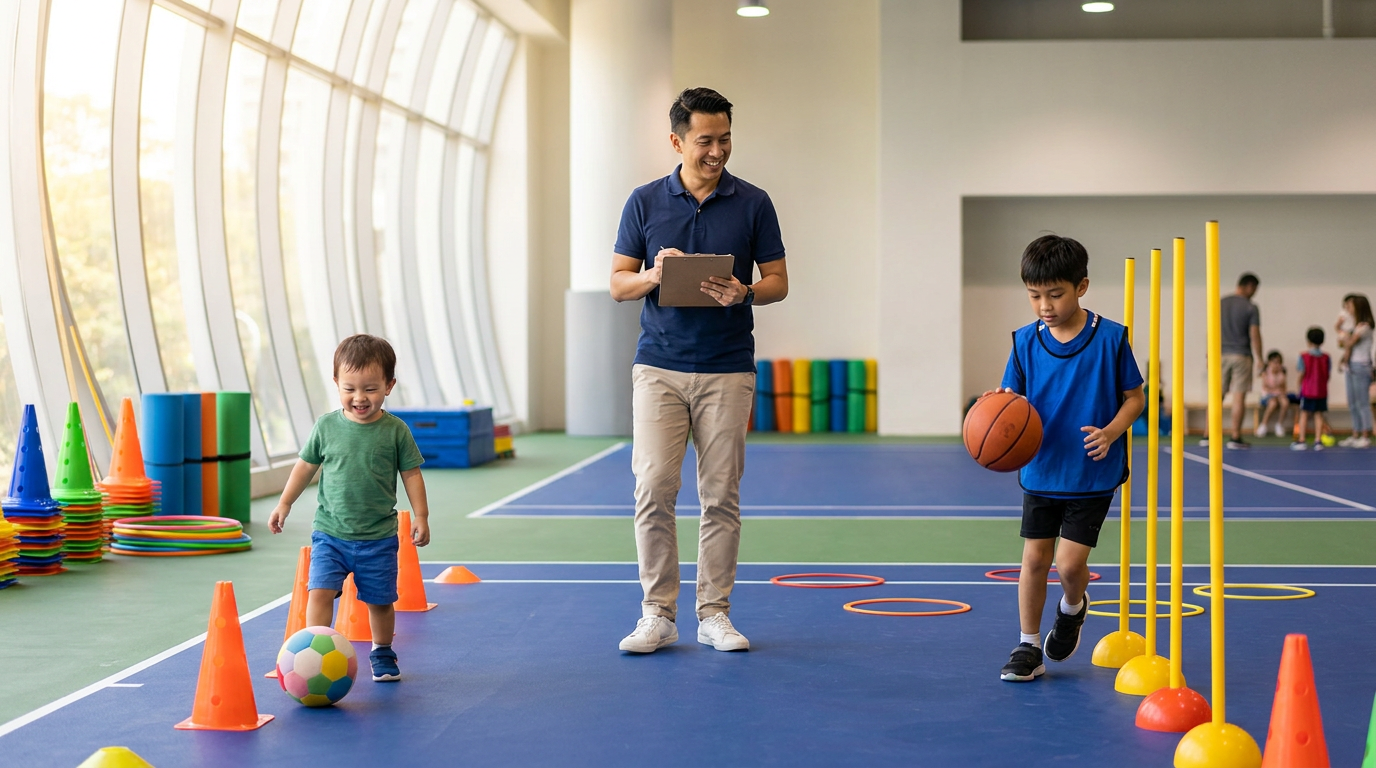
At Vivo Kinetics, this philosophy is built into every programme we design. Our Vivo Kids multi-sports programme for children aged 2 to 6 is specifically structured around age-appropriate multi-sport exposure — helping young children build foundational movement skills, balance, and coordination across a range of activities rather than locking them into a single discipline too soon. For children aged 6 to 12 who are ready to explore structured sport with expert coaching, our Vivo Kicks Academy provides a nurturing, skills-focused environment where football is taught with an emphasis on proper technique, safe play, and character development — all factors that directly reduce injury risk.
Supporting Your Child's Emotional Recovery
A sports injury doesn't just affect the body — it can affect a child's confidence, sense of identity, and motivation to stay active. A child who is sidelined from a sport they love may feel frustrated, left out, or worried about falling behind their peers. These emotional responses are completely normal and deserve as much attention as the physical recovery.
Parents can help by framing recovery as a positive process: focusing on what the child can do rather than what they cannot, celebrating small milestones, and maintaining connection to their team and coaches where possible. Pressure to return too quickly is one of the most common causes of re-injury, so allowing children to follow the natural pace of healing — and return to sport only when genuinely ready — protects both their bodies and their long-term love of the game.
It's also worth remembering that the pressure to win, to perform, or to keep up with peers can itself become a source of harm. Children should be judged on effort, improvement, and sportsmanship rather than outcomes alone. The most lasting gift sport gives a child is a joyful relationship with movement — and that is worth protecting above all else.
Keeping Kids in the Game
Sports injuries in children are common, but they are far from inevitable. With an understanding of how young bodies develop, a commitment to proper technique and rest, quick and informed first-aid responses, and the wisdom to choose age-appropriate, varied physical activity, parents can give their children the best possible chance of staying healthy, confident, and active.
The evidence is clear: the children who thrive in sport long-term are not the ones pushed hardest the earliest. They are the ones who are nurtured well, given space to explore, protected from overload, and taught that their wellbeing matters more than any scoreboard. Building that foundation from the very beginning is precisely what great sports programming for young children is all about.
Ready to give your child a safe, joyful, and expert-guided start in sport?
At Vivo Kinetics, our award-winning programmes are designed with children's health, development, and happiness at the centre — from our play-based Vivo Kids multi-sports programme for toddlers and preschoolers, to the skills-focused Vivo Kicks Academy for aspiring young footballers. Every session is led by expert coaches in a nurturing environment built to help children grow with confidence.
Explore our programmes at vivokinetics.com and take the first step toward raising a healthy, active, resilient child.
Comments