


Sports Supplements for Kids: What Every Parent Needs to Know About Safety
Table Of Contents
Why Parents Are Asking About Sports Supplements
What Are Sports Supplements?
Are Sports Supplements Safe for Kids?
Common Sports Supplements and Their Risks for Children
Creatine
Protein Powders and Amino Acid Supplements
Caffeine and Energy Drinks
Vitamins and Minerals
What to Do If Your Child Asks About Supplements
The Real Performance Boosters: What Actually Works for Kids
Red Flags to Watch For on Supplement Labels
A Note for Parents of Young Athletes in Singapore
Sports Supplements for Kids: What Every Parent Needs to Know About Safety
It usually starts innocently enough. Your child comes home from training and mentions that a teammate is using protein shakes, or they spot a flashy tub of pre-workout powder at the sports shop and ask if it could help them run faster or kick harder. In today's hyper-competitive youth sports environment, sports supplements are everywhere — marketed with slick packaging, bold performance claims, and endorsements from elite athletes. But when it comes to growing children, the questions parents face are far more serious than which flavour to choose.
Sports supplements for kids is a topic that sits at the intersection of sports science, child nutrition, and parental instinct. The honest answer from paediatric experts is this: most sports supplements are not designed, tested, or proven safe for children — and some carry genuine risks. This guide breaks down what sports supplements are, which ones pose the greatest concerns for children, and what the research actually says, so you can make informed decisions with confidence.
Why Parents Are Asking About Sports Supplements
The sports supplement industry is booming, and children are increasingly in its crosshairs. The sports supplement industry promises to help athletes of all ages move faster and grow stronger, and by recent estimates, 40% of teens consumed some type of protein supplement in 2024. Younger children are following this trend too, influenced by older siblings, social media, and the culture of competitive youth sports.
Part of what makes this topic tricky for parents is that supplements are sold openly in supermarkets and sports stores, giving them an air of everyday safety. Many products are specifically marketed to young athletes with child-friendly branding, bright colours, and promises of better performance. But marketing and safety are very different things — and understanding that distinction is the most important first step any parent can take.
What Are Sports Supplements?
Sports supplements are pills, powders, drinks, or bars taken to build muscle, lose weight, boost energy, or improve exercise performance. They are categorised as dietary supplements rather than medicines, and that classification has significant implications. Unlike pharmaceuticals, supplement companies do not have to demonstrate safety and efficacy in humans before their products are sold to consumers. This means that a product can appear on shelves without ever having been tested on the people most likely to be influenced by its marketing.
Common types of sports supplements include protein powders, creatine, amino acid blends, pre-workout formulas, caffeine-containing products, and high-dose vitamins and minerals. Each carries its own profile of potential benefits and risks — though for children, the risks consistently outweigh any documented performance advantages.
Are Sports Supplements Safe for Kids?
The short answer from the medical community is: we simply don't know enough to say they're safe — and that alone should give parents pause. There is limited research about sports supplements on individuals under the age of 18, and most studies are currently being conducted with adult subjects, meaning we don't have much current research on the safety, dosage, or efficacy of supplements for younger athletes.
This lack of research and other factors has led the American Academy of Pediatrics to advise against using performance-enhancing supplements in anyone under the age of 18. Beyond the research gap, there's a more immediate concern: sports supplements may contain harmful drugs or additives not listed on the label. Even when ingredients are declared, they may interact in ways that haven't been studied in developing bodies. For a child whose organs, hormones, and skeletal system are still maturing, that uncertainty is a real risk.
Common Sports Supplements and Their Risks for Children
Creatine
Creatine is one of the most popular sports supplements in the world, and it frequently makes its way into young athletes' routines. Produced naturally in the body, it plays a role in short-burst, high-intensity activities like sprinting and jumping. Man-made creatine is widely sold as powders, pills, and energy bars, and its marketing often reaches directly into youth sports culture.
Creatine can cause side effects such as muscle cramps, joint stiffness, dehydration, diarrhoea, and seizures. More concerning for parents, few studies have looked at the long-term safety of creatine use by younger people, some research shows that it can harm the kidneys, and the American College of Sports Medicine recommends that people younger than age 18 should not take it. If a child is eating a balanced diet, there is no evidence that creatine supplementation adds any performance benefit — and the risks to a developing body are simply not worth taking.
Protein Powders and Amino Acid Supplements
Protein powder is probably the most normalised supplement in the children's sports world, largely because it feels less intimidating than creatine or pre-workout formulas. But normalisation does not equal safety. Studies show that most children are already eating two to three times the recommended daily intake of protein, and there are currently no guidelines for the optimal amount of protein intake in the paediatric population. This means the vast majority of active children simply do not need additional protein from supplements.
Unless recommended by a healthcare provider or registered dietitian, it is best to avoid giving adult protein powder to kids, as children have specific nutritional needs for growth and development compared to adults, and adult protein powders may not be formulated to meet those needs, potentially providing excessive amounts of protein that could be harmful. If excess protein is consumed, it won't be used efficiently and may impose a metabolic burden on a child's organs. In terms of digestive effects, children given whey protein powder may have problems digesting it, with symptoms such as bloating, gas, cramps, and diarrhoea.
Amino acid supplements carry similar concerns. Ads for amino acid supplements claim they improve endurance, lower protein breakdown, and reduce soreness from exercise — but most studies do not show benefits to taking them, and some can cause serious side effects, with insufficient long-term studies to know whether they are safe for children.
Caffeine and Energy Drinks
Caffeine is arguably the most misunderstood supplement in youth sports, partly because it appears in so many everyday products — sodas, teas, energy drinks, pre-workout powders, and even some sports gels. Some parents may assume that because caffeine is so common, it poses minimal risk to their children. The paediatric evidence disagrees strongly.
The American Academy of Pediatrics has stated that energy drinks are not appropriate for children and adolescents, due to the high levels of caffeine they contain. Due to children's developing brains, decreased impulse control, and smaller body sizes, they are more susceptible to the effects and risks of caffeine ingestion — and children who consume caffeine can have difficulty sleeping and may develop behavioural or mental health issues, such as increased aggression, anxiety, stress, and depression.
The American Academy of Pediatrics recommends that children aged 12 and under avoid caffeinated beverages entirely, including soda, energy drinks, coffee, and tea, and that adolescents limit their caffeine intake to less than 100 milligrams per day. Even at low doses, caffeine can trigger sleep disturbances or mood changes, increase anxiety, and play a role in triggering arrhythmias and abnormal heartbeats. For children in active sports programmes, disrupted sleep is especially harmful — since the majority of physical recovery and growth hormone release occurs during deep sleep.
Vitamins and Minerals
Vitamins and minerals are perhaps the most benign category of sports supplements, but they are still not without nuance for children. Young athletes who are eating healthy don't need vitamin and mineral supplements, though there may be situations — such as special or restricted diets — where vitamin supplementation is appropriate. Children following vegan or vegetarian diets, or those with medically diagnosed deficiencies, may genuinely benefit from targeted supplementation under a doctor's guidance. The key distinction is this: supplementing where no deficiency exists provides no performance advantage and may cause imbalances in how nutrients are absorbed.
What to Do If Your Child Asks About Supplements
It's worth approaching this moment as a teaching opportunity rather than a hard no. Children who are curious about supplements are usually motivated by a genuine desire to improve — and that instinct is worth nurturing, even if the proposed method isn't appropriate. Here's a practical approach for parents:
Start with a conversation. Ask your child what they're hoping to achieve — more speed, better stamina, quicker recovery. Understanding their goal helps you find safer, more effective solutions together.
Consult a paediatrician or registered dietitian before taking any action. If your child is considering taking a sports supplement, talk to your paediatrician first. A professional can assess whether any genuine nutritional gap exists and recommend food-first solutions.
Avoid adult formulations entirely. Many people assume protein powders made for adults are fine for children, but adult protein powders are optimised for older people and may have excessive amounts of protein or calories, which can lead to unintended side effects in children.
Check for third-party testing. If a healthcare provider does recommend a supplement, choose a high-quality product or brand that has passed an independent quality assessment, indicated by a label or symbol on the package denoting third-party testing.
Watch for overlapping ingredients. Avoid taking multiple supplements with overlapping ingredients, which can prevent a child from consuming excessive amounts of specific ingredients such as caffeine, herbal extracts, or vitamins that could be problematic over time.
The Real Performance Boosters: What Actually Works for Kids
Here's the good news for parents: the most effective performance enhancers for children are also the safest, most accessible, and most evidence-backed. No supplement comes close to matching what consistent nutrition, sleep, and quality coaching can do for a developing young athlete.
Balanced, whole-food nutrition is the foundation of youth athletic performance. Children who are eating a well-balanced diet are unlikely to gain any additional benefits from supplementing. Practically, this means meals built around lean proteins (chicken, fish, eggs, legumes), complex carbohydrates, healthy fats, and plenty of fruits and vegetables. For example, children can increase carbohydrate intake — especially on game days — to boost energy for improved performance. These are small, practical shifts that make a measurable difference without any risk.
Proper hydration is another underestimated factor. Even a lack of fluid intake leading to just a one-pound weight loss may reduce athletic performance, making it essential to drink appropriate amounts of fluid before activity and to have access to fluids during practice and games. For most children training at moderate intensity, plain water is the best choice.
Sleep is arguably the most powerful performance tool available to young athletes — and it costs nothing. When children sleep, their brains process information taken in during the day, and this includes assimilating new skills or techniques learned that day so they become an intuitive part of their sports performance. Physical activity, especially intense training or competition, causes small tears in muscle fibres — and during deep sleep, the body produces growth hormone, which repairs muscles, builds tissue, and strengthens bones. Children aged 6 to 12 should be getting nine to twelve hours of sleep each night.
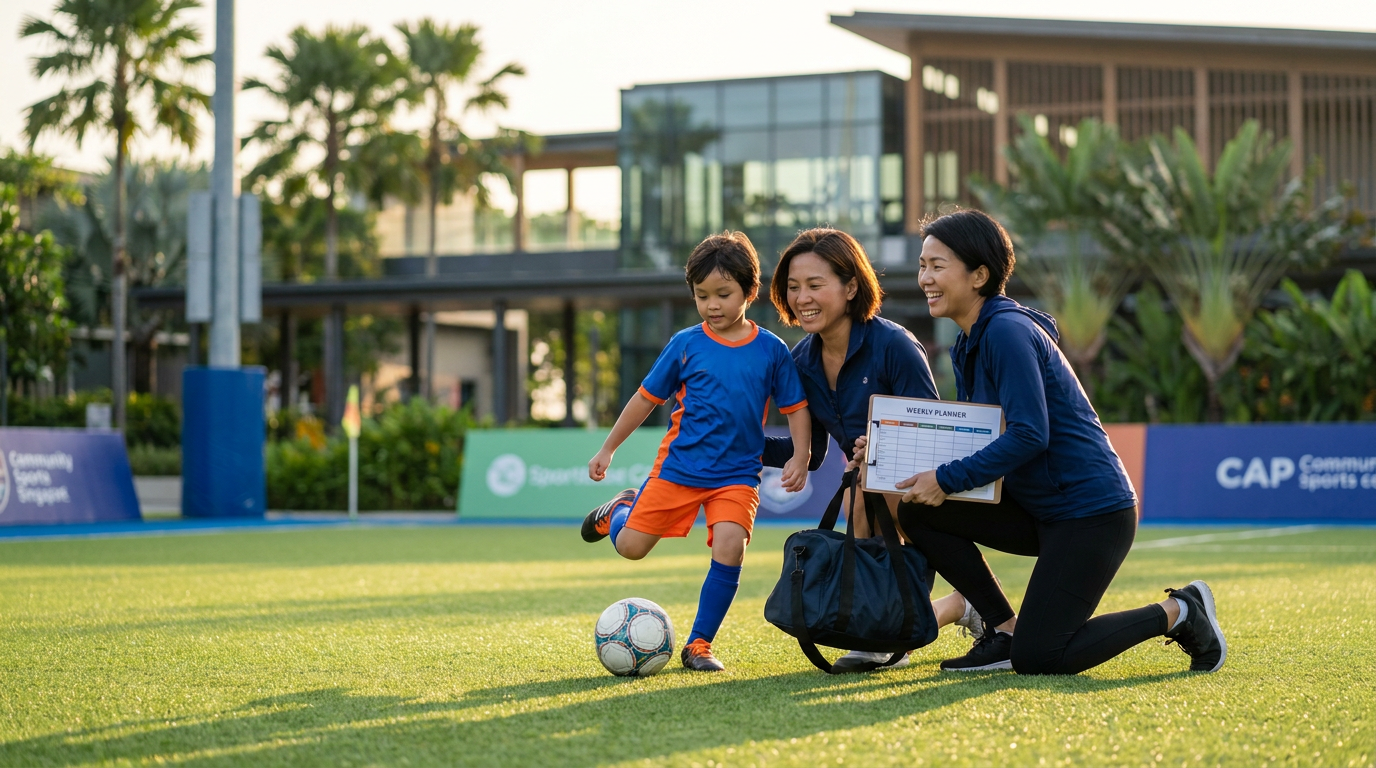
Expert-led, age-appropriate training rounds out the picture. Working with qualified coaches who understand child development means children build proper movement foundations, avoid overtraining, and enjoy sport in ways that motivate lifelong participation. This is fundamentally different from pushing children through adult training protocols and hoping supplements will compensate.
At Vivo Kinetics, this whole-child philosophy is central to everything we do. Our Vivo Kids multi-sports programme for children aged 2 to 6 focuses on building movement skills through play-based activities that develop confidence, coordination, and a genuine love of being active — no shortcuts needed. For older children ready for more structured sport, the Vivo Kicks Academy provides soccer training for ages 6 to 12, guided by expert coaches who understand how to develop young athletes safely and progressively.
Red Flags to Watch For on Supplement Labels
If you ever find yourself evaluating a supplement that's been recommended for your child, knowing what to avoid on a label is just as important as knowing what to look for. Watch out for:
Proprietary blends with no ingredient quantities listed. These make it impossible to know how much of each ingredient your child would actually be consuming.
Caffeine, guarana, or other stimulants. Energy drinks often contain high concentrations of caffeine and other stimulants like guarana, taurine, or L-carnitine — none of which are appropriate for children.
Artificial sweeteners, colours, and additives. Many protein powders are highly processed and contain added sugars, artificial sweeteners, and unnecessary additives and thickeners that serve no nutritional purpose for a growing child.
Absence of third-party certification. Reputable children's supplements should carry verification from independent testing organisations.
Adult dosing instructions with no child-specific guidance. This is a clear sign the product was never designed with children in mind.
Bold, unqualified claims. Phrases like "clinically proven" or "scientifically formulated" without specific citations are standard marketing language rather than evidence of safety.
A Note for Parents of Young Athletes in Singapore
Singapore's youth sports scene has grown enormously in recent years, and with it, the availability and visibility of sports supplements in local stores and online channels. It's worth noting that regardless of where supplements are sold, the same paediatric guidance applies universally: growing children in Singapore face the same physiological risks as children anywhere else, and the absence of long-term safety data is a global limitation, not a regional one.
For parents here, the most empowering action is to invest in quality coaching, structured physical activity, and consistent nutrition — rather than looking to supplements to accelerate what only time, play, and expert guidance can build. The foundations of athletic ability and lifelong health are laid in childhood, and they are built through movement, joy, and smart daily habits — not from a tub of powder.
The Bottom Line
Sports supplements may be everywhere, but for children, the evidence is clear: they are largely unnecessary, frequently unregulated, and in many cases carry genuine health risks that no performance promise is worth. Creatine can harm developing kidneys. Caffeine can disrupt sleep and cardiac rhythms. Protein powders can overload organs that are still growing. And nearly all of them lack the long-term safety data that would be required before any responsible health professional could recommend them for children.
What children genuinely need to thrive as young athletes — balanced nutrition, adequate sleep, proper hydration, and expert-led training in a supportive environment — is already available to them. The best investment parents can make is not a supplement, but a programme that understands how children develop and nurtures that development with care, expertise, and age-appropriate challenge.
Help Your Child Thrive the Right Way
At Vivo Kinetics, we believe every child has the potential to grow into a confident, capable, and healthy young athlete — and it starts long before they're anywhere near a supplement aisle. Whether your child is taking their first steps into sport or ready to pursue a passion for football, our programmes are designed around how children actually develop, physically and emotionally.
Explore our programmes and take the first step toward healthy, joyful active living for your child:
Discover Vivo Kinetics →
Vivo Kids – Multi-Sports Programme (Ages 2–6)
Vivo Kicks – Soccer Academy (Ages 6–12)


Comments