


Weight Training for Kids: When Is It Safe and How to Get Started
Table Of Contents
Is Weight Training Actually Safe for Kids?
The Growth Plate Myth: What the Research Really Says
What Age Can Kids Start Weight Training?
The Real Benefits of Strength Training for Children
Age-by-Age Guide to Strength Training
Safety Rules Every Parent Should Know
Red Flags and When to Pause
How Structured Sports Programs Build the Foundation
Picture this: your child watches an older sibling doing push-ups, hops off the couch, and announces, "I want to do that too!" For many parents, the first instinct is hesitation. Will it hurt their growing bones? Is it too much for their young bodies? Could it stunt their growth?
These are completely understandable concerns — and you are far from alone in asking them. Weight training for kids has long been surrounded by myths and misunderstandings. But the good news is that the science is clearer than ever: when done correctly, strength training is not only safe for children, it can be genuinely beneficial for their physical health, confidence, and even their mental well-being.
This guide cuts through the confusion and gives you a practical, research-backed framework for understanding when weight training is appropriate for children, what it should look like at different ages, and how to make sure your child stays safe and actually enjoys the process.
Is Weight Training Actually Safe for Kids?
For decades, the conventional wisdom was simple: keep children away from the weight room. The fear was that lifting weights would damage their developing bodies and stunt their growth. That thinking has changed dramatically. Today, major medical organisations including the American Academy of Pediatrics (AAP), the American College of Sports Medicine (ACSM), and the National Strength and Conditioning Association (NSCA) all endorse supervised strength training for children, provided it is properly designed and age-appropriate.
The key phrase there is "properly designed." A well-structured strength program for a child looks nothing like a typical adult gym session. It prioritises technique over load, enjoyment over intensity, and gradual progression over rapid results. When those principles are followed, the evidence is reassuring: children can gain strength safely, with injury rates that are actually lower than many common youth sports.
It is also worth remembering that strength training is broader than lifting barbells. It includes bodyweight exercises like squats and push-ups, resistance bands, climbing frames, hopping drills, and even carrying a heavy backpack up a hill. Many children are already doing forms of resistance training every day without anyone calling it that.
The Growth Plate Myth: What the Research Really Says
The most persistent fear about children and weights is the idea that lifting will damage growth plates and permanently stunt a child's height. This myth has roots in isolated case reports from the 1970s and 1980s, but a much fuller picture has emerged since then.
Growth plates are areas of developing cartilage near the ends of long bones where new bone tissue is produced. They are softer than the surrounding bone and theoretically more vulnerable to stress. However, multiple research reviews have consistently found no evidence that properly prescribed resistance training damages growth plates or negatively affects how tall a child grows. In fact, some studies suggest that the mechanical stress of weight-bearing exercise may actually have a positive effect on skeletal development by stimulating bone mineralisation.
The cases where growth plate injuries did occur in young lifters were almost universally linked to two causes: lifting maximal loads without supervision, or using improper technique. Injuries to the growth cartilage have not been reported in any prospective youth resistance training studies conducted under appropriate conditions. To put the risk in perspective, the forces placed on a child's joints during jogging are roughly three times their body weight, and jumping can impose up to seven times their body weight in ground reaction forces — both of which are considered completely normal childhood activities.
The takeaway for parents is clear: it is not weight training itself that poses a risk to growing children. It is unsupervised, age-inappropriate, or technique-poor training that creates danger.
What Age Can Kids Start Weight Training?
There is no single magic age at which a child is "ready" for strength training, because readiness depends on individual development rather than a birthday. That said, research and clinical guidelines point to some useful benchmarks.
Around ages 7 to 8, children's balance and postural control reach a level of maturity that makes structured resistance training practical and safe. The AAP's position is that strength programs generally need not begin before this level of physical development is achieved. A widely used rule of thumb is that if a child is ready to participate in organised sports, they are likely ready to begin some form of supervised resistance training.
Below the age of 7, this does not mean children should avoid physical activity — quite the opposite. Young children between roughly 2 and 6 years of age benefit enormously from active, play-based movement that builds the physical literacy skills (coordination, balance, body awareness, and agility) that underpin all future athletic development. Jumping, climbing, tumbling, skipping, and throwing are all forms of natural resistance training that develop strength in an age-appropriate way, without any formal programming required.
Readiness is also about emotional and cognitive maturity. A child who can listen to and follow instructions, focus for short periods, and understand the concept of correct form is far better prepared for structured training than one who simply meets an age threshold.
The Real Benefits of Strength Training for Children
Once the safety question is settled, the conversation becomes genuinely exciting. When done well, strength training delivers a wide range of physical and psychological benefits that extend well beyond the gym.
Stronger muscles and better sports performance. Building muscular strength helps children perform better across all physical activities — running faster, jumping higher, throwing further, and absorbing impacts more effectively. For children already involved in sports, stronger muscles translate directly into improved power, speed, and agility on the field or court.
Improved bone health. Weight-bearing exercises place stress on the skeleton in a way that stimulates bone growth and density. This is particularly valuable during childhood and adolescence, when bones are still developing. Building strong bones early in life is one of the most effective long-term strategies for reducing the risk of conditions like osteoporosis in adulthood.
Reduced injury risk. Strengthening the muscles, tendons, and ligaments that surround joints makes those joints more stable and resilient. Research indicates that youth who participate in structured strength training experience fewer sports-related injuries, not more. Some reviews have found that appropriate strength conditioning can reduce sports injury rates by a significant margin.
Better coordination and motor skills. Strength training improves neuromuscular control, meaning the brain and muscles communicate more efficiently. This translates into better coordination, body awareness, and movement quality — benefits that carry over into every sport and physical activity a child pursues.
Confidence and mental well-being. Perhaps the most underrated benefit is psychological. Learning new movements, achieving small goals, and experiencing the satisfaction of getting stronger builds genuine self-confidence in children. Research consistently shows that strength training contributes to better self-esteem, reduced symptoms of anxiety, and a more positive relationship with physical activity overall.
Age-by-Age Guide to Strength Training
Understanding what strength training looks like at different stages of childhood helps parents set realistic and safe expectations.
Ages 2 to 6: Movement and Play as the Foundation
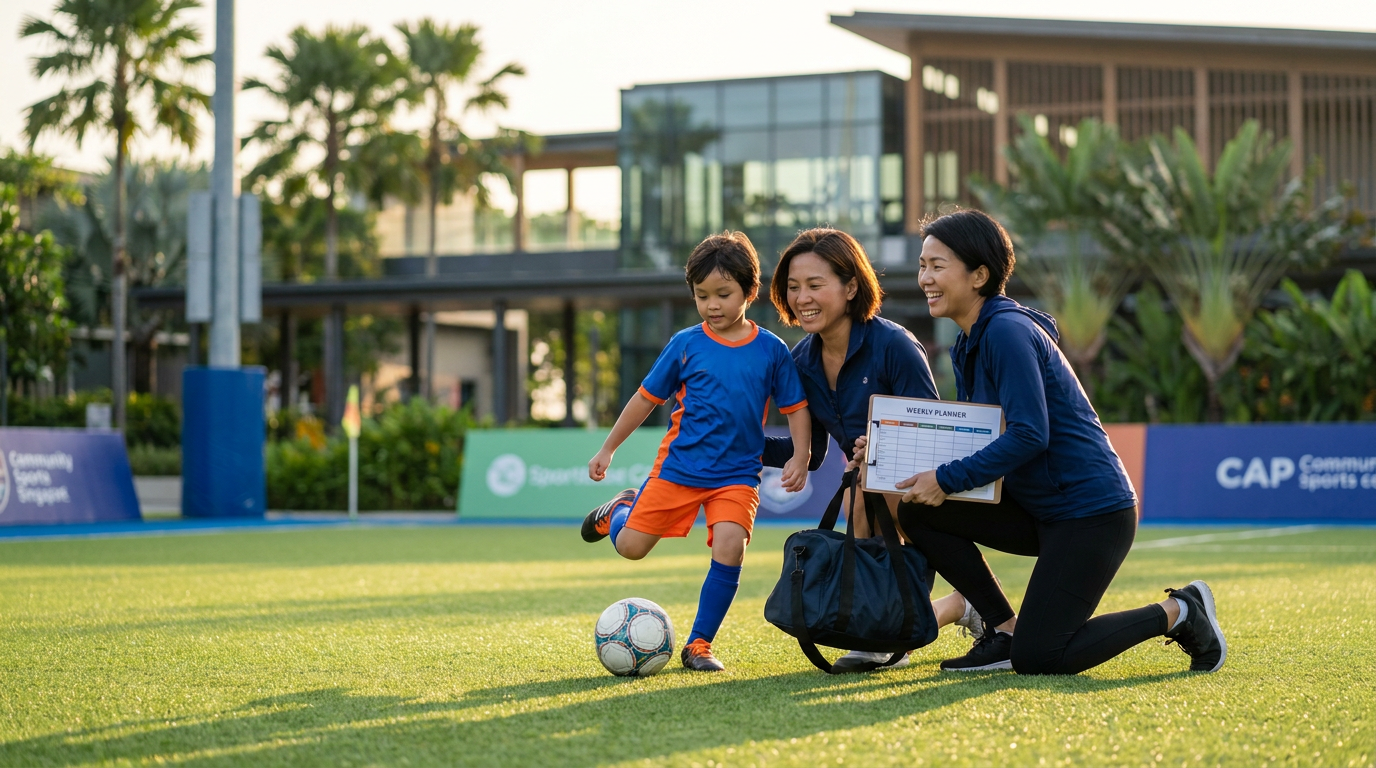
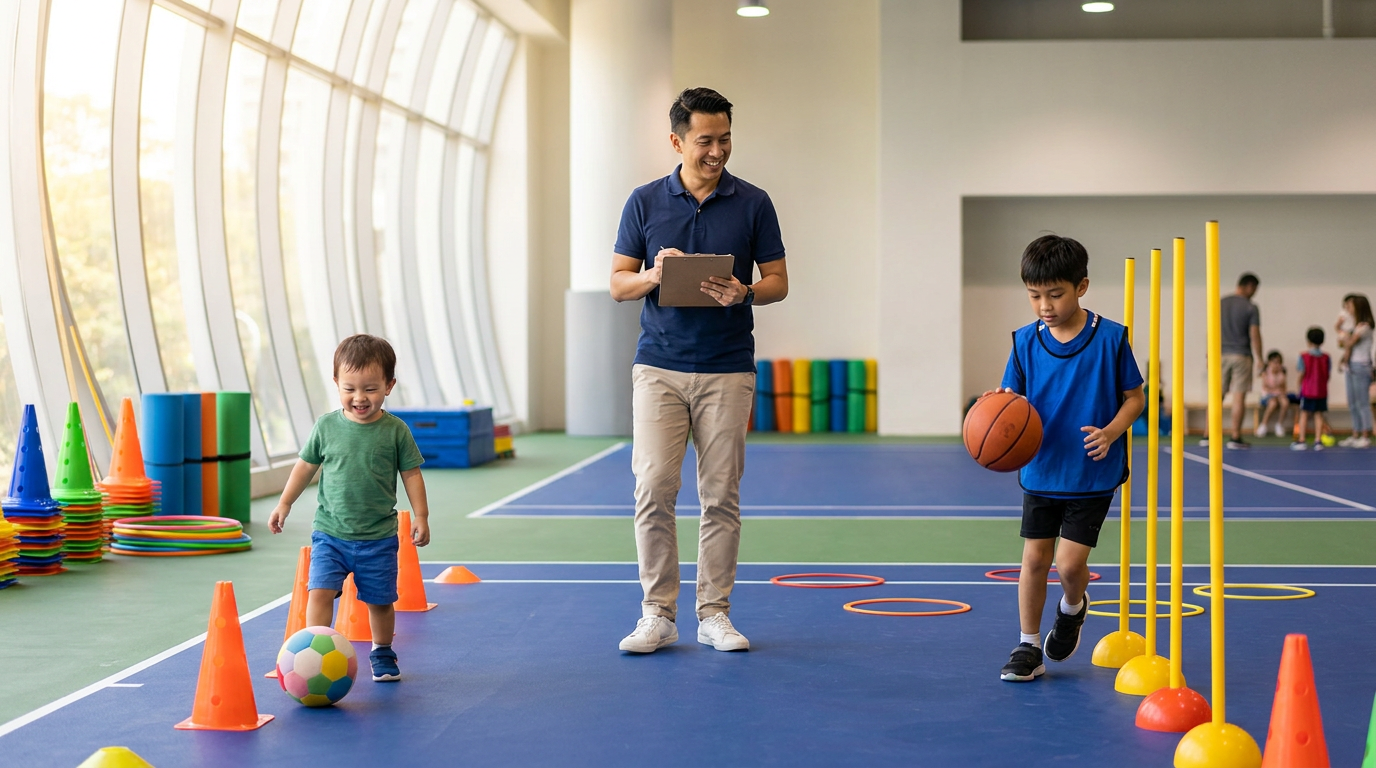
This is not the time for structured weight sessions — and it does not need to be. Young children develop strength naturally through active, exploratory play. Climbing playground equipment, rolling, jumping, running obstacle courses, kicking balls, and carrying objects all challenge the body in ways that build fundamental physical literacy. The goal at this age is broad movement experience and joyful activity, not programming. A multi-sport, play-based environment is ideal for this developmental stage, which is exactly what the Vivo Kids multi-sports programme is designed to provide — nurturing movement skills, coordination, and confidence through age-appropriate activities for children from as young as 2 years old.
Ages 7 to 10: Bodyweight Basics
Children in this age range can begin structured strength exercises, starting exclusively with bodyweight movements. Squats, lunges, push-ups, planks, and jumping exercises are all excellent choices that build functional strength without any external load. The priority at this stage is learning correct movement patterns and developing body awareness, not adding resistance. Children should be supervised by a qualified coach, work at a comfortable effort level, and focus on form before anything else. Two sessions per week is a sensible starting point, with adequate rest between sessions.
Ages 10 to 12: Light Resistance Introduction
As children approach the upper end of primary school age and demonstrate solid technique in bodyweight exercises, light external resistance can be gradually introduced. Resistance bands, light dumbbells, and medicine balls are appropriate tools at this stage. Weight machines designed for adults are not suitable, as the proportions are wrong for smaller bodies and can compromise movement quality. The emphasis remains firmly on technique, control, and enjoyment. A programme of one to two sets of 8 to 12 repetitions per exercise, covering major muscle groups in the upper body, lower body, and core, provides a balanced foundation. Children involved in organised sport — such as those playing in a structured soccer academy — often find that this kind of complementary strength work directly improves their on-field performance. The Vivo Kicks Academy is a great example of how structured, age-appropriate sport programmes lay the groundwork for well-rounded physical development in children aged 6 to 12.
Safety Rules Every Parent Should Know
Regardless of age, the following principles apply to any child engaging in strength training.
Prioritise technique over load. A child should never increase weight or resistance until they can perform the movement with correct form for the full set. If form breaks down, the weight is too heavy.
Always warm up and cool down. Five to ten minutes of light aerobic activity and dynamic stretching before training, and gentle static stretching afterwards, significantly reduce the risk of muscle strains.
Use child-appropriate equipment. Adult weight machines are designed for adult proportions and weight increments. Children should use bodyweight, resistance bands, or free weights that are genuinely light for them.
Ensure qualified supervision. A certified strength-training coach with experience working with children is not optional — it is essential, particularly for younger children who are still learning movement patterns.
Rest between sessions. Children should allow at least one full day of recovery between strength sessions targeting the same muscle groups. Two to three sessions per week is plenty for most children.
Consult a doctor first. If your child has any underlying health conditions — including heart problems, uncontrolled high blood pressure, or seizures — get medical clearance before starting any structured training programme.
Avoid explosive or maximal lifts. Exercises like power cleans, snatches, or any attempt at a one-repetition maximum are not appropriate for prepubescent children. These movements require a level of neuromuscular coordination and skeletal maturity that young children have not yet developed.
Make it enjoyable. This point matters more than most parents realise. A child who dreads their training session is far more likely to use poor form, rush through exercises, or lose interest entirely. Fun is not a luxury in children's fitness — it is a safety mechanism.
Red Flags and When to Pause
While strength training is broadly safe for healthy children, there are signs that something is not right and that training should stop until the issue is addressed.
Any joint pain — as opposed to normal muscle fatigue — should be taken seriously and evaluated by a sports medicine professional. Persistent soreness that lasts more than 48 to 72 hours after a session suggests the training load is too high. Signs of burnout, such as loss of enthusiasm, sleep disturbances, or declining performance, indicate that the programme needs to be scaled back or restructured. And any child who is experiencing rapid growth spurts deserves extra caution, as the skeleton is particularly susceptible to stress during these periods.
Muscle strains are the most common injury associated with strength training in young people, and they most often occur when children are not being supervised or are using weights that are too heavy. The solution is straightforward: keep the load light, keep the technique strict, and keep a qualified adult in the room.
How Structured Sports Programs Build the Foundation
One of the most practical insights from paediatric sports medicine is that readiness for strength training rarely develops in isolation. Children who have experience in organised, multi-sport environments tend to arrive at formal strength training with better body awareness, stronger movement habits, and more receptive attitudes toward coaching — all of which make them safer and more effective participants.
This is why investing in physical literacy early, through well-designed sports and movement programmes, pays dividends later. Children who have spent their early years exploring a wide variety of movements, developing coordination, and learning to work with coaches are naturally better prepared for the more structured demands of a strength programme.
At Vivo Kinetics, this philosophy sits at the heart of everything we do. Whether children are discovering their first movement skills in the Vivo Kids multi-sports programme or developing sport-specific athleticism through the Vivo Kicks Academy, the focus is always on age-appropriate challenges, expert guidance, and the kind of positive experiences that build a lifelong love of movement.
The Bottom Line
Weight training for kids is not something to fear — but it does demand respect for the principles that make it safe and effective. The research is clear: children who participate in properly supervised, age-appropriate strength training benefit physically, psychologically, and athletically. The growth-plate myth has been thoroughly debunked. The risks, when guidelines are followed, are genuinely low.
The most important steps any parent can take are to match the type of training to their child's age and developmental stage, ensure qualified supervision, keep the emphasis on enjoyment and technique, and treat strength training as one piece of a broader active lifestyle rather than the whole picture. Start with movement and play in the early years, build in bodyweight fundamentals from around age 7, and introduce light resistance gradually as both the body and the technique mature.
Physical strength is built over years, not weeks. The habits, confidence, and body awareness that children develop through well-designed movement programmes in their earliest years are the true foundation on which everything else is built.
Ready to give your child the best possible start in physical fitness?
At Vivo Kinetics, our expert coaches create safe, engaging, and age-appropriate programmes that build the physical literacy and confidence children need to thrive — in sport and in life.
Explore our programmes and get started today at vivokinetics.com

Comments